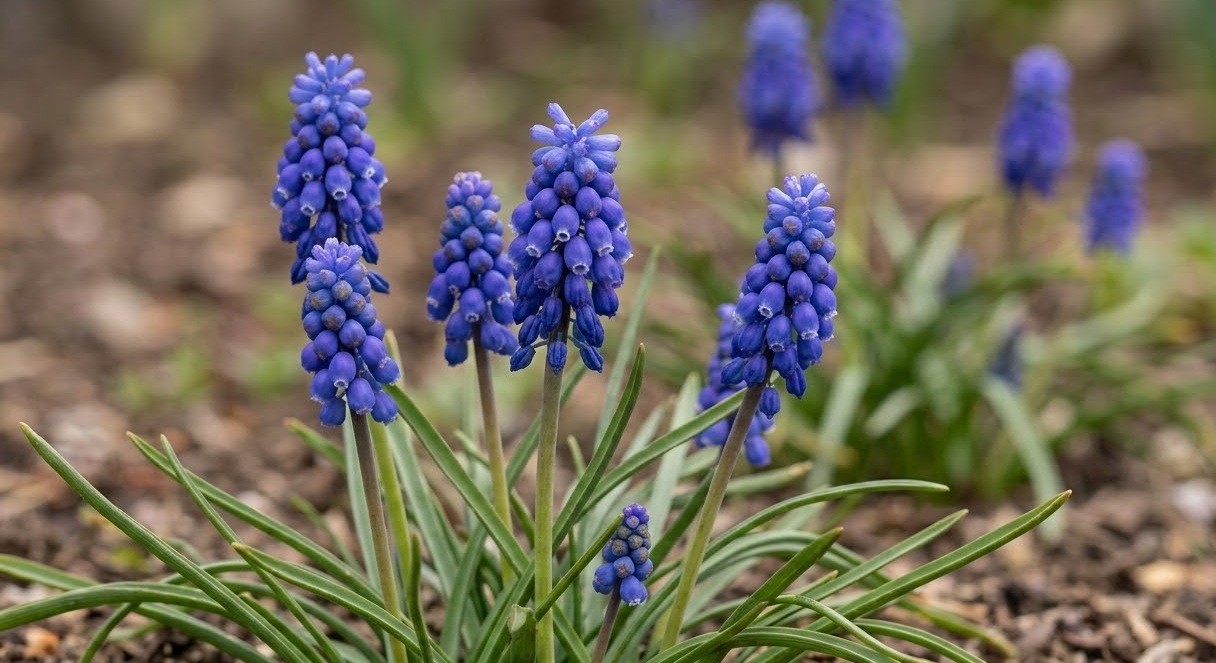

The light requirements of grape hyacinth are a fundamental aspect of their cultivation that directly impacts their flowering potential and overall health. While these bulbs are remarkably adaptable, providing them with the optimal amount of solar energy is the key to achieving professional-quality results. You should carefully analyze the light patterns in your garden throughout the day and across the seasons to find the perfect placement for these spring gems. A professional understanding of photobiology allows you to maximize the beauty of your floral displays while ensuring the long-term vigor of the bulbs.
In the early spring, when these plants are most active, they generally prefer a location that receives full sun for at least six to eight hours a day. This intense light is necessary to power the rapid development of the flower spikes and to facilitate the photosynthesis that builds up energy reserves for the following year. Because they often bloom before many deciduous trees have leafed out, they can thrive in areas that might become quite shaded later in the summer. This unique timing allows them to occupy ecological niches that other sun-loving plants cannot utilize.
Insufficient light can lead to a variety of physiological issues, most notably a condition known as “etiolation,” where the leaves and stems become pale and overly elongated. When the plant has to stretch to find a light source, its structural integrity is compromised, and the flower spikes are more likely to flop over. Additionally, bulbs grown in deep shade may produce fewer flowers or stop blooming altogether over several seasons as their energy stores are depleted. A professional gardener recognizes these signs of light stress and takes corrective action by thinning overhead foliage or moving the bulbs to a brighter spot.
Conversely, while they love the spring sun, these plants also benefit from the cooling shade that develops as the temperatures rise in late spring and early summer. The transition from full sun to dappled shade helps prevent the soil from drying out too quickly and can extend the life of the foliage. This natural progression of light and shade mimics their original habitat in open woodlands and meadows. Understanding this balance is the hallmark of an expert who knows how to work with the natural tendencies of the plant species.
Selecting the best site for light
When planning your garden layout, look for south or west-facing areas that will receive the maximum amount of early season sunlight. These “warm” spots will not only provide the necessary light but will also help the soil warm up faster in the spring, leading to earlier blooms. You can use the reflection from light-colored walls or fences to further increase the light intensity in a particular corner of the garden. A professional approach involves using the physical features of the landscape to optimize the growing environment for your plants.
More articles on this topic
Underneath deciduous trees is often an ideal location, provided the bulbs are planted far enough away from the trunk to avoid extreme root competition. The bulbs will receive plenty of light during their critical growth and flowering phases before the tree canopy becomes dense and opaque. By the time the shade is at its deepest, the grape hyacinths will have already started their journey into dormancy. This “time-sharing” of light resources is a sophisticated way to create a multi-layered and seasonally dynamic garden design.
If you have a garden that is naturally quite shaded by buildings or evergreen trees, you may need to be more selective about where you plant your bulbs. Look for “light wells” or small gaps where the sun penetrates for a few hours in the middle of the day. You can also improve the light levels by pruning lower branches of shrubs or by using lighter-colored mulches that reflect some of the ambient light onto the plants. Every bit of extra solar energy you can provide will be reflected in the health and vibrancy of the flowers.
Rock gardens and raised beds are excellent choices for these bulbs because they are often elevated and exposed to more light than the surrounding ground level. The stones in a rock garden can also absorb heat during the day and release it slowly, creating a favorable microclimate that supports healthy growth. These locations also typically have excellent drainage, which is a perfect complement to a high-light environment. Strategic placement in these specialized garden features can elevate the visual impact of your grape hyacinths significantly.
Light and indoor cultivation
For those who wish to force these bulbs for indoor displays, managing the light levels is one of the most challenging and important tasks. Once the bulbs have been brought out of their cold treatment, they should be placed in a very bright, cool location to encourage sturdy growth. A south-facing windowsill is usually the best spot, provided the temperature doesn’t fluctuate too wildly during the day. Professional indoor gardeners often use supplemental grow lights to ensure the plants receive a consistent and high-quality light spectrum.
More articles on this topic
If the indoor light is too weak, the plants will quickly become “leggy” and the flowers may lack the intense blue color that is characteristic of the species. You can rotate the pots every few days to ensure that all sides of the plant receive equal exposure and to prevent them from leaning too far in one direction. Providing a consistent light source helps the plant maintain its compact, professional appearance throughout its indoor blooming period. After the display is over, remember that these bulbs will need to spend time outdoors to recover their energy.
The duration of light, known as the photoperiod, also plays a role in the timing of the floral display both indoors and out. While temperature is the primary driver for spring bulbs, the increasing day length provides a secondary signal that the growing season is underway. By controlling the light and temperature in an indoor environment, you can essentially “trick” the plant into blooming several weeks ahead of its natural schedule. This advanced horticultural technique allows for a bit of spring color even in the depths of winter.
When the indoor flowers have faded, it is important to continue providing the foliage with as much light as possible until it can be moved outdoors. This allows the plant to continue the vital work of photosynthesis and to start building up the bulb for the following year. Many people make the mistake of moving the plants to a dark corner once they are no longer “pretty,” but this is a sure way to weaken the bulb. A professional-minded gardener treats the post-bloom phase with the same care and attention as the flowering period itself.
Professional insights on light management
In very hot climates, the intensity of the afternoon sun in late spring can sometimes be too much for the delicate flower spikes. If you notice that your flowers are wilting or fading prematurely, you might consider providing some light afternoon shade using taller perennials or garden structures. This helps keep the local temperature a few degrees cooler and preserves the aesthetic quality of the blooms for a longer period. Balancing high light for growth with protection from extreme heat is a nuanced skill that comes with experience.
The quality of the light—specifically the balance of different wavelengths—also influences the plant’s development in subtle ways. Blue light tends to promote compact growth and strong stems, while far-red light can encourage elongation. In a natural outdoor setting, the sun provides a perfect balance of all the necessary wavelengths for healthy plant metabolism. If you are using artificial lighting, ensuring that you use “full-spectrum” bulbs will provide the best results for your container-grown grape hyacinths.
Observing how the light moves across your garden at different times of the year is a great way to improve your overall horticultural skills. A spot that is in full sun in mid-summer may be in deep shadow in early spring when the sun is lower in the sky. Taking the time to map these changes allows you to place your spring bulbs where they will actually receive the light they need when they need it. This kind of site-specific knowledge is what distinguishes a professional landscape from a haphazardly planted one.
In summary, light is the primary energy source that drives every aspect of the grape hyacinth’s lifecycle. From the first emergence of the leaves to the final maturation of the bulb, the sun provides the fuel for growth and beauty. By understanding and managing the light requirements of these plants, you can ensure they remain a vibrant and healthy part of your garden for many years to be. With the right amount of solar energy, your grape hyacinths will reach their full potential and provide a stunning display every single spring.