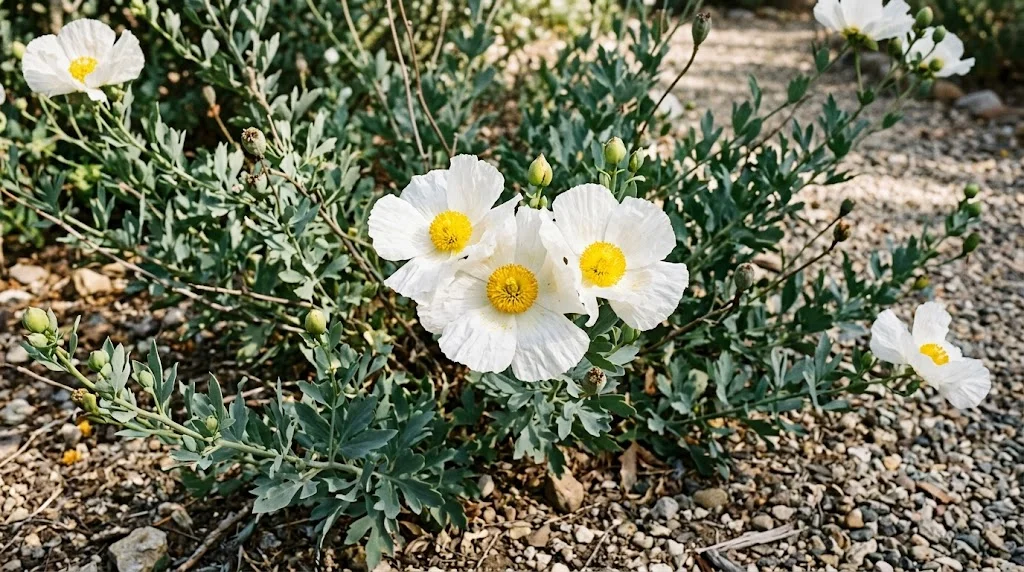

Overwintering Matilija poppy successfully depends on two factors above all others: winter temperature and soil drainage. The plant originates from relatively mild, seasonally dry regions, so persistent freezing combined with wet soil can be more damaging than a brief cold spell in a well-drained position. Established roots are generally more resilient than young container plants, but hardiness varies with local conditions and the maturity of the specimen. Preparing the plant for winter therefore begins with sensible siting and summer management rather than with last-minute protection after frost arrives.
In mild climates, overwintering can be remarkably straightforward. Top growth may remain partly present, or stems may decline gradually as temperatures fall. The underground system survives and produces vigorous new shoots when conditions improve. Excessive winter watering is usually a greater risk than insufficient fertilisation.
Colder gardens require more caution. Repeated freeze-thaw cycles can damage crowns and exposed roots, particularly where soil remains wet. A protected position near a warm wall may offer a useful microclimate without sacrificing sunlight. Even so, drainage remains essential because protection from wind cannot compensate for saturated soil.
Young plants deserve greater attention than long-established colonies. Their roots are shallower and occupy a smaller volume of soil, making them more vulnerable to temperature fluctuations. If planting in a marginal climate, spring establishment is often preferable because it provides more time for roots to develop before the first winter. A mature root system substantially improves the plant’s chances of recovery after cold damage.
Preparing plants in autumn
Reduce fertilisation well before the end of the growing season. Late applications of nitrogen can stimulate soft new growth that has little time to mature before cold weather. This tender tissue is more easily damaged by frost. Allowing the plant to slow naturally encourages stronger seasonal acclimatisation.
More articles on this topic
Irrigation should also decrease as temperatures fall and growth slows. The plant requires less water during dormancy, and cool soil loses moisture slowly. Continue watering only if autumn is unusually dry and the root zone genuinely needs moisture. Never maintain a permanently wet winter root zone in an attempt to protect the plant from cold.
Remove badly diseased or rotting plant material before winter. This improves airflow around the crown and prevents decaying stems from trapping moisture. Healthy stems can be left temporarily if they offer some structural protection and the climate is not excessively wet. The timing of full cutback can be adjusted to local conditions.
Inspect drainage before prolonged winter rain begins. Clear blocked channels, ensure containers can drain freely and prevent surrounding mulch from forming a water-holding basin around the plant. A few simple corrections in autumn can prevent major problems later. Winter survival is often determined below ground rather than by what happens to the visible stems.
Protecting roots and crowns
A light protective mulch can help moderate soil temperature in colder climates, but the material and depth require care. Thick, wet organic mulch placed directly against the crown can encourage decay. Apply protection around the wider root zone while leaving some breathing space at the plant base. Loose, dry material is generally safer than compacted, waterlogged mulch.
More articles on this topic
Mineral mulch can be particularly useful where winter wet is a serious concern. Gravel around the crown helps reduce surface splashing and does not retain as much moisture as thick compost. It also reflects the type of free-draining surface the species experiences naturally. Mineral mulch alone, however, cannot solve deep drainage problems.
In regions near the lower limit of the plant’s hardiness, temporary winter protection may be worthwhile. Breathable horticultural fleece can reduce exposure during exceptional cold events. Avoid wrapping the plant tightly in impermeable plastic because trapped moisture can create additional problems. Protection should allow ventilation and should be removed when severe weather passes.
Container-grown specimens need special attention because roots in pots experience lower temperatures than roots insulated by the ground. Move containers to a sheltered, bright location where they remain cool but are protected from the most severe freezing. Ensure pots continue to drain after rain. A container standing in a saucer of winter water is particularly vulnerable to root damage.
Winter pruning and spring recovery
There is no need to panic if frost kills the upper stems. Matilija poppy can regenerate from its underground system when the roots remain healthy. Wait until the extent of winter damage is clear before making final pruning decisions. Cutting back dead stems also makes room for vigorous new shoots.
In colder climates, late winter or early spring is often a practical time for major cleanup. Remove dead stems close to the base using clean, sharp tools. Avoid unnecessary digging around the crown because new shoots may already be developing below the surface. Disturbance to the roots can delay recovery.
Do not fertilise heavily the moment new growth appears. Allow the plant to demonstrate that its roots are functioning normally. If growth is strong, supplemental feeding may not be needed at all. If soil fertility is genuinely low, a modest spring application can support development without forcing weak growth.
Spring watering should also be gradual. Cold soils can remain moist long after the surface appears dry, so check conditions before irrigating. Once vigorous shoot growth begins and temperatures rise, water demand will increase. The plant can then transition back into its normal spring growth cycle.
Overwintering in containers and marginal climates
Growing Matilija poppy permanently in a container is more demanding than cultivating it in open ground. The species develops an extensive root system and eventually requires substantial space. A large, deep container with excellent drainage is essential. Even then, long-term vigour may be lower than in unrestricted soil.
Winter root protection becomes the main challenge in containers. Insulate the outside of the pot where severe frost is expected, or move it to a sheltered position protected from repeated freezing. The location should remain cool enough for normal dormancy rather than warm enough to force weak winter growth. Bright, unheated conditions are generally preferable to a warm indoor room.
Water extremely carefully during winter storage. The compost should not become bone dry for months, but it should never remain saturated. Because evaporation is low, relatively small amounts of water may be sufficient. Always confirm moisture below the surface before adding more.
In climates where outdoor survival is consistently uncertain, treating the plant as a protected container specimen may be the safest approach. However, gardeners should balance this against the species’ natural preference for unrestricted root space. Where a warm, sheltered, well-drained garden position exists, planting in the ground often produces stronger long-term growth. Microclimate can make a considerable difference to success.