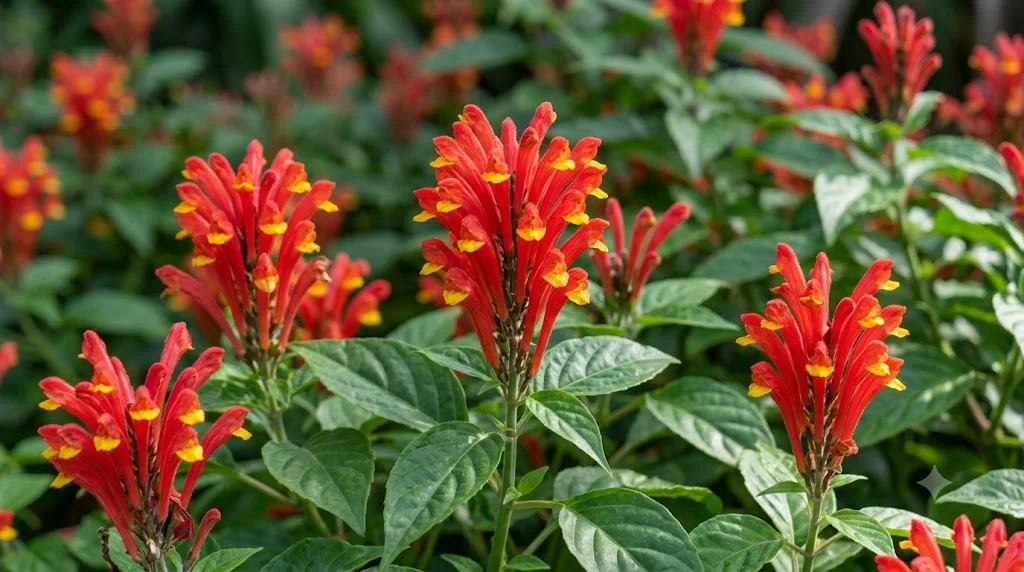

Costa Rican skullcap responds well to pruning because flowers are produced on actively growing, well-branched shoots. Without regular shaping, the plant may become tall, open, and uneven, particularly when it is grown indoors. Strategic cutting promotes a denser canopy, removes weak growth, and helps control the plant’s size. Timing is important because severe pruning immediately before flowering can remove developing bloom sites.
Choosing the right time to prune
Early spring is the best time for major structural pruning. Increasing light and warmth allow the plant to replace removed growth quickly. Winter-damaged, bare, or stretched stems can be shortened before active development begins. This timing also makes it easier to coordinate pruning with repotting.
Light pinching can be carried out throughout the active growing season. Removing the soft tip of a young shoot encourages buds below the cut to grow. This produces a fuller shape and increases the number of future flowering stems. Pinching should be reduced once a strong display of buds begins to form.
After a flowering flush, spent clusters and overly long shoots can be trimmed. This keeps the plant attractive and redirects growth into fresh side branches. Make each cut above a healthy leaf pair or outward-facing shoot. Avoid leaving long bare stubs that may die back.
Heavy cutting is best avoided during the darkest part of winter. The plant may not have enough light to replace lost foliage efficiently. Emergency pruning is still appropriate when stems are diseased, broken, or heavily infested. In those cases, plant health is more important than seasonal timing.
More articles on this topic
Using proper pruning techniques
Use sharp, clean scissors or pruning shears. Blunt tools crush stems and create ragged wounds that dry slowly. Disinfect the blades before beginning and after removing diseased material. Clean cuts heal more predictably and reduce the chance of infection.
Examine the plant’s natural framework before cutting. Remove dead stems first, followed by weak, crossing, inward-growing, or crowded shoots. This opens the centre of the plant and improves air movement. Healthy outward-growing branches can then be shortened to create the desired shape.
Do not remove more foliage than the root system can support losing at one time. A vigorous plant can tolerate substantial pruning, but a stressed or recently repotted specimen needs a gentler approach. Reducing the canopy by about one-third is often enough for routine renovation. More severe rejuvenation should be followed by warm, bright, stable care.
Cut just above a node where a pair of leaves or dormant buds is present. New shoots will usually emerge from this area. The direction of the upper buds influences the future shape of the branch. Choosing outward-facing growth points helps create an open, balanced canopy.
More articles on this topic
Caring for the plant after cutting back
After pruning, place the plant in bright indirect light. Adequate light supports compact new shoots, while harsh sun can dehydrate freshly cut stems. Maintain warm temperatures and moderate humidity. Avoid repeated relocation during the recovery period.
Water according to the reduced leaf area. A heavily pruned plant uses less moisture than it did before cutting. Allow the upper layer of the medium to dry slightly before watering again. Continuing the old irrigation schedule can leave the root zone excessively wet.
Delay strong fertilizer until new growth becomes visible. Freshly pruned plants do not need a large nutrient dose immediately. Once several shoots begin extending, a weak balanced feed can support development. Excess nitrogen may produce soft, elongated growth that requires further correction.
Pruned stem tips can be used as propagation material when they are healthy and free from flowers. Prepare them promptly and insert them into a clean, airy rooting medium. This allows routine maintenance to produce replacement plants at the same time. Regular pruning combined with propagation is an effective way to preserve vigorous young specimens.