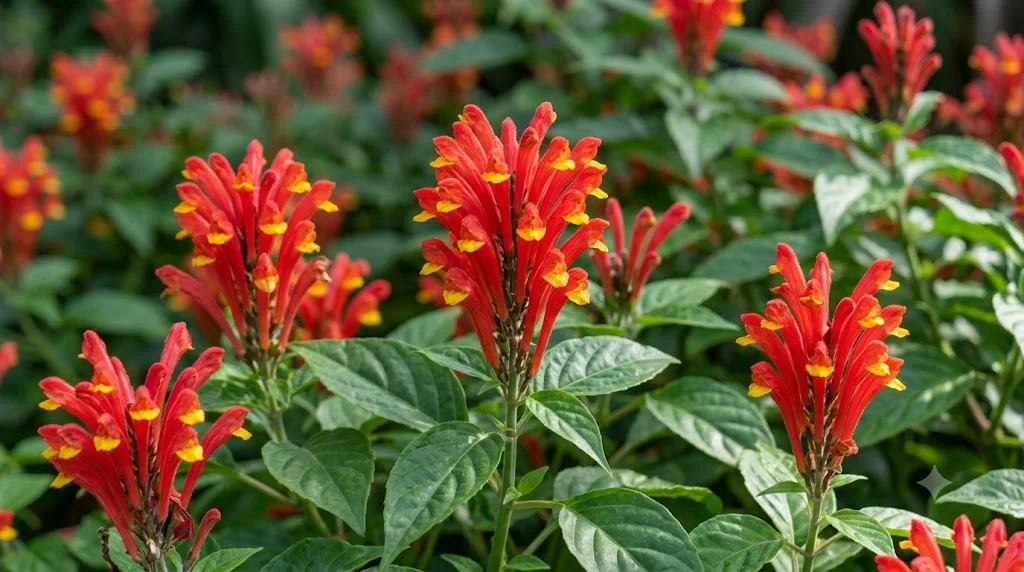

Costa Rican skullcap needs a dependable supply of moisture, but it reacts poorly to soil that remains saturated and airless. Its tropical appearance can tempt growers to water too frequently, especially when the upper leaves wilt in warm conditions. A successful routine keeps the root zone evenly moist while allowing excess water to escape freely. Fertilizer should support active growth without creating soft, weak stems or damaging the roots with accumulated salts.
Judging when the plant needs water
Check the growing medium with your finger rather than following a rigid schedule. Water when the upper two or three centimetres feel slightly dry while the lower root zone remains faintly moist. Small pots, warm rooms, and active summer growth usually require more frequent irrigation. Large containers and cool winter conditions dry much more slowly.
The weight of the container can become a useful guide with practice. A freshly watered pot feels noticeably heavier than one approaching the correct watering point. Learning this difference helps you assess moisture without repeatedly disturbing the soil. It is particularly helpful when decorative covers make the drainage holes difficult to inspect.
Leaf position can provide supporting information, but it should not be used alone. Slightly softer leaves may indicate developing dryness, while severe wilting suggests the plant has already experienced stress. Wilting in wet soil points toward root damage, low oxygen, or disease rather than simple thirst. Always examine the medium before adding more water.
Environmental conditions can alter water demand from one day to the next. Bright sun, moving air, flowering, and warm temperatures increase moisture loss. Cloudy weather, short winter days, and recent pruning reduce it. Flexible observation is therefore more reliable than watering on the same weekday throughout the year.
More articles on this topic
Using the correct watering technique
Apply water slowly across the entire surface of the potting medium. Continue until a small amount flows freely from the drainage holes. This method wets the full root ball and helps carry soluble residues downward. Small sips applied only to one area encourage shallow roots and uneven moisture.
Allow the container to drain completely after watering. Water left in a saucer or decorative pot should be emptied within a few minutes. Constant contact with standing water keeps the lower roots deprived of oxygen. Even a moisture-loving tropical plant can decline rapidly under such conditions.
Room-temperature water is preferable, especially during winter. Very cold water can chill the root zone and stress a warm-growing plant. If tap water is extremely hard, mineral deposits may accumulate in the growing medium and on leaf surfaces. Rainwater or filtered water can be useful where water quality causes repeated problems.
Watering directly onto the soil is safer than repeatedly soaking the foliage. Wet flowers can develop blemishes, and leaves that remain damp in cool air become more susceptible to fungal infection. Occasional rinsing can remove dust and pests, but the plant should then dry in a warm, ventilated location. Evening overhead watering is best avoided in cool indoor conditions.
More articles on this topic
Preventing overwatering and drought stress
Overwatering is determined by how long the roots remain wet, not simply by the volume applied during one irrigation. A thorough watering is safe when the medium drains well and is allowed to dry slightly afterward. Frequent watering of a poorly drained mix is far more dangerous. Root oxygen must be restored between irrigations.
Early signs of excess moisture include persistent yellowing, soft lower leaves, and a sour smell from the potting medium. The soil may stay dark and wet for many days despite warm conditions. Fungus gnats often appear when the surface remains continually damp. Correcting drainage and reducing frequency are more useful than applying extra fertilizer.
Drought stress usually causes limp foliage, dry leaf edges, and premature flower drop. Repeated severe drying can damage fine roots and make later watering less effective. A dehydrated root ball may shrink away from the sides of the container. In this case, water slowly in several stages until the medium is evenly rehydrated.
Alternating between complete dryness and saturation creates unstable growth. Leaves may yellow, buds may drop, and stems may become less resilient. A moderately consistent moisture level is healthier than dramatic fluctuations. Mulching the surface lightly with fine organic material may reduce evaporation in warm outdoor containers, but the crown should remain uncovered.
Selecting and applying fertilizer
A complete liquid fertilizer containing nitrogen, phosphorus, potassium, and essential micronutrients is suitable during active growth. Products formulated for flowering houseplants or balanced general feeding can both work well. The solution should usually be diluted to half or three-quarters of the label strength. Moderate, regular feeding is safer than occasional heavy doses.
Apply fertilizer only to moist growing medium. Feeding a dry root ball increases the risk of chemical injury because the solution becomes concentrated around vulnerable roots. Water lightly first if the soil has become drier than intended. Never use extra fertilizer as a quick response to unexplained yellowing.
During spring and summer, feeding every two to four weeks is generally sufficient for container-grown plants. Rapidly growing specimens in bright conditions may use nutrients more quickly. Plants in shade, cool rooms, or recently refreshed potting mix need less. The schedule should be adjusted according to growth rather than followed automatically.
Slow-release fertilizer can provide a steady nutrient supply when used carefully. It is important to measure the dose according to container size and product strength. Combining a full dose of slow-release fertilizer with frequent liquid feeding can lead to excessive salt levels. One controlled feeding system is usually easier to manage than several overlapping methods.
Adjusting nutrition and irrigation seasonally
Spring marks the beginning of increased water and nutrient demand. As new shoots appear, allow the plant to use moisture slightly faster before gradually increasing irrigation frequency. Begin feeding only after active growth is clearly visible. A plant that is still recovering from winter conditions should not be pushed with strong fertilizer.
Summer usually brings the highest demand for both water and nutrients. Outdoor containers may need daily inspection during hot weather, although not every inspection will result in watering. Feeding can continue regularly while foliage remains healthy and growth is vigorous. Extra water should not be used to compensate for an excessively hot or exposed position.
In autumn, reduce feeding as daylight and growth decrease. Continue watering thoroughly, but extend the interval between applications when the medium dries more slowly. Plants brought indoors should be checked because evaporation may change dramatically in the new location. A container that dried quickly outdoors may remain wet for many days inside.
Winter feeding should be minimal or suspended unless the plant is growing actively under strong light. Water only after the upper layer of the medium has dried slightly. Cold, saturated soil is particularly dangerous because roots use little oxygen and recover slowly from damage. Stable warmth and careful watering are more important than fertilizer during the darkest months.