
Planting a lemon tree correctly gives it the stable root environment needed for future growth, flowering and fruit production. Propagation can be equally rewarding, but the method chosen has a major influence on how quickly the new plant matures and whether it reproduces the qualities of its parent. Seed, cuttings, layering and grafting each have different practical uses. Careful hygiene, suitable timing and patient aftercare are essential whichever technique is selected.
Planting a lemon tree in a container
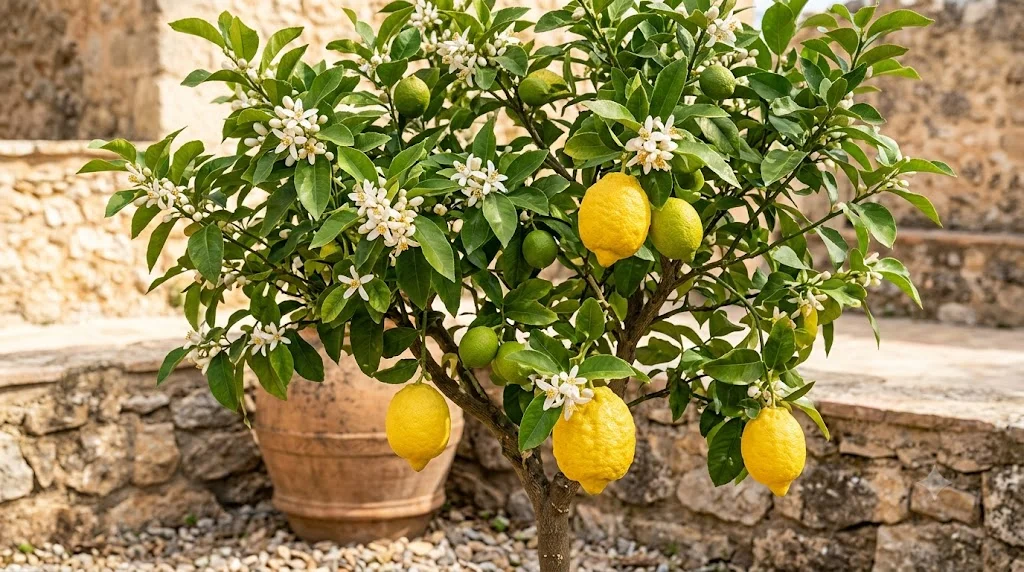
A container is the most practical choice in regions where winter frost makes permanent outdoor planting unsafe. Select a pot that is slightly wider than the existing root ball and deep enough to support a stable root system. Several large drainage holes are essential because lemon roots are sensitive to stagnant water. The container should also be strong enough to withstand repeated movement between seasonal positions.
Before planting, inspect the root ball and remove any broken or decayed roots with clean tools. Loosen tightly circling outer roots gently so that they can grow into the new medium. Avoid pulling the entire root mass apart, since excessive disturbance can delay establishment. If the compost is very dry, moisten it before transferring the plant.
Set the lemon tree at its original growing depth. Burying the trunk or graft union encourages decay and may allow unwanted shoots to develop from the rootstock. Fill around the root ball gradually, firming the medium lightly with your fingers. Heavy compression should be avoided because roots require air as well as water.
Water thoroughly after planting until moisture drains freely from the base. This first watering settles loose material and removes large air pockets around the roots. Place the tree in bright, filtered light for several days if the root system was disturbed. Strong feeding should begin only after the plant shows renewed growth.
More articles on this topic
Planting outdoors in a favourable climate
Permanent outdoor planting is suitable only where winter temperatures remain within the tolerance of the chosen lemon cultivar and rootstock. The site should receive abundant sun and be sheltered from cold prevailing winds. Avoid low areas where cold air collects or where rainwater remains after storms. A gentle slope or raised position often provides better drainage and frost protection.
The planting hole should be wider than the root ball but no deeper. Digging a very deep hole and filling it with loose compost can cause the tree to sink after watering. The upper root flare should remain level with or slightly above the surrounding soil. In heavy ground, planting on a low mound can improve oxygen supply to the roots.
Backfill primarily with the existing soil rather than creating a pocket of rich material. A sharp contrast between the planting hole and the surrounding ground may discourage roots from spreading outward. Organic matter is more effective when incorporated over a broad area or applied as surface mulch. Fresh manure should never be placed directly against citrus roots.
After planting, water slowly and deeply to settle the soil. Apply an organic mulch over the root zone while leaving a clear space around the trunk. A young tree may need temporary staking in an exposed position, but the ties must allow slight movement. Regular watering during establishment is vital because a newly planted root system cannot yet explore a large soil volume.
More articles on this topic
Growing lemon trees from seed
Lemon seeds are easy to germinate when they are fresh and have not been allowed to dry completely. Remove the seed from ripe fruit, wash away all pulp and plant it soon afterwards. A sterile, airy propagation medium reduces the risk of rot. Warmth and even moisture encourage germination, while waterlogged conditions rapidly damage the embryo.
Plant each seed at a shallow depth and keep the container in bright indirect light. Covering the pot with a clear lid can reduce moisture loss, but daily ventilation is needed to prevent mould. Germination may occur within several weeks, although timing varies. Once seedlings emerge, they should receive progressively stronger light to prevent weak, elongated growth.
Seed-grown lemon trees are genetically variable and may not produce fruit identical to the original lemon. They also have a long juvenile phase and can take many years to flower. For this reason, seed propagation is most useful for experimentation, ornamental plants or potential rootstocks. It is not the best method when predictable fruit quality is the main goal.
Seedlings should be transplanted when they have developed several true leaves and a manageable root system. Lift them carefully because young citrus roots are brittle. Pot each seedling individually in a free-draining mixture and maintain gentle warmth. Weak plants should not be overfed, since excessive salts can damage their developing roots.
Propagating by cuttings, layering and grafting
Semi-ripe cuttings can produce clones of a desirable lemon tree. Choose healthy, non-flowering shoots that have begun to firm but are not old and heavily woody. Remove the lower leaves, retain a small upper leaf area and insert the cutting into a sterile propagation medium. Rooting hormone can improve consistency, particularly where humidity and temperature are difficult to control.
Cuttings require high humidity around the leaves but adequate air around the base. A propagator or clear cover helps limit water loss while roots are absent. Condensation should not be allowed to remain constantly heavy, because stagnant moisture encourages fungal decay. Bottom warmth and bright indirect light usually improve rooting speed.
Air layering is useful when a larger propagated plant is desired. A section of bark is wounded on a healthy branch, treated if necessary and surrounded with moist rooting material. Once a strong root mass forms, the branch is cut below the rooted section and potted separately. This technique keeps the shoot supported by the parent plant during root formation.
Grafting and budding are the standard commercial methods because they combine a known fruiting cultivar with a selected rootstock. The rootstock may contribute disease tolerance, size control, soil adaptation or increased vigour. Successful grafting requires compatible plant material, precise cuts and close cambial contact. Shoots emerging below the graft must always be removed because they belong to the rootstock rather than the chosen lemon variety.