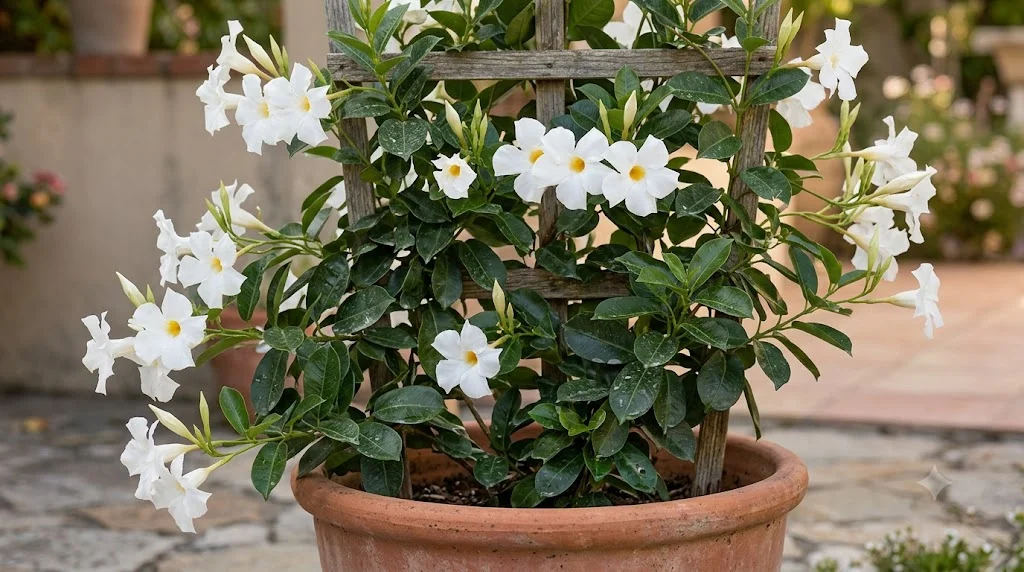

Pruning Chilean jasmine keeps its flexible stems within the available space, encourages a balanced framework, and removes growth damaged by winter or pests. The climber usually flowers on new seasonal shoots, so thoughtful cutting can support flowering rather than reduce it. Timing is important because severe pruning during active bud development may remove much of the potential display. The best results come from combining light training throughout summer with more deliberate structural work before vigorous spring growth.
Timing and preparing for pruning
Late winter or early spring is generally the most suitable time for major pruning. At this stage, damaged wood is easier to identify and the plant has not yet invested heavily in new growth. Wait until the risk of severe frost has largely passed if the plant is outdoors. Fresh cuts and newly stimulated buds can be vulnerable to cold.
Light corrective pruning can be carried out during summer. Remove shoots that are broken, badly tangled, or growing into paths and gutters. Avoid repeatedly shortening every new stem because this can reduce flowering. Training is often preferable to cutting when a shoot can be redirected.
Use sharp, clean secateurs that make smooth cuts without crushing the stems. Disinfect the blades before working on another plant, particularly if disease is suspected. Wear gloves because the sap may irritate sensitive skin. Keep ties and support materials ready so retained stems can be secured immediately.
Before making the first cut, identify the main framework and decide which stems should remain. Remove growth in stages rather than cutting the entire plant at once. Step back periodically to assess the shape. This approach prevents accidental removal of important structural shoots.
More articles on this topic
Structural pruning and renewal
Begin by removing dead, diseased, and damaged stems. Cut back to healthy tissue or to the point where the stem joins a sound branch. Dead wood is often dry and brittle, while living tissue remains flexible and green beneath the surface. Dispose of diseased material away from the planting area.
Next, thin crowded stems that cross or rub against one another. Constant friction creates wounds that can admit disease. Retain shoots that are well spaced and easy to tie to the support. An open framework also improves air circulation and light penetration.
Older plants may become bare at the base while growth concentrates high on the support. Renewal pruning can stimulate shoots from lower buds. Remove one or two of the oldest stems near the base rather than cutting all mature growth simultaneously. Gradual renewal preserves flowers while rebuilding the framework.
A severely overgrown plant can tolerate substantial reduction if it is otherwise healthy. However, recovery requires a functioning root system, adequate light, and careful watering. Hard pruning should not be combined with root disturbance or heavy feeding. Allow new shoots to develop before selecting the strongest replacements.
More articles on this topic
Training after cutting back
New stems should be tied loosely as they lengthen. Arrange them in a fan, horizontal pattern, or broad spiral to cover the support evenly. Shoots trained sideways often produce flowering laterals along a greater length. Vertical training alone can concentrate growth at the top.
Use soft ties that do not cut into expanding stems. Check them several times during the season and replace any that become tight. Wire or thin string can injure the bark and restrict sap flow. Reusable rubber or fabric ties are safer for permanent frameworks.
Pinching the tips of selected young shoots can encourage branching. This technique is useful when a fuller plant is desired, but excessive pinching delays extension and may reduce flower production. Allow some shoots to grow freely before deciding where branching is needed. The objective is controlled abundance rather than constant restriction.
After pruning, water according to the plant’s reduced leaf area. A heavily cut plant loses less water and may require less frequent irrigation for a short period. Resume feeding when active new growth is clearly visible. Balanced aftercare allows the plant to rebuild without producing weak, overfed shoots.