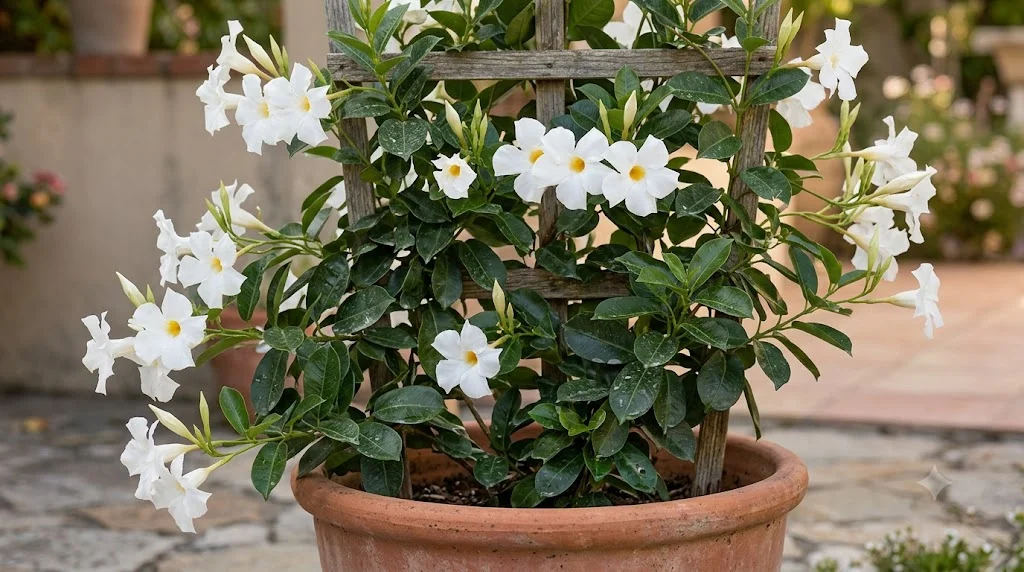

Winter management determines whether Chilean jasmine returns with strong growth and abundant flowers the following season. In regions with mild winters, an established plant may survive outdoors in a sheltered position, while colder climates require indoor protection or more substantial insulation. The goal is to keep the plant cool enough to rest but protected from damaging frost and prolonged root saturation. Preparing gradually in autumn is far safer than reacting after the first severe freeze has already arrived.
Preparing the plant in autumn
Begin winter preparation as temperatures decline and shoot growth naturally slows. Reduce feeding so that new growth has time to firm before cold weather. Continue watering, but allow the surface of the compost to dry slightly between applications. Sudden complete dryness can cause unnecessary leaf loss.
Inspect the plant carefully for aphids, mites, whiteflies, scale insects, and mealybugs before moving it indoors. Pests multiply quickly in protected winter conditions where natural predators are absent. Remove dead leaves and faded flowers from the plant and compost surface. Treat any infestation before placing the plant near other overwintering specimens.
Long, unruly shoots may be shortened enough to make the plant manageable. Avoid severe pruning in autumn unless stems are damaged or the plant cannot be moved safely. Heavy cutting can stimulate vulnerable new growth if conditions remain mild. Structural pruning is generally better delayed until late winter or early spring.
Acclimatise container plants gradually when possible. Moving directly from bright outdoor sun into a dark room can cause extensive leaf drop. A sheltered porch, cool greenhouse, or bright entrance area can serve as a transition space. The gradual change helps the foliage adjust to lower light and humidity.
More articles on this topic
Overwintering indoors
A bright, cool, frost-free room is usually the best winter location. Temperatures that remain moderately cool allow the plant to rest without suffering freezing damage. Very warm living rooms encourage weak growth and create favourable conditions for pests. Strong winter light is especially important if the plant remains warm.
Water much less frequently than in summer because growth and evaporation are reduced. Check the compost rather than following a fixed schedule. Water only when the upper layer has dried, then drain away any excess. Roots kept constantly wet in cool conditions are highly susceptible to decay.
Do not apply routine fertiliser while the plant is resting. Nutrients cannot compensate for low light and may encourage thin, pale shoots. Resume feeding only when stronger spring growth becomes visible. If new shoots appear in midwinter, increasing light is more useful than increasing fertiliser.
Ventilate the room on mild days without exposing the plant to icy draughts. Stagnant humid air encourages mould and stem problems. Remove yellow leaves promptly and continue checking for pests. Small infestations are much easier to control before spring growth becomes dense.
More articles on this topic
Protecting outdoor plants
Outdoor survival depends heavily on the severity and duration of frost. A mature plant against a warm wall may tolerate conditions that would kill a young specimen in an exposed bed. The root zone should be protected with a thick organic mulch before the soil freezes. Keep the mulch slightly away from the crown to reduce rot risk.
The lower stems can be wrapped with breathable horticultural fleece. Several loose layers provide better insulation than a tight, compressed covering. Plastic should not be wrapped directly around living stems because condensation can accumulate beneath it. Supports must be strong enough to remain stable during winter storms.
Excellent drainage is essential for outdoor overwintering. Cold, wet soil is often more damaging than dry cold because saturated roots lose oxygen and deteriorate. Divert excess rainwater away from the planting area where possible. Raised planting positions are advantageous in regions with wet winters.
After severe frost, avoid cutting the plant back immediately. Damaged upper growth can provide limited protection to lower buds during later cold spells. Wait until the danger of hard frost has passed before assessing the true extent of injury. Living stems remain firm and usually show green tissue beneath a lightly scratched surface.
Returning the plant to active growth
Increase watering gradually as daylight lengthens and buds begin to swell. A dormant root system cannot use summer quantities of water immediately. Keep checking drainage because cool spring weather may slow drying. Consistency is more important than rapid stimulation.
Prune dead, weak, and poorly positioned stems before vigorous growth begins. Make cuts back to healthy buds or sound framework branches. Clean tools between plants to reduce disease transmission. Tie retained stems back to their support before new shoots become tangled.
Container plants can be repotted or top-dressed in spring. Check whether roots are congested and whether the compost has broken down. Move into a slightly larger pot only when necessary. Fresh compost restores structure and provides a modest supply of nutrients.
Harden the plant off before leaving it outdoors permanently. Place it outside during mild days and return it to protection when cold nights are forecast. Gradually increase exposure to sun and wind over one or two weeks. This prevents leaf scorch and reduces the shock of changing conditions.