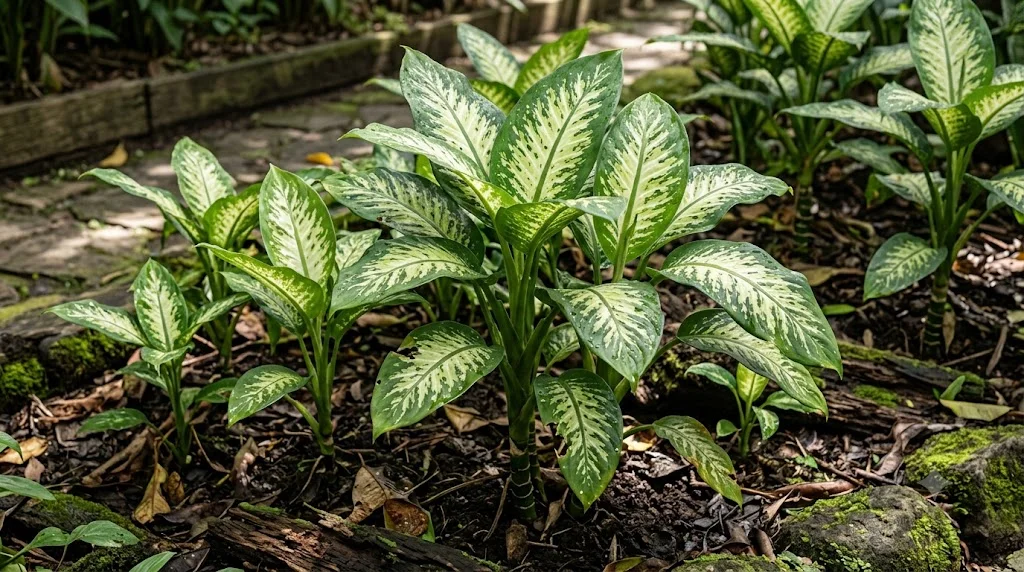

Dumb cane problems are easiest to control when they are identified before extensive damage occurs. Regular inspection of leaves, stems, compost, and roots reveals subtle changes that might otherwise be missed. Many symptoms are caused by unsuitable care rather than infectious disease, so diagnosis should begin with the growing environment. Prompt isolation and careful treatment can prevent pests or pathogens from spreading to nearby plants.
Distinguishing care problems from disease
Yellow leaves do not automatically indicate a pathogen. An occasional older lower leaf may yellow naturally as the plant redirects resources into new growth. Widespread yellowing, however, may result from overwatering, poor drainage, cold conditions, or insufficient light. Examine the compost and recent care routine before using any treatment.
Brown leaf tips are commonly associated with dry air, irregular watering, fertiliser salts, or mineral-rich water. Crispy pale patches can develop after exposure to strong direct sun. Dark, water-soaked areas are more suggestive of chilling or infection. The texture, position, and progression of damage provide valuable diagnostic clues.
Drooping can result from both drought and root failure. A dry, lightweight pot points toward thirst, while wet compost and soft roots suggest rot. Watering without checking the root zone may worsen the true problem. Accurate diagnosis depends on combining several observations rather than relying on a single symptom.
Poor growth may reflect compacted compost, exhausted nutrients, low temperature, or inadequate light. A plant that produces small pale leaves is often receiving too little energy or nutrition. Weak elongated stems usually indicate insufficient brightness. Correcting the environment often restores growth without chemical intervention.
More articles on this topic
Root and stem diseases
Root rot develops when roots remain wet and oxygen-deprived for long periods. Affected roots become brown or black, soft, and easily detached. The plant may wilt even though the compost is moist because decayed roots cannot transport water. A sour smell from the pot is another warning sign.
Treatment requires removing the plant from its container and discarding the old compost. Cut away all clearly rotten roots using a disinfected blade. Repot the remaining healthy tissue into fresh, porous growing medium and a clean pot. Water conservatively until new roots and leaves begin to form.
Stem rot can begin at the soil line or around a damaged section of cane. The tissue may turn dark, soft, or translucent before collapsing. Cold wet conditions and contaminated tools increase the risk. Healthy upper sections should be cut above the diseased area and propagated if the base cannot be saved.
Prevention depends on drainage, hygiene, and appropriate watering. Never allow the pot to stand in water, and avoid burying the stem deeper during repotting. Sterilise cutting tools between plants. Discard severely infected material rather than placing it in household compost.
More articles on this topic
Leaf spots and bacterial problems
Fungal or bacterial leaf spots may appear as small dark lesions surrounded by yellow tissue. Spots can enlarge and merge when foliage remains wet in cool, stagnant air. Splashing water may spread organisms from one leaf to another. Crowded conditions further increase the risk.
Remove badly affected leaves with clean tools and isolate the plant. Improve air circulation while keeping it away from cold drafts. Water the compost directly rather than wetting the foliage. Dispose of diseased leaves in a sealed household waste bag.
Bacterial infections may produce wet-looking, rapidly expanding patches with unpleasant odours. Chemical control is often unreliable once infection is advanced. Removing affected tissue early offers the best chance of limiting spread. Severe cases may require disposal of the entire plant.
Preventive care is more effective than repeated pesticide use. Keep leaves clean and dry, maintain stable warmth, and avoid handling wet foliage. Do not reuse contaminated compost or pots without cleaning them thoroughly. Inspect newly purchased plants before placing them near an established collection.
Spider mites, thrips, and other sap-feeding pests
Spider mites thrive in warm, dry indoor air. Their feeding creates fine pale stippling that can make leaves look dusty or faded. Delicate webbing may appear between veins, leaf stalks, and stems during heavy infestations. The undersides of leaves should be checked with a magnifying glass.
Thrips scrape and feed on young tissue, causing silvery scars, distorted leaves, and dark specks of waste. They can hide inside unfurling leaves where sprays may not reach them. Adults may move quickly when disturbed. Sticky traps help detect flying individuals but do not control larvae within the plant.
Aphids occasionally colonise tender new growth. They gather around young leaves and release sticky honeydew that can support sooty mould. Their feeding may twist or weaken emerging tissue. Small colonies can often be removed with water or a damp cloth.
Treatment should be repeated because eggs and immature stages may survive the first application. Insecticidal soap or horticultural oil can be effective when applied thoroughly according to the label. Test any product on a small area before treating the whole plant. Keep the specimen isolated until several inspections reveal no further activity.
Mealybugs, scale insects, and fungus gnats
Mealybugs appear as white, cotton-like clusters in leaf axils, along stems, or around roots. They feed on sap and may cause yellowing, weak growth, and sticky deposits. Small infestations can be removed with a cotton swab lightly moistened with alcohol. Larger infestations require repeated whole-plant treatment.
Scale insects resemble small brown, tan, or grey bumps attached firmly to stems and leaf surfaces. Mature scales are protected by waxy coverings that make them difficult to kill with a single spray. Gently remove visible insects before applying an appropriate treatment. Inspect hidden areas because young scales spread before becoming stationary.
Fungus gnats are small dark flies that hover around moist compost. Adults are mostly a nuisance, but larvae feed on organic material and may damage delicate roots in heavy infestations. Allowing the upper compost layer to dry reduces their preferred habitat. Yellow sticky traps and biological larval controls can support management.
Persistent pest problems often indicate that the growing environment needs improvement. Overly wet compost favours gnats, while dry air encourages mites. Weak, stressed plants are generally less resistant to feeding damage. Combining environmental correction with repeated targeted treatment gives the best results.