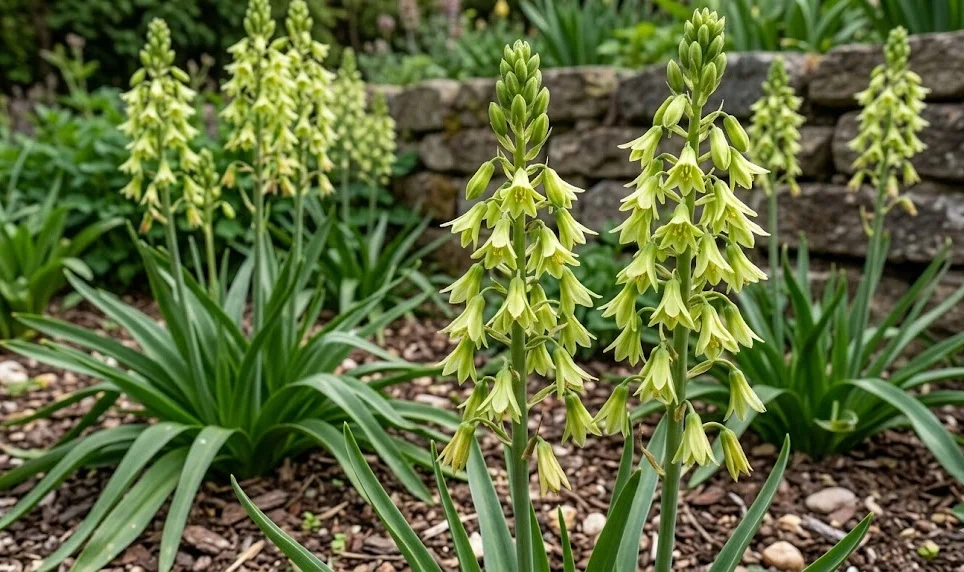

Green-flowered giant chincherinchee is generally resilient when grown in bright, airy conditions and sharply draining soil. Most serious problems arise when bulbs remain cold and wet, allowing fungal or bacterial decay to enter through roots or damaged tissue. Protected plants may also attract sap-feeding insects, while outdoor specimens can be injured by slugs and snails. Early recognition, isolation, and improvement of growing conditions are more effective than relying solely on chemical treatments.
A healthy plant has firm leaves, a solid bulb, and a fresh, earthy smell around the compost. Any sudden softening, yellowing, collapse, or unpleasant odour should be investigated promptly. Waiting for visible damage to spread through the entire plant greatly reduces the chance of recovery. Regular inspection is therefore an essential part of preventive care.
New plants and bulbs should be kept separate from established collections for a short observation period. Pest eggs and early infections may be difficult to detect at purchase. Clean pots and tools should be used during planting and division. Reusing contaminated compost can introduce problems immediately.
Environmental correction is often the first step in treatment. Increase ventilation, reduce unnecessary watering, and remove dead organic material. A pesticide or fungicide cannot compensate for permanently saturated compost. Long-term recovery depends on eliminating the conditions that allowed the problem to develop.
Bulb and basal rot
Bulb rot usually begins at the basal plate, root zone, or an injured area of the bulb. The affected tissue becomes soft, discoloured, and sometimes foul-smelling. Leaves may yellow rapidly or detach with little resistance. In advanced cases, the bulb collapses and cannot be saved.
More articles on this topic
Excess moisture is the most common trigger. Dense compost, blocked drainage holes, oversized pots, and water-filled saucers all increase risk. Cool temperatures slow evaporation and make overwatering particularly dangerous. A bulb that is dormant or newly planted is especially vulnerable because it uses very little water.
Remove a suspicious bulb from its container and wash or brush away the compost carefully. Cut out localised rot with a sterilised blade until only clean, firm tissue remains. Allow the wound to dry and callus in a shaded, airy place. Replant only if a substantial healthy basal section remains.
Severely affected bulbs should be discarded rather than placed back among healthy plants. The pot must be disinfected before reuse, and contaminated compost should not be recycled. Clean cutting tools after every contact with diseased tissue. These precautions reduce the movement of pathogens between specimens.
Fungal leaf spots and grey mould
Leaf spot diseases appear as brown, grey, or dark lesions that may enlarge under humid conditions. Some spots develop yellow halos, while others remain dry and sharply defined. Splashing water can distribute spores from one leaf to another. Crowded foliage encourages infection by restricting air movement.
More articles on this topic
Grey mould may form a fuzzy coating on ageing flowers, damaged leaves, or soft stems. It thrives in cool, damp, stagnant air. Spent flowers left among the foliage provide ideal material for colonisation. The fungus can then spread into healthier tissues.
Remove affected leaves and flowers with clean scissors. Avoid tearing them away, as this can create additional wounds. Improve ventilation and keep the foliage dry during watering. Dispose of diseased material rather than adding it to a cool compost heap.
A suitable fungicide may be considered when infection continues despite cultural correction. Treatment should be selected according to local regulations and the plant’s growing environment. Always follow the label regarding dilution, protective equipment, and application intervals. Repeated preventive spraying is rarely necessary when humidity and sanitation are managed well.
Viral and bacterial concerns
Viral infection may cause mottled leaves, irregular streaking, distorted growth, or reduced flowering. Symptoms can resemble nutrient deficiency, temperature stress, or insect feeding. There is no reliable curative treatment for a systemically infected bulb. Suspicious plants should be isolated while other causes are evaluated.
Sap-feeding insects can transmit viruses between plants. Tools used for cutting flowers or dividing bulbs may also spread contaminated sap. Sterilise blades between specimens, especially in a mixed bulb collection. Avoid propagating offsets from plants showing persistent unexplained distortion.
Bacterial soft rot produces rapid tissue collapse and a strong unpleasant smell. Warm, wet conditions favour its development. Damaged bulbs are particularly susceptible because bacteria enter through wounds. Once extensive soft rot develops, recovery is unlikely.
Dispose of badly affected bulbs and disinfect all surfaces that contacted the material. Avoid handling healthy plants with contaminated gloves or tools. Reduce injuries during repotting and allow separation wounds to dry before planting. Prevention is far more successful than treatment for bacterial decay.
Sap-feeding insects
Aphids may gather on young leaves, buds, and flower stems. They remove sap, distort tender growth, and leave sticky honeydew behind. Ant activity can indicate an aphid colony even when the insects are difficult to see. Heavy infestations weaken flowers and increase the risk of virus transmission.
Mealybugs appear as white, cotton-like clusters around leaf bases, bulb scales, and roots. Their protected hiding places make them difficult to eliminate with a single treatment. Root mealybugs may cause unexplained decline despite apparently correct watering. Inspect the root ball whenever a plant remains weak without obvious above-ground pests.
Scale insects form small brown, tan, or pale shells attached to leaves and stems. They may be mistaken for natural markings until sticky residue or yellowing becomes noticeable. Light infestations can be removed manually with a damp cloth or soft brush. Larger infestations require repeated treatment because newly hatched insects are more vulnerable than mature scales.
Isolate infested plants and inspect neighbouring specimens carefully. Insecticidal soap, horticultural oil, or an approved systemic product may be appropriate depending on the pest and local regulations. Treatments must reach hidden leaf bases without saturating the bulb crown. Repeat applications according to the product instructions and the pest’s life cycle.
Slugs, snails, and other physical damage
Slugs and snails can chew irregular holes in leaves and damage emerging flower stems. Their feeding is most common on outdoor plants in damp, sheltered positions. Silvery trails often reveal their presence. Young shoots can be destroyed before they fully emerge.
Reduce hiding places by removing fallen leaves, boards, and dense debris around containers. Inspect plants after dusk or during wet weather when molluscs are active. Physical barriers and approved baits can provide additional protection. Any bait must be used carefully where children, pets, or wildlife are present.
Rodents may investigate dormant bulbs, particularly when containers are stored in sheds or garages. Protective mesh or secure shelving can reduce access. Avoid storing bulbs beside animal feed or other materials that attract rodents. Regular inspection prevents unnoticed damage during dormancy.
Mechanical injury can resemble disease when leaves are bruised, scorched, or torn by wind. Sunburn often creates pale, dry patches after abrupt exposure to intense light. Cold injury may cause translucent or collapsed tissue. Reviewing recent environmental changes helps distinguish these problems from infectious disease.