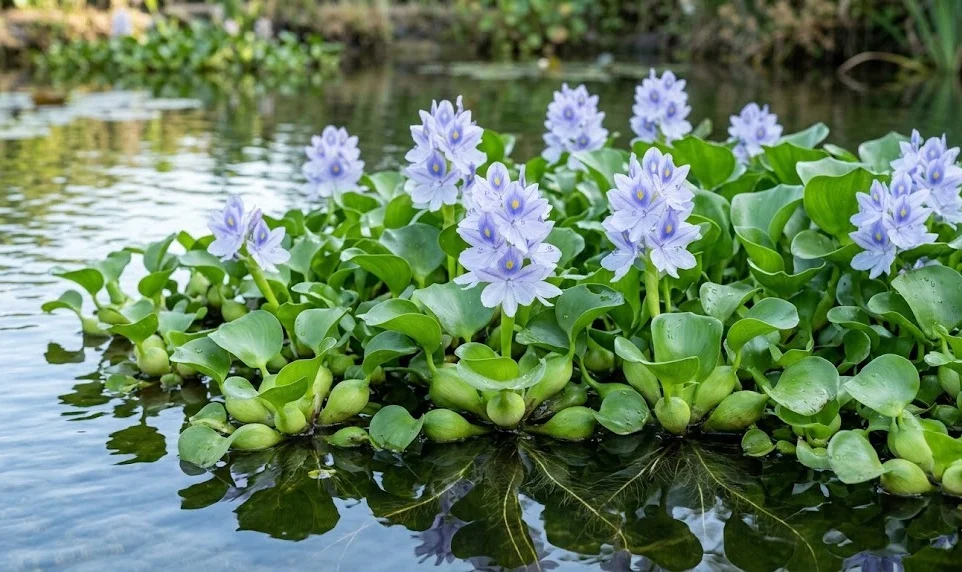

Water hyacinth is one of the most striking floating aquatic plants for ornamental ponds, water gardens, and controlled container displays. Its glossy rounded leaves, swollen buoyant petioles, and lavender-blue flowers make it look effortless, but strong growth still depends on the right balance of warmth, light, nutrients, and water quality. In favorable conditions, the plant can multiply with impressive speed, which is both useful for quick surface coverage and risky where escape into natural waterways is possible. Responsible cultivation always begins with containment, regular thinning, and awareness of local regulations.
Understanding the growth habit of water hyacinth
Water hyacinth is a free-floating aquatic perennial that lives with its roots suspended directly in the water column. It does not need soil in the usual garden sense because its roots absorb dissolved nutrients from the water. The plant forms rosettes of glossy leaves, and mature specimens produce inflated leaf stalks that help them remain buoyant. This floating structure allows the plant to move with wind and water currents unless it is kept within a defined pond area or container.
The root system is often underestimated because it remains hidden below the floating foliage. Healthy roots are usually dark, feathery, and extensive, creating a large surface area for nutrient uptake. These roots can also shelter aquatic microorganisms and small pond organisms, which contributes to the biological life of a garden pond. At the same time, dense root masses can trap organic debris, so routine inspection helps prevent stagnation and decay.
Growth is fastest in warm, nutrient-rich water with strong light and little competition. In ideal summer conditions, daughter plants form on stolons and quickly create a floating mat. This mat can shade the water, limit algae in some situations, and provide visual softness around pond edges. If allowed to cover too much of the surface, however, it can reduce oxygen exchange and stress fish or submerged plants.
The plant’s vigor is the central point of water hyacinth care. A specimen that looks modest in spring can become dominant by midsummer. For ornamental use, the goal is not maximum growth but controlled, healthy, attractive growth. Good care means maintaining enough plants for beauty and filtration value while removing excess growth before it creates ecological or pond-management problems.
More articles on this topic
Choosing the right growing environment
Water hyacinth performs best in still or slow-moving water. Ornamental ponds, tubs, barrels, and lined water features are all suitable when they remain warm and receive adequate sunlight. Strong currents, splashing fountains, or waterfalls can damage the floating rosettes and keep the roots from hanging naturally. A calm surface allows the plant to spread evenly and maintain balanced foliage.
Water depth is less important than surface conditions because the plant floats rather than anchors. It can grow in shallow basins or deeper ponds as long as its roots remain submerged. In very shallow water, roots may touch the bottom, but this is not required for healthy growth. The more important factor is that water levels remain stable enough to prevent plants from being stranded on dry margins.
Temperature is a major limiting factor in temperate climates. Water hyacinth grows actively in warm weather and slows dramatically when water becomes cool. Chilly nights can yellow the leaves, weaken roots, and make the plant vulnerable to rot. For this reason, it is usually treated as a seasonal pond plant in regions with cold winters unless overwintered indoors.
Containment should be planned before planting rather than after the plant has multiplied. A small floating ring, pond basket without soil, or sectioned-off water surface can keep plants in place. In open ponds, routine removal is essential so that water hyacinth does not cover the entire surface. Gardeners near natural streams, canals, lakes, or wetlands must be especially careful to prevent any plant material from escaping.
More articles on this topic
Light, warmth, and seasonal performance
Water hyacinth is a high-light plant and generally produces its best foliage and flowers in full sun. Strong light supports compact rosettes, firm leaf stalks, and abundant energy for flowering. In partial shade, plants may survive but often stretch, produce fewer flowers, and multiply more slowly. Deep shade usually results in weak growth, pale leaves, and poor ornamental value.
Warmth works together with light to drive performance. Even with bright sun, cool water can hold the plant back. Once daytime temperatures rise and the water warms consistently, growth becomes noticeably faster. This is why water hyacinth may seem slow after spring placement and then suddenly expand during summer.
Seasonal changes should guide care routines. In spring, newly acquired plants may need a short adjustment period before strong growth begins. In midsummer, thinning and nutrient management become the main tasks because growth can become excessive. Toward autumn, declining temperatures usually reduce flowering and trigger yellowing leaves.
Flowering is attractive but not always predictable in small ornamental systems. Plants are more likely to bloom when they receive strong sun, warmth, and moderate nutrient availability. Overcrowded mats may produce many leaves but fewer flowers because individual crowns compete for light and space. Regular spacing can encourage stronger rosettes and improve the chance of visible flower spikes.
Water quality and nutrient balance
Water hyacinth thrives in water that contains available nitrogen and phosphorus. In nutrient-poor water, the plant may remain small, pale, and slow-growing. In very nutrient-rich water, it may expand aggressively and require frequent thinning. The best ornamental balance is moderate fertility that supports healthy green foliage without producing an unmanageable mat.
Clear water is not always a sign of ideal nutrition for floating plants. A crystal-clear pond with little organic matter may lack the dissolved nutrients that water hyacinth needs. In such cases, plants can become yellow even when light and temperature are suitable. A carefully measured aquatic plant fertilizer may help, but it should be used cautiously in ponds with fish.
Water quality also depends on oxygen exchange and organic load. Dead leaves, decaying roots, and trapped debris can reduce water quality if they are left to decompose in large quantities. Removing yellowing foliage before it sinks helps keep the pond cleaner. This is especially important in small containers, where water volume is limited and changes occur quickly.
Chemical treatments should be approached with care. Many algicides, pond clarifiers, or fish medications can affect aquatic plants indirectly by changing water chemistry. Water hyacinth may also respond poorly to sudden shifts in pH or nutrient concentration. A stable, biologically balanced pond usually produces better long-term growth than one that is repeatedly corrected with harsh interventions.
Routine maintenance through the growing season
The most important maintenance task is thinning. Water hyacinth should never be allowed to cover the entire water surface for long periods. A moderate cover can shade water and look attractive, but complete coverage can reduce oxygen exchange and limit light for submerged plants. Removing excess rosettes every week or two during peak growth is often better than waiting for a dense mat to form.
Old leaves should be removed regularly. Yellowing, torn, or collapsing leaves can rot quickly in warm water. Trimming them away keeps the plant display fresh and reduces the amount of organic matter entering the pond. This simple habit also makes it easier to notice early signs of nutrient deficiency, pest damage, or cold stress.
Roots should be inspected occasionally, especially in small water gardens. Healthy roots may be long and dark, but they should not smell foul or feel slimy from decay. If roots become clogged with sludge, gently swishing the plant in clean pond water can remove loose debris. Avoid aggressive washing because the roots are part of the plant’s nutrient-absorbing system.
Plant spacing affects both appearance and health. Crowded rosettes may push each other upward, deform leaves, and block light from younger growth. Leaving small gaps between plants improves air movement over the water surface and gives each crown room to develop. A pond with fewer, stronger rosettes often looks better than one packed with weak, overlapping plants.
Caring for water hyacinth in containers and ponds with fish
Container culture is one of the safest and most manageable ways to grow water hyacinth. A large tub, half barrel, or lined bowl can provide an attractive display without the risks associated with open waterways. Containers warm quickly, which benefits growth, but they also experience faster water-quality changes. Regular water checks and removal of debris are therefore especially important.
In containers, nutrient supply must be monitored more actively than in established ponds. Rainwater alone may not contain enough dissolved minerals for strong growth. If the plant becomes pale, small doses of aquatic fertilizer can restore color and vigor. Fertilizer should be added gradually because too much can trigger algae or overly rapid plant expansion.
In fish ponds, water hyacinth can provide shade and root cover, but it must be managed carefully. Fish may nibble at roots, stir debris into the root zone, or contribute nutrients through waste. The plant can help absorb some of those nutrients, but it should not be treated as a complete filtration system. Mechanical and biological filtration remain important in stocked ponds.
Oxygen balance deserves special attention when fish are present. Dense surface coverage can reduce gas exchange, especially during hot nights when oxygen levels naturally fall. Keeping open water visible is a practical rule for healthier pond conditions. In warm periods, aeration can further reduce stress on fish and aquatic life.
Responsible cultivation and long-term control
Water hyacinth is admired as an ornamental plant, but it is also known worldwide for invasive behavior in suitable climates. Its ability to reproduce rapidly makes it a serious environmental concern where winters are mild and natural waterways are nearby. Gardeners should always check local rules before buying, selling, or moving it. In some regions, cultivation, transport, or disposal may be restricted.
Responsible disposal is essential. Removed plants should never be dumped into drains, streams, ponds, rivers, wetlands, or roadside ditches. The safest approach is to compost only where local guidance permits and where plant material cannot wash away. In colder climates, drying or freezing removed plants before disposal can reduce the chance of accidental survival.
Long-term care is easier when the plant is treated as a managed crop rather than a decorative object left to grow unchecked. Regular removal, containment, and seasonal review prevent most problems. A healthy pond display might contain only a small controlled group of plants at any given time. The aim is visual impact without ecological risk.
The best water hyacinth care combines horticultural skill with environmental responsibility. Strong light, warm water, moderate nutrients, and routine thinning produce beautiful plants. Careful containment and disposal protect local ecosystems. When those principles are followed, water hyacinth can be enjoyed as a dramatic, fast-growing aquatic feature without allowing its natural vigor to become a problem.