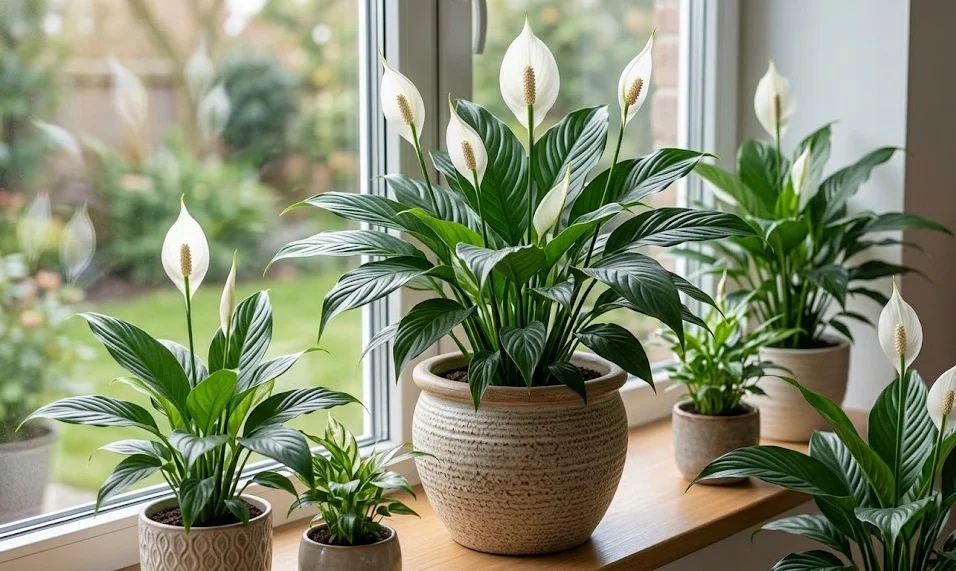

Peace lilies do not need heavy pruning, but careful trimming keeps them healthy, attractive, and productive. Most pruning involves removing yellow leaves, damaged foliage, and spent flower stems. Cutting back should be precise rather than aggressive because the plant relies on its leaves to produce energy. Good technique protects the crown and reduces the risk of infection.
When pruning is necessary
Pruning is needed when leaves turn fully yellow, brown, torn, or diseased. These leaves no longer contribute effectively to the plant and can make the pot look untidy. Removing them also improves airflow around the crown. Clean maintenance helps the plant direct energy toward healthy growth.
Spent flower stems should be removed once the spathe fades, turns green, or begins to brown. The stem can be cut close to the base without damaging surrounding leaves. This prevents the plant from wasting resources on an aging bloom structure. It also keeps the plant looking fresh.
Brown tips alone do not always require removing the whole leaf. If the leaf is otherwise healthy, only the dry tip can be trimmed for appearance. Follow the natural shape of the leaf so the cut looks less obvious. However, repeated brown tips indicate a care issue that pruning alone will not solve.
Major cutting back is rarely appropriate for a healthy peace lily. Removing too many leaves at once reduces photosynthesis and slows recovery. If the plant is overgrown, division is usually better than severe pruning. Structural problems should be corrected through repotting, placement, and care rather than drastic cutting.
More articles on this topic
Tools and pruning technique
Use clean, sharp scissors or pruning snips. Dirty tools can spread pathogens from one plant to another. Wiping blades with alcohol before use is a simple precaution. Sharp tools also make cleaner cuts that heal more easily.
Cut yellow or dead leaves as low as possible near the base of the stem. Avoid pulling leaves by force because this can damage the crown. If a stem resists, cut it rather than tearing it. The crown is the plant’s growing center and should remain intact.
When removing flower stems, trace the stalk down to its origin and cut close to the base. Leaving long stubs can look unattractive and may dry unevenly. Short clean cuts are neater and reduce dead material. Work slowly in dense plants so healthy stems are not accidentally cut.
For cosmetic trimming of brown tips, remove only the dry tissue and a very small margin beyond it. Do not cut deeply into healthy green tissue unless necessary. The trimmed edge may brown slightly again, which is normal. Correcting the underlying cause is more important than repeated reshaping.
More articles on this topic
Recovery and care after cutting back
After pruning, place the peace lily in stable bright indirect light. The plant should not be exposed to direct sun while recovering from heavy trimming. Normal light helps it replace lost foliage. Low light slows recovery and may prolong the unattractive phase.
Watering should remain balanced after pruning. A plant with fewer leaves may use slightly less water because transpiration is reduced. Check the soil before watering and avoid keeping the mix constantly wet. Overwatering after heavy pruning can stress the roots.
Do not fertilize immediately after severe trimming unless the plant is actively growing and otherwise healthy. Fertilizer does not repair damaged tissue. It supports new growth only when roots are functioning well. Wait for signs of fresh leaves before resuming a light feeding routine.
Pruning should be paired with diagnosis. Yellow leaves may result from age, but they can also indicate overwatering, underwatering, low light, cold stress, or nutrient imbalance. Brown tips may point to dry air, salt buildup, inconsistent watering, or water quality issues. The best pruning routine improves appearance while the care routine solves the cause.