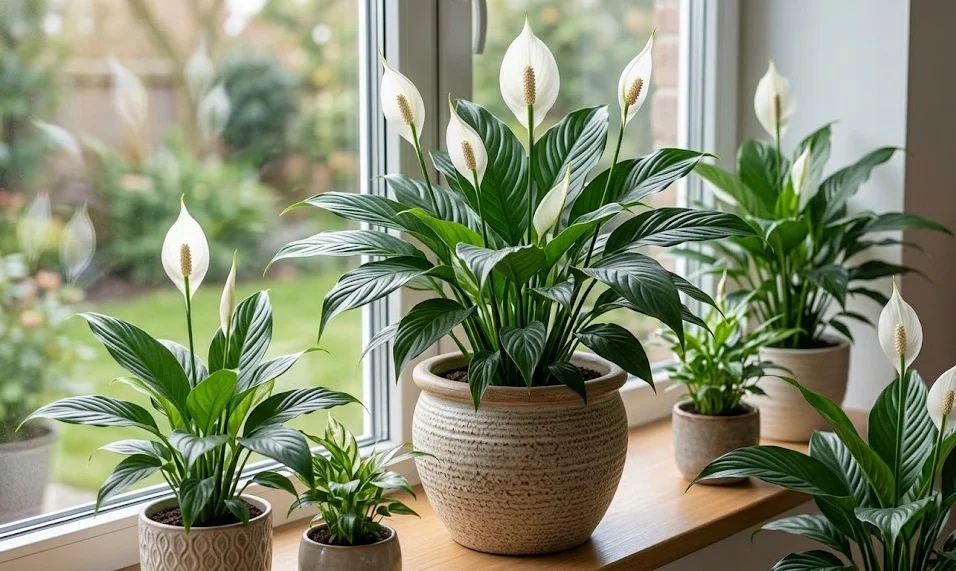

Watering and fertilizing are the two care practices that most strongly influence peace lily health, yet both are often overdone. The plant needs moisture, but its roots also need oxygen. It benefits from nutrients, but excessive fertilizer can damage roots and leaf tips. A professional routine is based on observation, season, and the condition of the potting mix.
Reading the plant before watering
Peace lilies are known for wilting when thirsty. This makes them easy to read, but it can also encourage neglect followed by heavy rescue watering. Severe wilting should not become routine because it stresses the plant. A healthier approach is to water before the leaves collapse dramatically.
The soil surface gives useful information, but it does not tell the whole story. The top may look dry while the lower root zone is still moist. Checking with a finger, wooden skewer, or moisture meter can give a better picture. The goal is to water when the upper portion has dried slightly but the full root ball has not become bone dry.
Leaf posture can also help guide timing. Slightly softer leaves may indicate that the plant is ready for water. Yellowing leaves combined with wet soil suggest the opposite problem. A peace lily can wilt from both dryness and root damage caused by overwatering, so soil condition must always be checked.
Seasonal changes are important. In summer, higher light and warmth increase water use. In winter, reduced light and cooler rooms slow growth and evaporation. The same plant may need water much less often in December than in June.
More articles on this topic
Proper watering technique
Water should be applied evenly across the soil surface. This encourages roots to grow throughout the pot rather than only in one moist channel. Pouring a small amount into one spot can leave parts of the root ball dry. Thorough watering supports a more resilient root system.
Allow water to drain freely from the bottom of the pot. This confirms that the root ball has been moistened and that the drainage holes are functioning. After drainage, empty the saucer or outer pot. Roots left sitting in water are at high risk of suffocation and rot.
If the soil has become very dry, it may repel water at first. In that case, water slowly in stages or soak the pot briefly until the medium rehydrates. After soaking, let the pot drain completely. Hydrophobic soil should be corrected because it creates uneven moisture patterns.
Avoid using ice cubes to water peace lilies. Tropical roots are not adapted to cold shock, and melting ice waters only a small area. Room-temperature water is more appropriate and less stressful. A consistent, thorough watering method is far better for long-term health.
More articles on this topic
Water quality and common moisture problems
Peace lilies can be sensitive to water quality. Hard water, high dissolved salts, and some treated tap water can contribute to brown leaf tips. This does not mean tap water is always harmful, but sensitive plants may benefit from filtered, distilled, or rainwater. Using better-quality water is especially helpful when other care factors are already correct.
Salt accumulation can occur when minerals from water and fertilizer build up in the potting mix. A white crust on the soil surface or pot rim may be a visible warning sign. Flushing the pot with clean water can help remove excess salts. The pot must drain well during this process.
Overwatering is not simply giving too much water at one time. It usually means watering too often, using a poor-draining mix, or keeping the plant in a pot without drainage. Roots need oxygen between watering cycles. Constant saturation leads to weak roots, yellow leaves, and eventual decline.
Underwatering creates a different pattern. Leaves may wilt sharply, edges may crisp, and older foliage may yellow after repeated drought stress. The root ball can shrink away from the pot sides, making future watering less effective. Correcting underwatering requires rehydration followed by a more consistent schedule.
Fertilizer type, timing, and strength
A balanced liquid houseplant fertilizer is suitable for most peace lilies. Products with similar proportions of nitrogen, phosphorus, and potassium can support general growth. A formulation for foliage or flowering houseplants can also work when used lightly. The exact brand matters less than proper dilution and timing.
During spring and summer, fertilizing once every four to six weeks is often enough. In bright conditions with active growth, the plant may use nutrients more efficiently. In low light, it needs less fertilizer because growth is slower. Feeding should always match the plant’s actual growth rate.
Dilution is important. Many peace lilies respond well to fertilizer mixed at half strength or weaker. Strong feeding may produce quick growth at first but can damage roots over time. Brown tips after fertilizing often indicate that the concentration is too high or salts are accumulating.
Fertilizer should usually be applied to already moist soil. Feeding a very dry root ball can increase the risk of root burn. Watering lightly before fertilizing helps distribute nutrients more evenly. This practice is especially useful for plants in smaller pots.
Adjusting the routine through the year
In spring, new leaves often appear more regularly. This is the ideal time to resume light feeding if it was paused during winter. Watering frequency may also increase as daylight strengthens. Care should be adjusted gradually rather than suddenly.
In summer, peace lilies may grow quickly if they receive bright indirect light and stable humidity. They may need more frequent watering, especially in warm rooms. Fertilizer can continue at a moderate rate, but the plant should be observed for salt stress. Flushing the soil occasionally can keep the root zone balanced.
In autumn, growth usually slows as light decreases. Fertilizer should be reduced, and watering intervals often become longer. The plant may still look healthy, but its demand for water and nutrients is lower. Respecting this slowdown prevents winter root problems.
In winter, the safest routine is conservative. Water only when the mix has dried slightly, and avoid feeding unless the plant remains actively growing under strong artificial light. Keep the plant away from cold drafts and heating vents. This seasonal restraint helps the peace lily enter spring with healthy roots.