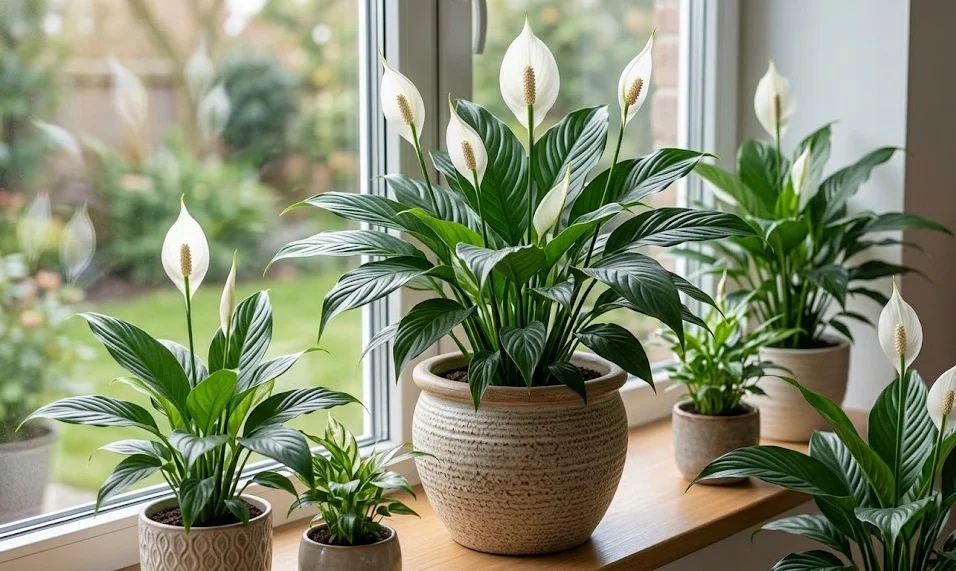

Planting a peace lily well from the beginning gives the plant a stronger root system, better moisture balance, and a smoother adjustment to indoor conditions. Propagation is usually done by division rather than cuttings, because the plant grows in clumps from rooted crowns. When the timing, soil, and handling are correct, division is straightforward and highly successful. A careful approach protects both the original plant and the new sections.
Preparing the right planting materials
The first requirement is a container with drainage holes. Peace lilies need consistent moisture, but they cannot tolerate water trapped around their roots for long periods. A plastic nursery pot placed inside a decorative outer pot is often practical. This allows easy watering, drainage, and inspection.
The potting mix should be light, moisture-retentive, and well aerated. A quality indoor potting mix can be improved with perlite, fine bark, or coco coir chips. These materials keep the root zone open and reduce compaction. A heavy garden soil is not suitable because it drains poorly and may contain pests or pathogens.
Choose a pot size that suits the root mass. A newly purchased or divided plant should not be placed in an oversized container. Too much unused soil stays wet and creates unfavorable conditions for roots. A slightly snug pot is often safer than one that is excessively large.
Before planting, inspect the roots and crown. Healthy roots are usually firm and light-colored to tan, while damaged roots may be black, mushy, or foul-smelling. Any unhealthy roots should be trimmed with clean tools. This inspection helps prevent old problems from being carried into the new pot.
More articles on this topic
Planting a peace lily correctly
Place a layer of fresh potting mix in the bottom of the container. Set the peace lily so the crown sits at approximately the same depth it grew before. Planting too deeply can trap moisture around the crown and encourage rot. Planting too high can expose roots and make watering less effective.
Fill around the roots gently with potting mix. The soil should be settled enough to remove large air gaps, but it should not be compressed hard. Roots need both moisture and oxygen to establish well. Light firming with the fingers is usually sufficient.
After planting, water thoroughly until excess water drains from the bottom. This settles the mix around the roots and reveals whether drainage is working properly. Empty the saucer after the pot has drained. Leaving water standing beneath the pot can undo the benefits of a good planting mix.
The newly planted peace lily should be placed in bright indirect light. Strong direct sun immediately after planting can stress the leaves while the roots are adjusting. The plant may look slightly limp for a few days after handling. Stable warmth, moderate humidity, and even moisture help it recover quickly.
More articles on this topic
Propagating by division
Division is the most reliable way to propagate peace lilies at home. The plant naturally forms multiple crowns over time, and each crown can become a separate plant if it has roots attached. This method preserves the characteristics of the parent plant. It also rejuvenates crowded specimens.
The best time to divide is during spring or early summer when the plant is entering active growth. At this stage, recovery is faster because light levels and temperatures are improving. Division can be done at other times if necessary, but recovery may be slower. Avoid dividing a plant that is already severely stressed unless repotting is needed to save it.
Remove the plant from its pot and gently loosen the root ball. Look for natural separations between crowns rather than tearing randomly through the center. Some sections may pull apart by hand, while others need a clean knife. Each division should have several leaves, a healthy crown, and a usable root system.
Pot each division into an appropriately sized container with fresh mix. Very small divisions should be placed in small pots so the medium does not remain wet for too long. Water them well after planting and keep them in bright indirect light. During the first few weeks, avoid fertilizer until new growth indicates recovery.
Aftercare for newly planted divisions
New divisions need steady moisture but careful drainage. Their reduced root systems cannot absorb water as quickly as a mature clump. The mix should remain lightly moist rather than saturated. Checking the soil frequently is better than following a fixed schedule.
Humidity can make a major difference during establishment. Divisions lose moisture through their leaves while their roots are still recovering. A humidifier, plant grouping, or clear humidity cover used briefly can reduce stress. Any cover must be ventilated to prevent fungal problems.
Do not expect immediate flowering after division. The plant first needs to rebuild roots and foliage. Once the division becomes established and receives enough light, it may flower again in a future growth cycle. Patience produces stronger, longer-lived plants.
Watch for warning signs during the first month. Persistent wilting, yellowing, sour-smelling soil, or blackened leaf bases may indicate root or crown trouble. Early correction usually involves improving drainage, reducing water, and removing damaged tissue. With the right aftercare, most peace lily divisions settle in well and begin producing fresh leaves.