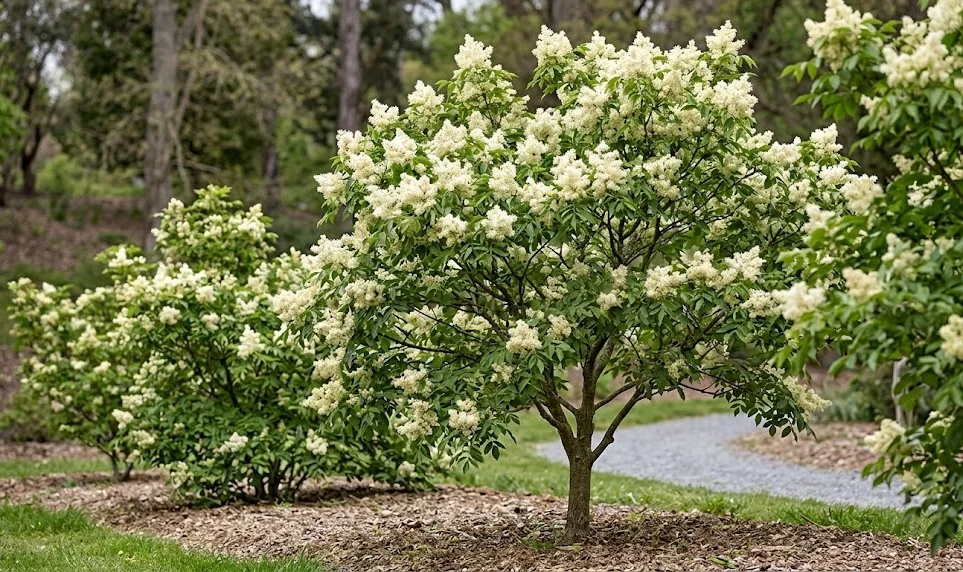

Flowering ash usually responds best to restrained, well-timed pruning rather than heavy cutting. Its natural form is one of its strengths, so the goal should be to guide the crown, remove defects, and preserve a healthy structure. Severe topping or repeated hard reduction can weaken the tree, spoil its shape, and encourage unstable regrowth. A thoughtful pruning approach keeps flowering ash elegant, safe, and capable of producing its characteristic spring display.
When and why to prune
The best reasons to prune flowering ash are structural improvement, removal of dead wood, and correction of crossing or damaged branches. Pruning should have a clear purpose before any cut is made. Cutting simply to reduce size often indicates that the tree was planted in too small a space. Good pruning respects the natural habit of the species.
Late winter or early spring is often the most suitable time for routine structural pruning. The branch framework is visible, and the tree can begin closing cuts as growth starts. Dead, broken, or hazardous branches can be removed whenever they are noticed. Timing should balance tree health with practical safety.
Avoid heavy pruning immediately before periods of severe heat or drought. Removing too much foliage can reduce the tree’s ability to produce energy and regulate moisture. Young or stressed trees should be treated especially gently. A tree recovering from drought, poor planting, or disease should not be forced through unnecessary cutting.
Flowering should also be considered when planning pruning. Since the tree is valued for its spring bloom, careless cutting can reduce the number of flowering shoots. Light structural pruning is usually compatible with good flowering. Severe or poorly timed pruning may sacrifice ornamental value for more than one season.
More articles on this topic
Building a strong crown
Young flowering ash trees benefit from gradual training that encourages a balanced framework. Competing leaders, narrow branch angles, and crossing shoots should be corrected early when cuts are small. This reduces the need for large wounds later. Early attention creates a safer and more attractive mature tree.
The central structure should be assessed from several angles before pruning. A branch that looks unnecessary from one side may be important for balance when viewed from another. Professional pruning is not only about removing wood; it is about understanding the future crown. The best cuts are often the ones that prevent later problems.
Lower temporary branches may sometimes be retained while the tree is young because they help the trunk thicken. They can be shortened or removed gradually as the tree develops. Removing too many lower branches too early can create a thin, top-heavy specimen. Patience produces better structure.
Cuts should be made just outside the branch collar without leaving long stubs. The branch collar contains tissue that helps the tree close the wound. Flush cuts damage this protective zone, while stubs die back and can invite decay. Proper technique is as important as correct timing.
More articles on this topic
Cutting back mature trees
Mature flowering ash should be pruned conservatively. Large cuts create large wounds, and older trees close them more slowly. If a mature tree requires major reduction, the reason should be carefully examined. Sometimes professional assessment is safer than repeated amateur cutting.
Crown thinning may be useful when branches are congested, but it should not strip the tree. The aim is to improve light penetration and air movement while preserving natural form. Over-thinning can expose branches to sunscald and wind stress. A balanced crown still needs enough foliage to feed the tree.
Crown lifting can be done if lower branches interfere with paths, lawns, or visibility. This should be gradual, especially on young trees. Removing large lower limbs from a mature specimen can leave prominent wounds and alter the tree’s proportions. Small, planned adjustments are better than sudden drastic changes.
Topping should be avoided because it destroys natural structure and often produces weak regrowth. The new shoots that follow topping may attach poorly and create future hazards. It also spoils the graceful appearance that makes flowering ash valuable. When size is the issue, replacement with a more suitable tree is often better than repeated hard cutting.