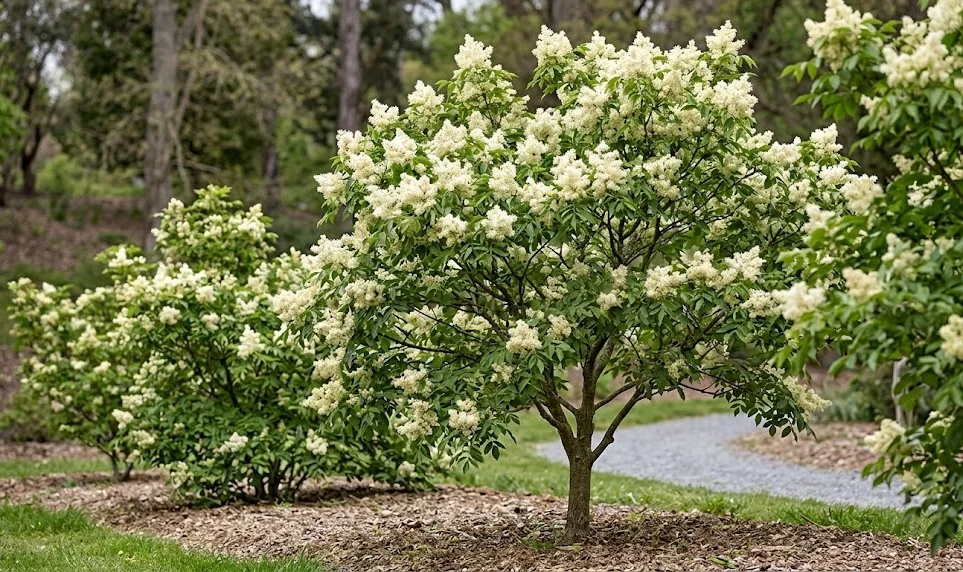

Flowering ash is often described as drought tolerant, but that description applies mainly to well-established trees with a developed root system. In the first years after planting, water management is one of the most important parts of successful care. Fertilization should be restrained and purposeful, because this tree usually performs better with balanced soil conditions than with heavy feeding. The goal is to support steady growth, healthy leaves, strong shoots, and reliable flowering without forcing weak or excessive development.
Understanding water needs
A newly planted flowering ash needs consistent moisture while roots are expanding beyond the original root ball. The surrounding garden soil may appear moist, yet the root ball itself can become dry and hard. This is especially common with container-grown trees planted during warm weather. Regular checking during the first season prevents hidden drought stress.
Deep watering is more effective than frequent surface wetting. Water should penetrate the full depth of the active root zone rather than only dampening the top layer. A slow flow from a hose or watering bag can be very useful during establishment. The aim is to encourage roots to grow outward and downward.
Established flowering ash can handle dry periods better than many ornamental trees, but it is not immune to extreme drought. Long heat waves, poor soil, and reflected heat from paving can still cause stress. Leaves may dull, curl, scorch, or drop early when water supply becomes insufficient. A timely deep watering can prevent unnecessary weakening.
The best watering rhythm depends on soil type, weather, tree age, and exposure. Sandy soils dry quickly and may need more frequent attention, while clay soils hold water longer but can become poorly aerated if saturated. Rather than following a fixed schedule blindly, observe the soil and the tree together. Good watering is responsive, not mechanical.
More articles on this topic
Seasonal watering practice
In spring, flowering ash benefits from adequate moisture as buds open, shoots extend, and flowers develop. If the weather is naturally wet, irrigation may not be required. However, young trees should still be monitored because their root zone is limited. Early-season drought can reduce growth before the tree has built enough energy.
Summer is the season when water stress is most likely. During hot spells, deep watering every several days may be necessary for newly planted trees. Mature trees usually need less intervention, but prolonged drought can justify occasional soaking. Watering in the morning or evening reduces immediate evaporation and allows better soil penetration.
In autumn, the watering need generally declines as temperatures cool and growth slows. Still, dry autumn weather should not be ignored, particularly for trees planted that year. A tree entering winter severely dehydrated may be more vulnerable to cold and wind damage. Moderate soil moisture before dormancy supports better winter resilience.
In winter, flowering ash normally requires little or no irrigation in open ground. Natural precipitation is usually enough in climates where the species is commonly grown. The main concern is avoiding waterlogged soil rather than adding extra moisture. Roots need oxygen even during the dormant season.
More articles on this topic
Fertilizing young and established trees
Flowering ash does not usually demand rich feeding if planted in suitable soil. A spring top-dressing of mature compost can improve soil structure and provide a gentle nutrient supply. This approach supports biological activity rather than creating a sudden flush of soft growth. It is especially useful in dry or compacted garden soils.
Young trees should not be pushed too aggressively with nitrogen. Fast top growth can develop before the roots are ready to support it. This imbalance may make the tree more vulnerable to drought and wind. Slow, sturdy growth is preferable during establishment.
For established trees, fertilizer should only be used when there is a clear reason. Poor leaf color, weak shoot extension, or reduced vigor may indicate a deficiency, but they may also point to water or root problems. Soil testing is the most reliable way to understand nutrient status. Guessing with fertilizer can waste effort and sometimes worsen stress.
If a balanced slow-release fertilizer is used, spring is generally the best time. Feeding late in the growing season can stimulate tender shoots that do not harden properly before cold weather. The dose should remain moderate and evenly distributed over the root zone. Concentrated fertilizer near the trunk is not beneficial.
Mulch and soil moisture stability
Mulch is one of the most useful tools for managing flowering ash in dry or exposed gardens. It reduces evaporation, buffers soil temperature, and limits weed competition. Organic mulches also break down gradually and contribute to soil structure. A broad, even layer is more effective than a small ring close to the trunk.
The mulch should be kept several centimeters away from the bark. Constant contact between wet mulch and the trunk can encourage decay or create shelter for pests. The root zone needs protection, but the trunk base needs air. This small detail can prevent serious long-term problems.
Mulching is especially valuable in the first years after planting. It helps maintain more even moisture while the roots are still shallow and limited. In hot summers, the difference between mulched and bare soil can be substantial. Trees under mulch often show less leaf scorch and steadier growth.
Mulch should be renewed as it decomposes, but old layers should not build up into a thick mound. Too much mulch can reduce air exchange and keep the surface overly wet. A moderate layer, maintained consistently, is enough. The best mulching looks simple but is carefully managed.
Signs of imbalance
Underwatering often appears as wilting, curling, dull foliage, brown leaf edges, or early leaf drop. In young trees, symptoms can develop quickly during heat waves. If the soil is dry below the surface, deep watering should be provided rather than light sprinkling. Recovery may take time, especially if stress has continued for weeks.
Overwatering can produce yellowing leaves, poor growth, and root decline. It is sometimes mistaken for drought because damaged roots cannot supply the crown properly. If the soil smells sour or remains wet for long periods, drainage should be investigated. Adding more water in this situation will not help.
Excess fertilizer may cause long, weak shoots, lush but vulnerable foliage, and reduced natural balance. It can also increase water demand, which becomes a problem during dry weather. Flowering ash should look vigorous but not forced. Controlled growth is usually healthier and more attractive.
Poor flowering can result from shade, stress, immature age, or excessive pruning, and nutrition is only one possible factor. Before fertilizing to encourage bloom, examine light exposure and general tree health. A stressed tree should be stabilized before being pushed. Proper care works best when the cause of the problem is understood.