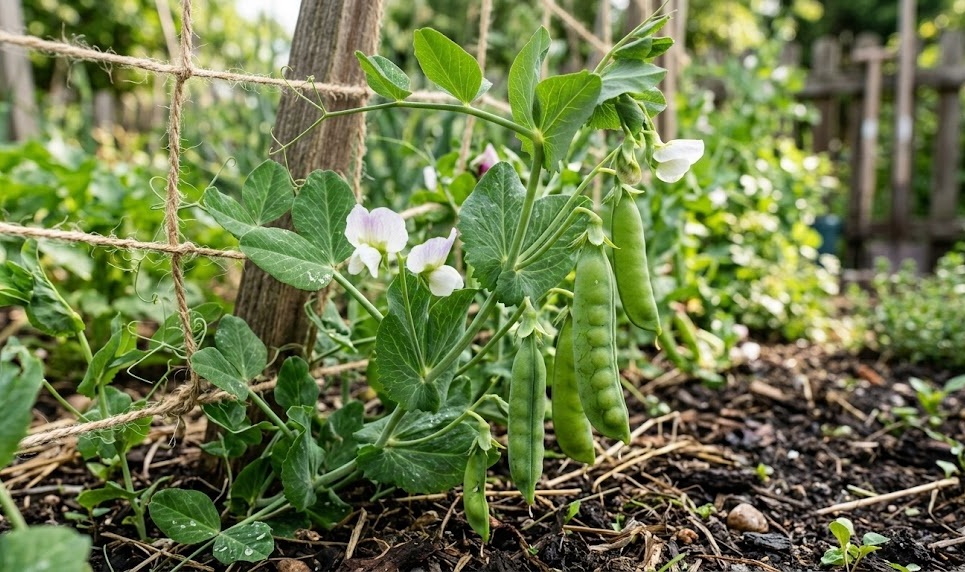

Pruning and cutting back green peas is a specialized technique that many home gardeners overlook, yet it offers significant benefits for plant health and yield. You should understand that while peas are not as demanding as grapevines or fruit trees, a little strategic intervention can go a long way. Proper pruning helps manage the density of the vines, improves air circulation, and can even encourage a second flush of growth under the right conditions. By learning how and when to use your garden shears, you can take your pea-growing skills to a professional level.
The primary reason to prune your pea vines is to prevent the growth from becoming a tangled, impenetrable mess that invites disease and hides pests. You will find that when the foliage is too dense, the interior leaves often turn yellow and die because they are shaded out by the outer growth. By thinning out some of the excess stems, you allow light to reach the lower parts of the plant and ensure that every leaf is contributing to the energy pool. This simple act of maintenance keeps the entire vine productive and reduces the likelihood of a major fungal outbreak in your garden.
Airflow is perhaps the most critical factor in keeping your peas healthy, and pruning is the most direct way for you to improve it. You should aim to create a structure where the wind can move freely through the vines, quickly drying any moisture from rain or morning dew. This is especially important for varieties that are susceptible to powdery mildew or other foliage-based diseases that thrive in stagnant, humid air. A well-pruned pea patch feels airy and light, providing a less hospitable environment for pathogens and a more pleasant experience for you during harvest.
Another technique involves “pinching out” the growing tips of the young pea plants once they have established several sets of true leaves. You can use your thumbnail and forefinger to remove the very top of the main stem, which triggers the plant to send out more lateral branches. This creates a bushier, more compact plant with more potential flowering sites and, eventually, a higher total yield of pods. While it might feel counterintuitive to remove part of a healthy plant, the long-term results in terms of productivity are well worth the initial hesitation.
Strategic thinning for health and harvest
Thinning should begin when the plants are still relatively young and you can clearly see the individual stems emerging from the ground. You should identify any weak, spindly, or damaged vines and remove them at the soil level to give the stronger plants more room to flourish. This reduces the competition for water and soil nutrients, allowing the best specimens to reach their full potential without being crowded out. A professional garden is characterized by quality over quantity, and thinning is the primary tool you use to achieve that balance.
More articles on this topic
As the season progresses, you may notice that some of the lower leaves of the pea vines begin to naturally yellow or show signs of early disease. You should proactively prune these aging or infected leaves to prevent any problems from spreading upward to the healthy new growth. Removing these spent leaves also opens up the base of the plant, making it easier for you to see the soil and monitor moisture levels more accurately. Keeping the bottom twenty centimeters of the vine relatively clear is a professional habit that pays dividends in plant longevity.
Managing the “suckers” or excessive lateral growth is another aspect of pruning that can help focus the plant’s energy on pod development. You should look for small, unproductive stems that are growing in the crotches of the main branches and consider removing some of them if the plant looks too crowded. By limiting the total number of stems, you ensure that the plant has enough resources to fill every pod with large, sweet peas. This focused energy results in a higher-quality harvest and a more organized garden space that is easier for you to maintain.
If you are growing peas on a specific trellis or support system, you can use pruning to guide the vines and keep them within the desired boundaries. You should trim back any adventurous stems that are reaching out into pathways or tangling with neighboring plants that they shouldn’t be touching. This keep the garden looking neat and professional while preventing the vines from becoming damaged by foot traffic or garden machinery. A well-behaved pea patch is a sign of a gardener who is in full control of their growing environment.
Post-harvest cutting and soil management
Once the main harvest of your green peas has been completed, you have a decision to make regarding how to handle the remaining plant material. You should never simply pull the plants out of the ground by the roots, as this destroys the valuable nitrogen-rich nodules that have formed. Instead, the professional approach is to cut the vines back to the soil level using a sharp pair of garden shears or a sickle. Leaving the roots in place allows them to decompose naturally and release their stored nitrogen back into the soil for the benefit of the next crop.
More articles on this topic
The spent vines themselves are a valuable source of organic matter that you can handle in several different ways depending on their health. If the vines are free of disease and pests, you can chop them into small pieces and use them as a nutrient-rich mulch for other parts of your garden. Alternatively, you can incorporate the chopped material directly into your compost pile, where it will provide a high-nitrogen “green” component to speed up the decomposition process. Recycling your garden waste in this way is a sustainable practice that keeps your soil fertile and productive year after year.
In some climates, cutting the pea vines back by half after the first major harvest can sometimes trigger a second, smaller flush of growth. You should only attempt this if the weather is still relatively cool and the plants appear vigorous and healthy. After cutting them back, provide the plants with a fresh application of compost tea and ensure they stay well-watered to support the new growth. While this second harvest is rarely as large as the first, it can be a rewarding way for you to extend the productive life of your pea patch.
Managing the transition from peas to the next crop is the final step in your pruning and cutting routine for the season. You should clear away the cut foliage promptly to prevent it from becoming a hiding place for slugs or other garden pests. Once the bed is clear and the pea roots are safely tucked away in the soil, the area is ready for a quick rake and the planting of your summer vegetables. Your professional approach to pruning and cutting back ensures that your garden remains a cycle of continuous productivity and health.