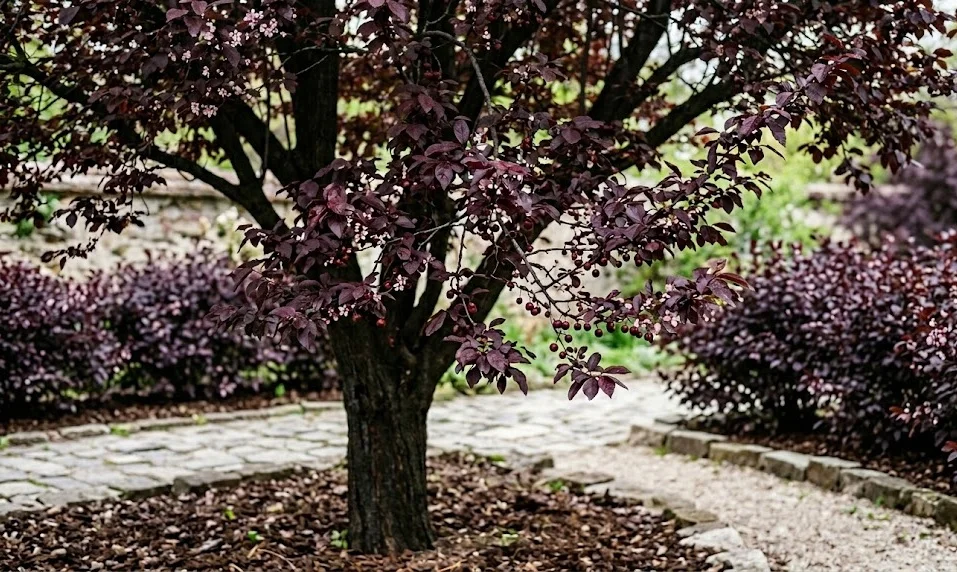

Purple-leaf plum is grown mainly for its dramatic dark foliage and early spring blossom, and both features depend strongly on light. Although the tree can tolerate some partial shade, it shows its best colour, density and flowering when planted in a sunny position. Light affects not only appearance but also crown structure, disease pressure and seasonal vigour. Choosing the right exposure from the beginning is one of the easiest ways to keep the tree healthy and visually impressive.
Why sunlight matters for foliage colour
The rich purple colour of the leaves develops most strongly in full sun. In bright conditions, the pigments responsible for the dark foliage are expressed more intensely. This gives the tree its characteristic contrast against green lawns, pale walls and mixed borders. Without enough sunlight, the leaves may appear dull, brownish-green or less uniform.
Partial shade does not always ruin the tree, but it often reduces ornamental quality. A few hours of morning or afternoon sun may be enough for acceptable growth, especially in warm climates. However, deep shade under large trees or beside tall buildings is not suitable. In such conditions, the crown may become thin and the colour may lose its strength.
Sunlight also supports flowering. Purple-leaf plum forms its spring display from buds produced during the previous season. If the tree grows in poor light, it may have less energy to create a strong floral show. A sunny position therefore improves both the spring and summer ornamental effect.
Good light also helps the tree maintain a compact, balanced crown. Branches growing in shade may stretch toward the light and become uneven. This can create a lopsided shape that later requires corrective pruning. Proper placement prevents many of these structural issues.
More articles on this topic
Full sun, partial shade and garden placement
Full sun is usually the best exposure for purple-leaf plum in temperate gardens. This means the tree should receive direct sunlight for much of the day. South-facing or west-facing positions often provide strong colour, provided the soil does not dry excessively. In hot regions, some protection from the most intense afternoon heat may be useful for young trees.
Partial shade can be acceptable when the tree still receives several hours of direct light. Morning sun with light afternoon shade can work well in gardens where summer heat is intense. The foliage may be slightly less dark than in full sun, but the tree can still remain attractive. The key is avoiding heavy, continuous shade.
The tree should not be planted directly beneath larger trees. Competition for light, water and nutrients can weaken young purple-leaf plum quickly. Overhead shade also keeps leaves damp for longer after rainfall. This combination increases stress and may encourage disease.
When used in garden design, purple-leaf plum should be placed where light enhances its contrast. Its dark foliage looks striking beside plants with pale flowers, yellow-green leaves or silver tones. If it is hidden in shade, much of this design value is lost. A visible, bright position allows the tree to function as a true focal point.
More articles on this topic
Light, heat and stress management
Strong sunlight increases the tree’s water demand during hot weather. A sunny tree may have excellent colour but still suffer if the root zone dries out repeatedly. Mulch and deep watering are important in exposed sites. This is especially true during the first few years after planting.
In very hot climates, young leaves may experience stress during extreme heatwaves. This does not mean the tree prefers shade, but it does mean the roots must be able to supply enough moisture. Soil improvement before planting can help the tree cope with sunny conditions. A healthy root system is the best partner for a bright canopy.
Light also influences disease risk. Sunny, open crowns dry faster after rain and dew, making conditions less favourable for many fungal leaf problems. Trees in shade often stay damp longer, especially if air circulation is poor. This is one reason bright placement supports both beauty and health.
If an existing tree is struggling in shade, pruning nearby vegetation may help. Removing competing branches from surrounding plants can increase light and air movement. However, a tree planted in deep shade may never reach its full ornamental potential. In some cases, replacement with a shade-tolerant species is more practical.