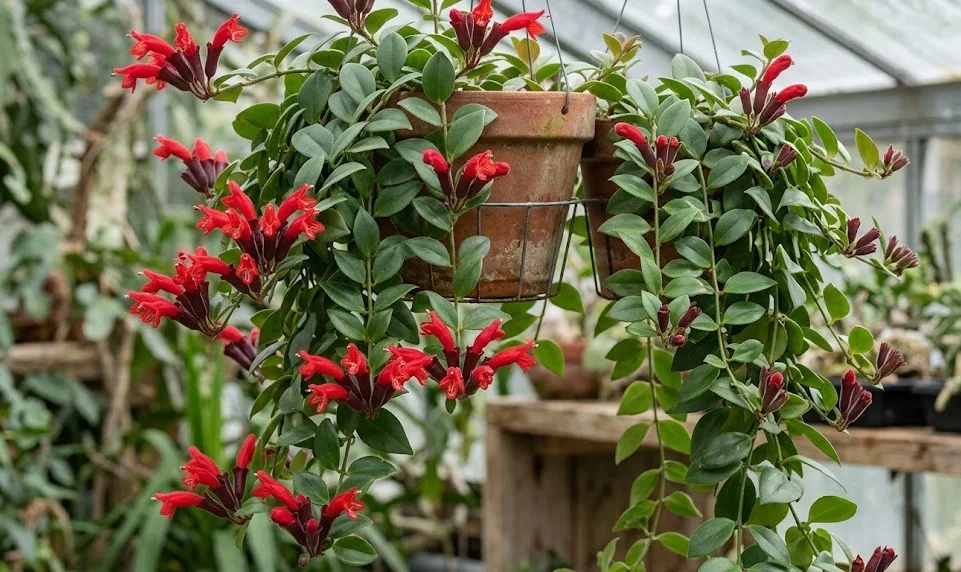

Overwintering the trailing lipstick plant is mainly about protecting it from cold, darkness, and excess moisture. The plant does not enter a deep dormancy indoors, but its growth usually slows as light levels fall. Care should become gentler and more conservative during this period. With stable warmth and careful watering, it can pass through winter without losing its shape or flowering potential.
Adjusting to lower winter light
Winter light is weaker and shorter, especially in temperate regions. A trailing lipstick plant that was happy farther from the window in summer may need a brighter position in winter. Moving it closer to an east- or south-facing window can help maintain growth quality. Direct winter sun is often less intense, but the plant should still be watched for scorching.
Low light can cause stretched stems and reduced flowering later. The plant may also use water more slowly because photosynthesis decreases. This makes winter watering more delicate than summer watering. Light and water should always be considered together.
Cleaning the leaves before winter can improve light capture. Dust blocks light and dulls the plant’s natural gloss. A soft damp cloth is usually enough to refresh the foliage. This simple task can make a noticeable difference during darker months.
Grow lights can support plants in very dim homes. A timer can provide consistent daily illumination without relying on irregular natural light. The light should be positioned to cover the trailing stems evenly. Stronger winter light support often results in healthier spring growth.
More articles on this topic
Keeping warmth steady
The trailing lipstick plant should be kept away from cold windows and draughty doors. Even if a room feels warm during the day, the temperature near glass can drop sharply at night. Chilled roots and leaves may lead to yellowing, bud drop, or sudden stress. A small move away from the windowpane can prevent damage.
Heated rooms can create a different problem. Radiators and heating vents may produce hot, dry air that dehydrates foliage. The plant should not be placed directly above a heater. Warmth is helpful, but dry blasts of air are not.
A stable indoor temperature is more valuable than occasional warmth. The plant prefers consistency and reacts poorly to repeated cold shocks. Night temperatures should remain comfortably mild. This is especially important if the plant is kept in a hanging basket near a ceiling corner or window recess.
Humidity often drops during winter because heating dries the air. A humidifier, plant grouping, or humidity tray can help. However, extra humidity should not be paired with stagnant air and wet soil. The aim is gentle atmospheric moisture with clean, fresh conditions.
More articles on this topic
Reducing watering and feeding
Winter watering should be reduced because the plant grows more slowly. The potting mix should still not become completely dry for long periods. Instead, allow the top layer to dry more thoroughly than in summer before watering again. This keeps roots hydrated without leaving them suffocated.
The deeper part of the pot may remain damp even when the surface looks dry. This is especially true in plastic pots or dense mixes. Checking pot weight helps prevent unnecessary watering. A moisture meter can also be useful, but it should not replace observation.
Fertilising is usually paused or greatly reduced in winter. When growth is slow, the plant cannot use nutrients efficiently. Unused fertiliser salts can accumulate and damage roots. Feeding can resume gradually in spring when new shoots appear.
Winter is not the best time for major repotting unless there is an emergency. Disturbing roots during low-light months slows recovery. If root rot or severe soil breakdown is present, repotting may be necessary, but care should be gentle. Otherwise, structural work is better postponed until spring.
Preparing for spring recovery
Late winter is a good time to inspect the plant carefully. Remove dead leaves, check for pests, and assess the condition of the stems. Dry indoor air can encourage spider mites, while weakened plants may attract mealybugs. Early intervention prevents pests from spreading as growth resumes.
As daylight increases, watering can be adjusted gradually. The plant may begin using moisture more quickly when new growth starts. Sudden heavy watering after a dry winter routine should still be avoided. A steady transition is safer than an abrupt change.
Light pruning can be done near the end of winter or in early spring. Removing weak, thin, or damaged stems encourages cleaner new growth. Healthy cuttings can be rooted if the plant needs renewal. This is often the easiest way to refresh an older hanging basket.
Spring feeding should begin modestly. A diluted balanced fertiliser can support the first flush of growth. Strong feeding too early may stress roots that are still adjusting. With careful overwintering, the plant enters spring ready to branch, trail, and eventually bloom.