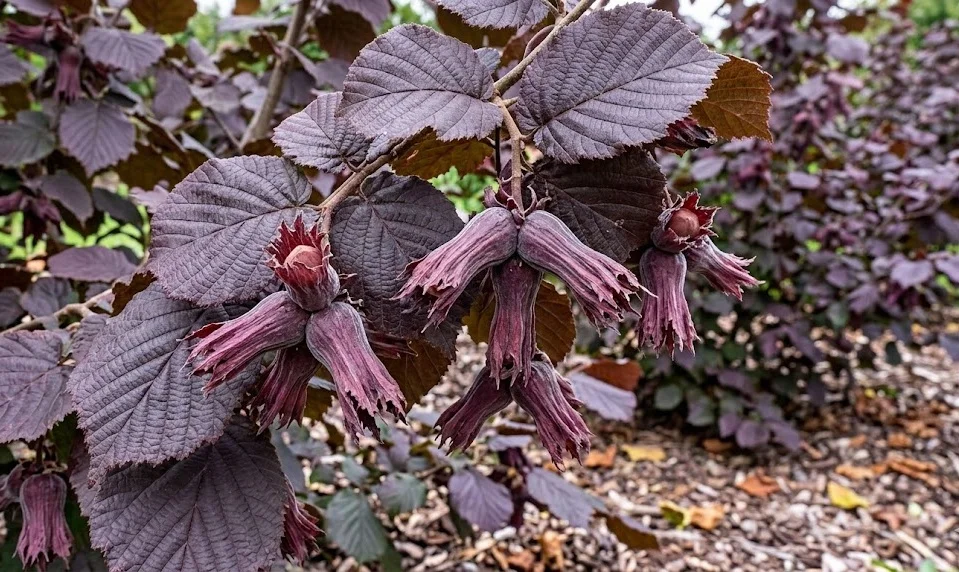

Purple-leaved filbert is one of those shrubs that can carry a garden visually from early spring to late autumn, provided its basic needs are understood rather than guessed. Its deep burgundy foliage, rounded habit, spring catkins, and edible nuts make it both ornamental and productive. Good care begins with balanced soil, steady moisture, correct light, and timely pruning. When these elements work together, the plant develops dense growth, rich leaf color, and a healthier structure.
Site conditions and general growth habit
Purple-leaved filbert grows best as a large shrub or small multi-stemmed tree with enough space around it. It should not be squeezed into narrow beds, because mature plants can become broad, layered, and strongly branched. Air circulation is especially important around the canopy, as dense, damp foliage can encourage fungal problems. A generous planting position also allows the purple leaves to be seen properly from several angles.
The plant prefers a fertile, moderately moist soil that drains well but does not dry out too quickly. Heavy clay can be improved with compost and structural organic matter before planting. Sandy soil benefits from humus-rich amendments that help retain moisture and nutrients. The aim is not to create an overly rich pocket, but to improve the whole rooting zone.
Its ornamental value depends strongly on good annual growth. Young shoots usually display the most attractive leaf color, especially when the plant receives sufficient light. Older, shaded interior branches may carry duller foliage and fewer vigorous leaves. Regular renewal of growth helps the shrub remain decorative instead of becoming tired and congested.
Purple-leaved filbert is also a living plant with seasonal changes, not a static decorative object. In spring, the fresh foliage often appears especially vibrant. During summer heat, color can soften or deepen depending on exposure, moisture, and local climate. In autumn, the foliage may shift again before leaf fall, leaving the branch structure visible through winter.
More articles on this topic
Soil care and root-zone management
A healthy root zone is the foundation of reliable growth. Purple-leaved filbert does not like waterlogged conditions, yet it also performs poorly in soils that become bone dry for long periods. Soil should remain evenly workable, crumbly, and biologically active. Compost applied around the plant every year helps maintain this balance.
Mulching is one of the simplest ways to improve care. A layer of leaf mold, composted bark, wood chips, or mature garden compost reduces evaporation and moderates soil temperature. The mulch should not be piled against the stems, because constant moisture around the collar can cause rot. Leaving a clear ring around the base is a small detail that prevents many avoidable problems.
Compaction should be avoided around established plants. The roots of hazels are relatively shallow and spread widely, so repeated trampling can limit oxygen supply. Beds around the plant should be maintained gently, preferably by hand or with light tools. Deep digging near the shrub is unnecessary and can damage feeder roots.
Soil pH is usually not a severe limitation, because purple-leaved filbert tolerates a moderately broad range. However, extremely acidic or highly alkaline soils may reduce nutrient availability. If leaves become pale despite adequate moisture and organic matter, a soil test can clarify the cause. Correcting soil imbalance is more effective than applying random fertilizers.
More articles on this topic
Watering through the seasons
Newly planted purple-leaved filbert needs regular watering while it establishes its root system. The first growing season is the most critical, especially during warm, windy, or dry weather. Water should soak deeply into the root zone rather than only wetting the surface. Shallow watering encourages shallow roots and makes the plant more vulnerable to stress.
Established plants tolerate short dry spells better, but long drought still affects foliage quality and nut development. Leaves may lose intensity, edges may dry, and young shoots may stop elongating. A deep watering once or twice a week during severe drought is usually better than daily light sprinkling. Moisture should reach the active roots beyond the immediate stem area.
Morning watering is preferable because foliage dries faster during the day. Wet leaves kept damp overnight can create favorable conditions for disease. Drip irrigation or slow hose watering around the base is more efficient than overhead sprinkling. This approach also reduces water waste and keeps the canopy cleaner.
Autumn watering should not be neglected if the season is dry. A well-hydrated shrub enters winter in better condition, especially after a hot summer. However, watering should be reduced when soil remains naturally moist and temperatures fall. The goal is steady moisture, not saturated soil.
Nutrient management and fertilization
Purple-leaved filbert is not an extremely heavy feeder, but it responds well to a fertile, living soil. Annual compost is often enough in gardens where the soil is already healthy. Compost supports microbial activity, improves structure, and releases nutrients gradually. This slow approach suits woody shrubs better than sudden, excessive feeding.
If growth is weak, a balanced organic fertilizer can be applied in early spring. The product should be spread over the root zone, not heaped near the trunk. Watering after application helps nutrients move into the soil. Overfertilizing with nitrogen should be avoided, because it can promote soft shoots that are more vulnerable to pests and winter injury.
Nutrient deficiency may show as poor shoot growth, small leaves, pale foliage, or weak flowering. These symptoms should be interpreted together with soil moisture, light exposure, and root health. Fertilizer will not solve problems caused by shade, compaction, or poor drainage. Diagnosis is always better than routine heavy feeding.
Nut production requires energy, so productive shrubs benefit from consistent care. Adequate potassium, phosphorus, and trace elements support flowering, fruit set, and wood maturation. Organic matter helps maintain these nutrients in a plant-available form. A balanced feeding strategy encourages both ornamental quality and crop potential.
Pruning and canopy renewal
Pruning should respect the natural shape of purple-leaved filbert. The shrub looks best when its branching remains graceful, open, and layered. Hard shearing destroys this character and creates dense outer growth with a shaded interior. Selective pruning is more professional and produces a healthier plant.
The best routine pruning removes dead, damaged, crossing, or inward-growing branches. Older stems can be taken out gradually at the base to encourage younger replacement shoots. This renewal method keeps the plant vigorous without shocking it. Removing too much wood at once can reduce flowering and temporarily weaken the shrub.
Suckers may appear from the base, especially if the plant is grafted or stressed. Any green-leaved shoots that differ from the purple cultivar should be removed promptly. Such shoots may come from the rootstock and can outgrow the ornamental variety. They should be cut cleanly at their origin rather than shortened.
Pruning is also a way to improve air circulation. An overcrowded shrub stays damp longer after rain and becomes more inviting to fungal diseases. Opening the center gently allows light to reach young shoots and leaves. This improves both plant health and ornamental color.
Seasonal maintenance and observation
Spring care begins with inspection. Winter damage, broken stems, and dead tips should be removed before strong growth begins. Mulch can be refreshed once the soil warms slightly. Early observation also helps detect aphids, scale insects, or abnormal bud development before problems spread.
During summer, the most important tasks are watering, monitoring, and light corrective pruning if needed. Heat stress can appear quickly on exposed sites, particularly in young plants. Mulch should be maintained, and weeds should be removed because they compete for water. The foliage should be checked regularly for spots, distortion, or pest colonies.
Autumn is the time to support recovery and prepare the shrub for dormancy. Fallen leaves can be collected if disease was present during the season. Compost may be added as a surface amendment, allowing winter weather to draw nutrients gradually into the soil. Heavy pruning should generally be avoided late in the season because it may stimulate vulnerable new growth.
Winter care is mostly protective and preventive. Branches should not be bent or tied tightly under snow unless there is a clear risk of breakage. Heavy snow can be shaken off gently if it threatens to split the crown. The shrub is generally hardy, but young plants benefit from stable soil moisture and protection from extreme drying winds.
Common care mistakes and professional corrections
One common mistake is planting purple-leaved filbert in too much shade. The shrub may survive, but its foliage color becomes weaker and its growth becomes open or uneven. Flowering and nut set may also decline. Moving the plant or reducing surrounding shade can restore better performance.
Another mistake is overwatering in poorly drained soil. Yellowing leaves, weak shoots, and root decline can result when oxygen is excluded from the root zone. Improving drainage is more important than adding more fertilizer. In difficult sites, raised planting areas can make a significant difference.
Neglecting pruning for many years can lead to an old, tangled plant with little ornamental value. A neglected shrub should be renovated gradually over several seasons. Removing a portion of the oldest stems each year is safer than cutting everything down at once. This method preserves energy reserves and maintains some visual structure.
The most professional approach is consistent observation. Purple-leaved filbert shows stress through its leaves, shoot growth, bark condition, and seasonal rhythm. A gardener who notices changes early can adjust watering, pruning, feeding, or protection before serious decline begins. Good care is not complicated, but it must be attentive and regular.