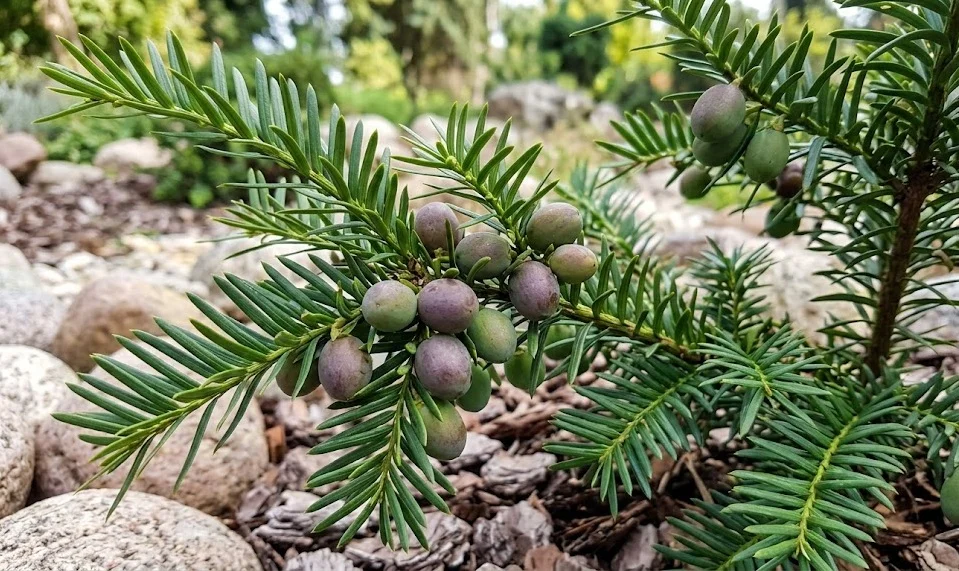

Planting Japanese plum yew successfully depends on careful site preparation, correct depth, and a realistic understanding of its slow growth. This evergreen does not need excessive intervention, but it does need a comfortable root environment from the beginning. Propagation is possible from seed and from terminal softwood or semi-hardwood cuttings, although both methods require patience. The best results come from treating it as a long-term woody crop rather than a quick ornamental filler. RHS+1
Selecting planting material and timing
Choose healthy nursery plants with firm, evenly colored needles and a well-branched structure. Avoid plants with browned shoot tips, sour-smelling potting mix, circling woody roots, or loose crowns. A compact plant with balanced roots is often better than a tall specimen that has been forced too quickly. Slow growth is normal, so size alone should not guide selection.
Spring and autumn are generally the best planting seasons in temperate gardens. Spring planting gives the shrub a full growing season to establish before winter. Autumn planting works well where soil remains warm and moisture is reliable. In very cold or exposed areas, spring planting is usually safer.
Container-grown plants can be planted across a wider season if irrigation is available. Even so, planting during extreme heat should be avoided. High temperatures increase transpiration before the roots have settled into the surrounding soil. A cloudy, mild day is ideal for reducing transplant stress.
Before planting, water the root ball thoroughly while it is still in the container. A dry root ball can resist rewetting after planting, especially if the potting medium is peat-based. Hydrated roots make better contact with the new soil. This small step often improves establishment more than extra fertilizer.
More articles on this topic
Preparing the planting site
Begin by clearing weeds and loosening the soil over an area wider than the root ball. Japanese plum yew benefits from a broad, aerated rooting zone. If the soil is compacted, break it carefully without creating a glazed planting hole. Roots establish more successfully when the transition between amended and native soil is gradual.
In heavy soil, improve drainage by incorporating composted bark, leaf mold, or mature compost across the bed. Do not fill a clay hole with a very light potting mix, because this can create a sump that holds water. The amended zone should blend into the surrounding soil. Drainage and oxygen are more important than making the planting hole excessively rich.
In sandy soil, organic matter helps retain moisture and nutrients. Compost and leaf mold improve the soil’s capacity to hold water without making it heavy. Mulch becomes especially important after planting in sandy sites. Regular deep watering may still be necessary during the establishment period.
Check the mature size before deciding on spacing. Japanese plum yew may grow slowly, but it still needs room for its final form. Crowded plants become harder to water, inspect, and prune cleanly. Proper spacing also reduces disease pressure by improving air circulation.
More articles on this topic
Planting technique and aftercare
Set the plant so the top of the root ball is level with the surrounding soil. If the site is heavy or slightly wet, planting a little high can protect the crown. Never bury the stem bases under soil or mulch. Crown burial is a common cause of long-term decline in woody evergreens.
Backfill in layers and firm the soil gently with your hands rather than compacting it with heavy pressure. The aim is to remove large air pockets while preserving soil porosity. After backfilling, water slowly and thoroughly. This settles soil around fine roots and reveals any areas that need additional filling.
Apply organic mulch in a broad ring after watering. Keep the mulch away from direct contact with the stems. A moderate layer is enough to suppress weeds and stabilize moisture. Excessively thick mulch can hold water against the crown and invite problems.
After planting, monitor moisture carefully for the first year. The plant may look unchanged for months because root growth is happening below the surface. Do not assume it has failed simply because top growth is slow. A patient establishment phase is typical for this evergreen.
Propagation from seed and cuttings
Seed propagation is possible, but it is slow and variable. Fresh seed should be cleaned and sown in a well-drained medium. Germination may be delayed, and seedlings can take years to reach landscape size. This method is useful for collectors and nurseries, but less practical for gardeners who need uniform plants quickly.
Cuttings are usually more practical when a particular form must be maintained. Terminal softwood or semi-hardwood cuttings are commonly recommended. Material should be taken from healthy, non-flowering shoots with good vigor. Clean tools and a sterile rooting medium reduce losses.
A free-draining propagation mix is essential for cuttings. Excess moisture around the base can cause rotting before roots form. Humidity should be maintained around the foliage while the medium remains aerated. Bottom heat may improve rooting consistency in professional propagation settings.
Rooted cuttings should be grown on gradually rather than rushed into open ground. Young plants need protection from harsh sun, drying wind, and freezing containers. Once a strong root system has developed, they can be hardened off for planting. Patience at this stage produces sturdier, better-shaped shrubs.