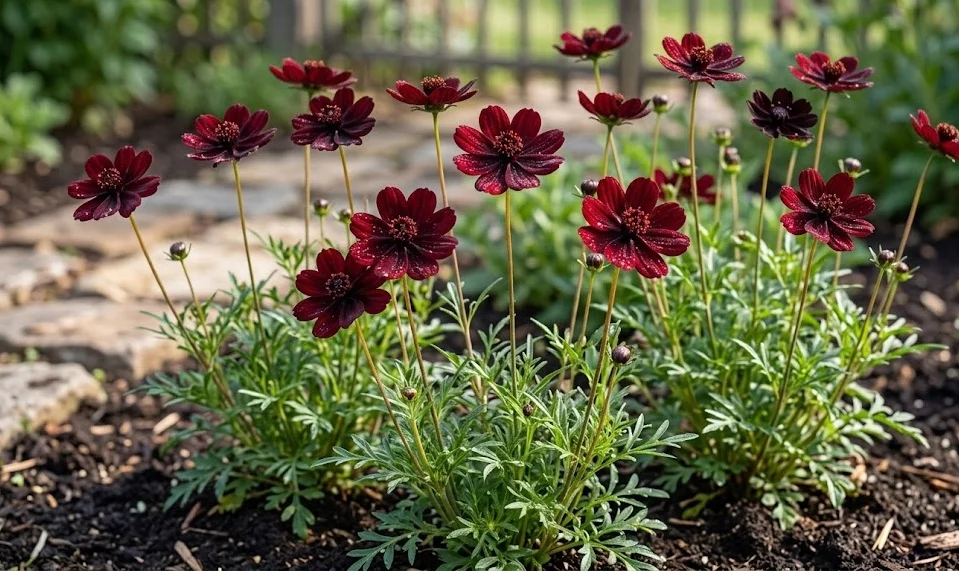

Chocolate cosmos responds well to careful pruning, deadheading, and seasonal cutting back. The aim is not to force the plant into a rigid shape, but to keep it flowering, balanced, and healthy. Regular removal of faded blooms encourages new buds and keeps the display refined. More substantial cutting back is mainly linked to rejuvenation, damage control, and preparation for winter.
Pinching and shaping young plants
Young chocolate cosmos plants can benefit from light pinching if they are growing strongly. Removing the soft tip of a young shoot encourages branching from lower nodes. This can create a fuller plant with more flowering stems. Pinching should be done only when the plant is healthy and actively growing.
Weak or newly stressed plants should not be pinched too early. They need time to establish roots and produce enough foliage. If growth is slow because of cold weather or poor light, pruning will not solve the problem. Better growing conditions should come first.
Clean fingers or sharp snips can be used for soft pinching. The cut should be made just above a healthy pair of leaves. This encourages side shoots to develop from the leaf joints. Rough tearing should be avoided because damaged tissue heals less cleanly.
Pinching is especially useful for container plants that need a compact, attractive shape. It can also help border plants avoid becoming too tall and sparse. However, excessive pinching may delay flowering. A light, well-timed approach is better than repeated heavy trimming.
More articles on this topic
Deadheading and flower cutting
Deadheading is the most regular pruning task for chocolate cosmos. Faded blooms should be removed before they spoil the appearance of the plant. Cutting back to a leaf joint or side shoot gives a cleaner result than simply removing the flower head. This encourages the plant to continue producing fresh stems.
The plant is also suitable for cutting for small arrangements. Harvesting flowers can support continued blooming if stems are cut thoughtfully. Stems should be taken with clean snips and placed in water quickly. Cutting in the morning often gives the best results.
Deadheading also helps reduce disease risk. Old, damp flower heads can trap moisture and encourage fungal problems. Removing them improves air movement and keeps the plant looking fresh. This is particularly important in humid weather or densely planted borders.
A consistent deadheading routine can extend the ornamental season. The plant may produce flowers over a long period if it is not allowed to become exhausted. Watering and feeding must support this repeated flowering. Pruning works best as part of a complete care routine.
More articles on this topic
Cutting back for health and overwintering
Damaged, diseased, or yellowing stems should be removed when noticed. This prevents the plant from wasting energy on failing growth. It also improves air circulation around the crown. Clean tools should be used, especially if disease is suspected.
During the growing season, hard cutting back should be used cautiously. Removing too much foliage at once reduces the plant’s ability to feed its tuberous roots. If a plant becomes untidy, it is better to trim selectively rather than cutting everything low. Gradual correction is safer than severe pruning.
At the end of the season, cutting back becomes part of winter preparation. Once frost has blackened the top growth, stems can be shortened. Leaving short stubs can make lifted tubers easier to handle and identify. Completely removing all visible growth before the plant has finished naturally is not ideal.
For stored tubers, the cut material should be clean and free from rot. Diseased stems should not be composted if infection is severe. After cutting back, the roots can be lifted, dried briefly, and stored under suitable conditions. With careful pruning and winter handling, chocolate cosmos can return strongly in the next growing season.