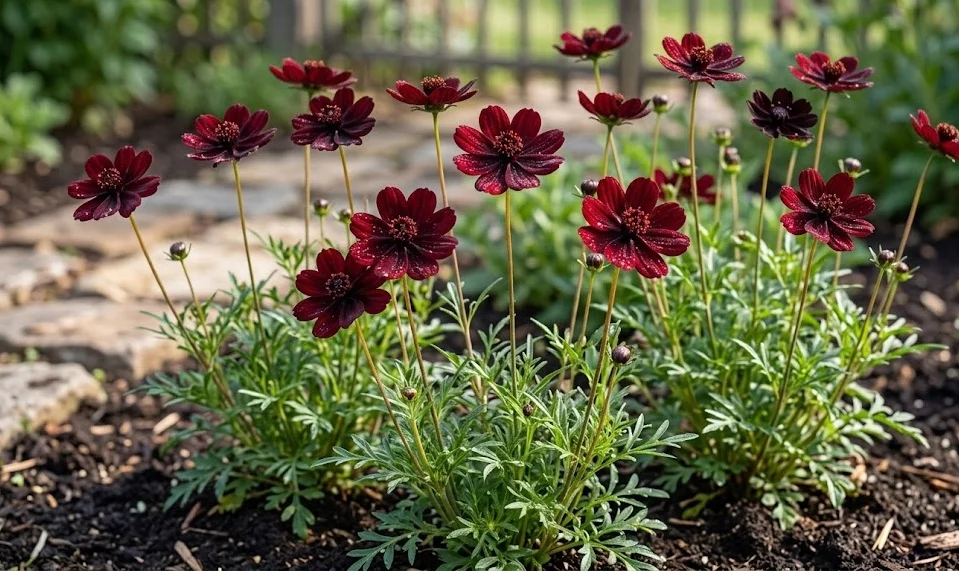

Chocolate cosmos flowers best when moisture and nutrients are supplied steadily, but not excessively. The plant’s tuberous roots make it more sensitive to waterlogged soil than many ordinary summer bedding plants. At the same time, drought stress can shorten flowering, reduce stem length, and weaken the overall display. A balanced watering and feeding routine keeps the plant productive, healthy, and elegant from early summer into autumn.
Building a reliable watering routine
The best watering routine begins with observing the soil rather than following a fixed schedule. Chocolate cosmos needs more water during warm, sunny, windy weather and much less during cool or cloudy spells. The upper layer of soil may dry quickly, but the deeper root zone is what matters most. Checking below the surface helps prevent both drought stress and overwatering.
Newly planted chocolate cosmos should be watered thoroughly after planting. This helps settle soil around the roots and removes dry pockets. During establishment, the plant should not be allowed to dry severely. Once roots spread, it becomes more resilient, but consistent moisture still supports better flowering.
Deep watering is generally preferable to light sprinkling. A deep soak encourages roots to grow downward and makes the plant less dependent on frequent attention. Shallow watering keeps roots near the surface, where heat and wind dry them quickly. This can make the plant more vulnerable during summer heat.
Morning watering is usually the best choice. It gives foliage time to dry and reduces the risk of fungal disease. Evening watering can be acceptable in hot weather if water is directed to the soil rather than the leaves. Wet foliage overnight should be avoided whenever possible.
More articles on this topic
Avoiding overwatering and root problems
Overwatering is one of the most common causes of failure with chocolate cosmos. The tuberous roots need oxygen as well as moisture. If the soil remains saturated, roots can suffocate and decay. Symptoms may include wilting, yellowing, poor growth, and sudden collapse.
The difficulty is that overwatered plants can sometimes look thirsty. This leads gardeners to add more water, making the problem worse. Before watering a struggling plant, the soil should always be checked by touch. If it feels wet below the surface, the issue is probably drainage, root damage, or disease rather than drought.
Containers need special attention because drainage conditions vary widely. A pot may have drainage holes but still remain too wet if the compost is dense or the container sits in a water-filled saucer. Decorative outer pots can also trap hidden water around the root ball. After heavy rain, checking containers is especially important.
Improving drainage is often more effective than reducing watering alone. Gritty compost, raised containers, pot feet, and well-structured soil all help protect the roots. In borders with heavy soil, watering less often will not solve the problem if rainwater cannot escape. Healthy roots depend on both sensible irrigation and a suitable growing medium.
More articles on this topic
Feeding for strong stems and rich blooming
Chocolate cosmos appreciates moderate feeding during active growth. A balanced slow-release fertilizer at planting can support early development without overwhelming the plant. In fertile garden soil, additional feeding may be minimal. In containers, nutrients are used and washed out more quickly, so a planned feeding routine is more important.
Once buds begin forming, a flowering-plant feed can help maintain bloom production. Fertilizers higher in potassium are often useful because they support flowering and general plant strength. They should be applied according to the product’s recommended dilution. Stronger is not better, especially with a plant that values balanced growth.
Too much nitrogen can produce soft, leafy stems with fewer flowers. These stems may bend, attract pests, or become more susceptible to disease. If a chocolate cosmos looks lush but blooms poorly, feeding should be reassessed. The plant may need more sun, less nitrogen, or better pruning rather than more fertilizer.
Organic feeding can work very well when used thoughtfully. Compost, worm castings, and mild organic feeds improve soil life and provide gradual nutrition. They are especially helpful in borders where long-term soil quality matters. However, even organic materials can be overapplied, so moderation remains important.
Adjusting care during heat and drought
Hot weather increases the plant’s need for moisture, especially in pots. Leaves may droop temporarily during the hottest part of the day even when the soil is adequately moist. If the plant recovers by evening, emergency watering may not be necessary. If it remains limp and the soil is dry, a deep watering is needed.
Mulching can make a major difference in dry periods. A layer of composted bark, leaf mould, or fine gravel helps reduce evaporation and keeps the root zone cooler. Mulch should be kept slightly away from the crown to avoid trapping moisture against vulnerable tissue. In containers, a surface mulch can also reduce rapid drying.
During heatwaves, feeding should be handled carefully. Stressed plants may not absorb nutrients efficiently, and strong liquid feed can worsen root stress. It is usually better to water well first and feed only when the plant is actively growing again. Gentle care produces better recovery than forcing growth during extreme conditions.
Temporary shade can protect container plants during severe heat. Moving pots out of the harshest afternoon sun may preserve flowers and prevent root overheating. Border plants can be helped by watering deeply in the morning and avoiding unnecessary disturbance. The goal is not to keep the soil constantly wet, but to prevent damaging drought stress.
Late-season watering and feeding
As autumn approaches, chocolate cosmos naturally begins to slow down. Cooler temperatures and shorter days reduce water use. The watering routine should become more cautious at this stage. Soil that was safe in July may remain too wet in October.
Feeding should also be reduced late in the season. Continued fertilizer applications can encourage tender growth that is vulnerable to cold. The plant should be allowed to mature and direct energy into its tuberous roots. This is especially important where tubers will be lifted and stored.
If the plant is still flowering, it should not be neglected completely. Moderate moisture helps late blooms open properly and keeps foliage functioning. However, water should be applied only when the soil needs it. A wet autumn is more dangerous than a slightly drier finish.
Before winter storage or protection, the plant should be gradually prepared for dormancy. Excessively wet compost should be allowed to dry to a safer level. Feeding should stop, and top growth should be left until frost or natural decline ends the season. This measured transition improves the chances of healthy regrowth the following year.