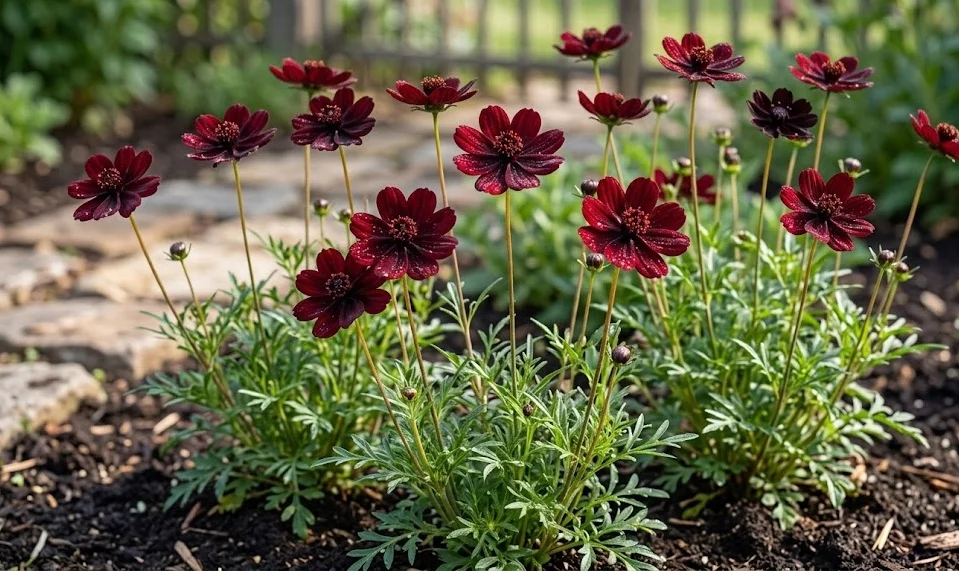

Chocolate cosmos earns its place in the garden not only through its velvety, dark burgundy flowers, but also through the warm cocoa-like scent that becomes most noticeable in sunny, calm weather. This elegant perennial behaves differently from many ordinary bedding flowers, because it grows from fleshy tuberous roots and needs a little more seasonal attention. With the right soil, light, watering, and winter protection, it can become one of the most memorable plants in a border, patio container, or cut-flower planting. Care is not complicated, but it does reward consistency, observation, and a gardener’s willingness to adjust the routine as the season changes.
Understanding the plant’s growth habit
Chocolate cosmos has a refined, airy structure, with slender stems that carry dark, velvety blooms above soft green foliage. Its flowers often look almost black from a distance, especially in evening light or against pale companion plants. The plant usually grows as a tender perennial in mild climates, while in colder regions it is often treated like a summer feature that must be lifted or protected before frost. Knowing this seasonal rhythm is the foundation of successful care.
The plant does not behave like a seed-grown annual cosmos in the traditional sense. Many garden forms are maintained vegetatively because they do not reliably produce viable seed. This means the long-term health of the tuberous root system matters far more than seed saving. When the roots are kept healthy, the plant can return with stronger growth year after year.
Chocolate cosmos usually performs best when it is allowed to build gradually through the warm months. Early growth can be modest, especially if spring temperatures remain cool. Once the soil warms and light levels improve, the plant begins to produce more stems and flower buds. Patience is important, because forcing growth too early often leads to weak, soft shoots.
In a well-designed planting, chocolate cosmos is most effective when placed where people can appreciate its scent close up. It suits borders near paths, terraces, benches, and container displays around seating areas. The fragrance is subtle rather than overpowering, so distance matters. A plant hidden at the back of a deep border may look beautiful, but much of its sensory value will be lost.
More articles on this topic
Choosing the right growing position
Chocolate cosmos prefers a warm, bright, and sheltered position. Full sun is usually ideal, especially in cooler climates where warmth helps the tubers grow strongly. In very hot areas, light afternoon shade can reduce stress and keep the flowers looking fresh for longer. The best position is one that combines generous light with protection from harsh wind.
Wind exposure is often underestimated when caring for this plant. The stems are elegant rather than heavy, but repeated buffeting can bend them, dry the foliage, and reduce flower quality. A site near a low wall, mixed border, or open fence can provide useful shelter without trapping stagnant air. Good air movement still matters, because overly enclosed spaces can encourage fungal problems.
Soil warmth is another important part of site selection. Chocolate cosmos dislikes cold, wet ground, particularly early in the season and during dormancy. Raised beds, free-draining borders, and large pots often create better conditions than heavy, compacted garden soil. If the garden naturally holds winter moisture, container cultivation may be the safest option.
The plant also benefits from thoughtful visual placement. Its dark flowers can disappear against deep red, purple, or shadowy backgrounds. Pale grasses, silver foliage, lime-green leaves, and soft pink or cream flowers help the dark blooms stand out. A good position is therefore both horticultural and aesthetic, because healthy growth and visual impact work together.
More articles on this topic
Preparing soil for healthy roots
Chocolate cosmos needs soil that drains well but does not become dusty or lifeless. The tuberous roots dislike waterlogging, yet the plant still needs steady moisture during active growth. A loose, fertile soil enriched with mature compost usually provides the best balance. The goal is a root zone that holds enough moisture for flowering but releases excess water quickly.
Heavy clay soil should be improved before planting. Adding compost alone can help structure, but it may not be enough if water sits around the roots after rain. In difficult soil, grit, fine gravel, leaf mould, and raised planting levels can improve drainage. Planting slightly proud of the surrounding soil can also prevent the crown from sitting in wet conditions.
Sandy soil presents a different challenge. It drains quickly, which protects the roots from rotting, but it may dry out too fast in summer. Organic matter is especially valuable in sandy ground because it improves moisture retention and nutrient availability. Mulching after planting can also reduce surface evaporation and keep root conditions more stable.
Soil fertility should be moderate rather than excessive. Too much nitrogen encourages leafy growth at the expense of flowers. A balanced soil with slow, steady nutrient release is preferable to a heavily fertilized bed. Chocolate cosmos looks most graceful when growth is firm, well-branched, and floriferous rather than lush and floppy.
Watering through the growing season
Watering should support steady growth without making the soil constantly wet. Newly planted chocolate cosmos needs careful attention until roots establish into the surrounding soil. Deep watering is better than frequent shallow sprinkling, because it encourages roots to explore downward. The surface can dry slightly between waterings, but the root zone should not remain dry for long during active flowering.
Container-grown plants need more regular watering than those in open ground. Pots heat up quickly, and the limited compost volume can dry out within a day during hot weather. A large container is usually easier to manage than a small one because it buffers moisture and temperature changes. Drainage holes are essential, because decorative pots without proper drainage can quickly cause root problems.
The plant often signals water stress through dull foliage, drooping stems, and shorter flower life. However, similar symptoms can also appear when roots are damaged by excess moisture. This is why checking the soil before watering is more reliable than following a rigid calendar. A finger test, moisture meter, or simply lifting a pot to feel its weight can prevent many mistakes.
Late-season watering should become more cautious as temperatures fall. The plant needs moisture while it is still flowering, but cooler weather slows water use. Wet soil in autumn can weaken the tubers before winter storage or dormancy. Reducing water gradually helps the plant prepare for the end of the growing season.
Feeding for flowers and resilience
Chocolate cosmos benefits from gentle, balanced feeding during the growing season. A slow-release fertilizer mixed into container compost at planting can provide a reliable foundation. In borders, compost and a modest organic fertilizer are often enough if the soil is already healthy. The aim is to encourage flower production without pushing overly soft growth.
Liquid feeding can be useful once buds begin to form. A feed designed for flowering plants, applied at sensible intervals, supports repeated blooming. High-potassium formulas are generally more suitable than high-nitrogen lawn-style fertilizers. Overfeeding should be avoided, because it may produce tall, weak stems that need extra support.
Plants in containers depend more heavily on feeding because nutrients leach out with watering. Regular light feeding is usually better than occasional heavy feeding. If leaves become pale and growth slows despite good watering and light, the plant may need additional nutrition. However, yellowing can also indicate poor drainage, so the root environment should always be checked first.
Feeding should taper off toward the end of summer or early autumn. Continued strong feeding late in the season can encourage tender growth that is vulnerable to cold and disease. The plant should be allowed to slow naturally as days shorten. This helps the tuberous roots mature and improves their chances of surviving storage or winter protection.
Deadheading and seasonal grooming
Deadheading is one of the simplest ways to keep chocolate cosmos flowering well. Removing faded blooms prevents the plant from wasting energy on old flower heads. It also keeps the display clean and encourages the production of new buds. The task is especially worthwhile in containers and prominent border positions where every stem is visible.
Cutting flowers for small arrangements has a similar effect to deadheading. The blooms are charming in posies, especially when paired with grasses, scabious, salvias, or pale cosmos varieties. Stems should be cut in the cool of morning or evening for the best vase life. Regular cutting can help the plant branch and remain productive.
Grooming should also include removing damaged or yellowing leaves. This improves air flow around the base of the plant and reduces hiding places for pests. It is best to use clean, sharp snips rather than tearing stems by hand. Clean cuts heal more easily and reduce unnecessary stress.
As autumn approaches, grooming becomes more selective. Spent stems can be removed, but the plant should not be stripped aggressively while foliage is still feeding the roots. Allowing healthy leaves to remain for as long as possible helps the tubers store energy. Once frost blackens the top growth, the plant can be prepared for winter care.
Long-term care and garden value
The long-term success of chocolate cosmos depends on treating it as a treasured tender perennial rather than a disposable seasonal flower. In mild regions, it may remain in the ground with excellent drainage and winter mulch. In colder regions, lifting and storing the tubers is usually more reliable. The right approach depends on local winter temperatures, soil moisture, and how much risk the gardener is willing to accept.
Dividing or repotting may become necessary as plants mature. Crowded tubers can produce weaker growth and fewer flowers if left unmanaged for too long. Repotting also refreshes tired compost and gives the gardener a chance to inspect root health. Any soft, shriveled, or diseased pieces should be removed before replanting.
Chocolate cosmos combines especially well with drought-tolerant and prairie-style planting schemes, provided moisture is still available during establishment. It looks sophisticated with ornamental grasses, bronze fennel, gaura, verbena, salvias, and pale dahlias. The dark flowers add depth without overwhelming nearby plants. Its scent gives the planting an intimate quality that purely visual combinations cannot achieve.
Good care makes the plant more than a novelty. When grown well, chocolate cosmos offers months of bloom, a distinctive fragrance, and a refined color that suits both traditional and contemporary gardens. It rewards close attention, but it does not demand constant fussing. The key is to provide warmth, drainage, moderate fertility, and protection from winter cold.