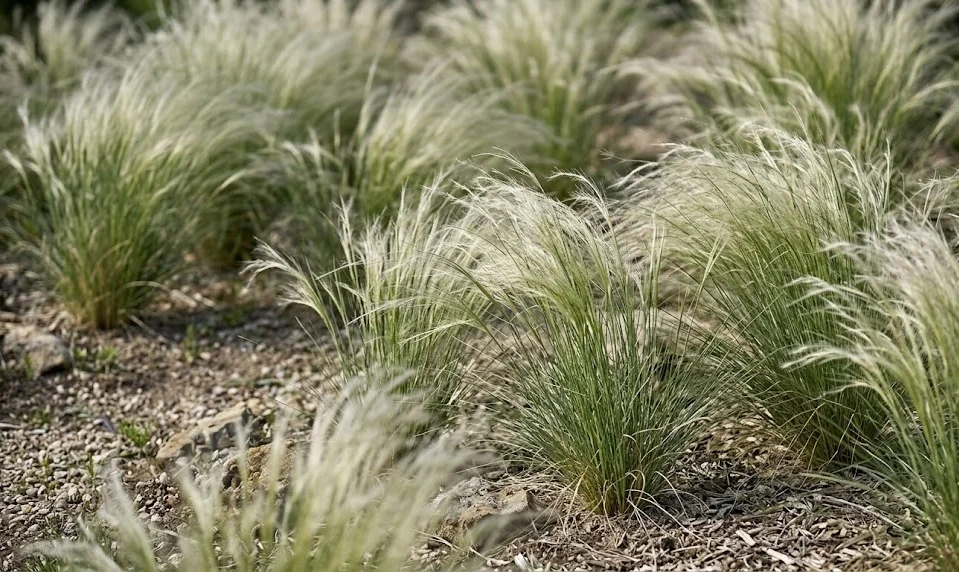

Mexican feather grass needs abundant sunlight to develop the fine, flowing habit that makes it so valuable in ornamental planting. Full sun strengthens the clump, improves flowering, and helps the foliage dry quickly after rain. In too much shade, the plant becomes loose, weak, and less durable. Understanding its light requirements is essential before choosing a position in the garden.
Full sun as the ideal condition
Full sun is the preferred condition for Mexican feather grass. A site with at least six hours of direct sunlight each day usually produces the best results. In bright exposure, the leaves remain fine and the clump keeps a more balanced fountain shape. Flowering and seed head production are also stronger.
Sunlight affects not only appearance but also plant health. Warm, bright conditions help the crown stay dry after rain or irrigation. This reduces the risk of fungal issues and rot. A sunny position is therefore both aesthetic and practical.
Morning and afternoon sun can both be useful, but long, open exposure is ideal. In cooler climates, all-day sun helps the plant ripen and overwinter better. In hot climates, some light afternoon relief may be tolerated if drainage remains excellent. However, deep or prolonged shade should be avoided.
The best planting sites are open borders, gravel gardens, sunny slopes, raised beds, and dry meadow-style areas. These positions allow the grass to receive light from multiple angles. Low sunlight also highlights the fine foliage beautifully. When backlit, the plant can appear almost luminous.
More articles on this topic
Effects of partial shade
Partial shade may be acceptable when it is light and brief. For example, a plant may perform reasonably well if shaded for a small part of the day by an open tree canopy. The key is that it still receives several hours of direct sun. Bright reflected light from paving or walls can also help.
Too much shade changes the plant’s structure. The clump may stretch, lean, or open in the center as it searches for light. Foliage can become softer and less dense. Seed heads may be fewer and weaker.
Shaded plants also dry more slowly after rain. This increases the chance of crown dampness, especially in heavy soil. If shade and poor drainage occur together, decline becomes much more likely. A plant that might survive one stress may fail when several stresses overlap.
When using Mexican feather grass near shrubs or perennials, consider future growth. A young border may seem sunny at planting time but become shaded as neighboring plants mature. Regular editing may be needed to preserve light. If shade becomes permanent, moving the grass is usually better than forcing it to struggle.
More articles on this topic
Using light creatively in design
Light can be used as a design tool with Mexican feather grass. The fine leaves and seed heads are especially striking when the sun shines through them from behind. Planting near paths, terraces, or seating areas allows this effect to be appreciated at eye level. Early morning and late afternoon light are particularly beautiful.
In contemporary gardens, the grass can soften hard lines without blocking views. Its translucent quality means it adds volume while still allowing light to pass through. This makes it useful near stone, metal, timber, and pale gravel. The plant contributes atmosphere rather than visual heaviness.
In mixed borders, place it where it will not be overshadowed by tall, dense companions. Pair it with plants that enjoy similar sunny, dry conditions. Upright flowers, silver foliage, and rounded shrubs all contrast well with its fine texture. Good companion selection protects both the visual effect and the plant’s health.
Seasonal light changes should also be considered. A site sunny in summer may be shaded in winter by low sun angles or evergreen structures. Winter shade can keep soil colder and wetter for longer. Choosing an open position improves performance through the entire year.