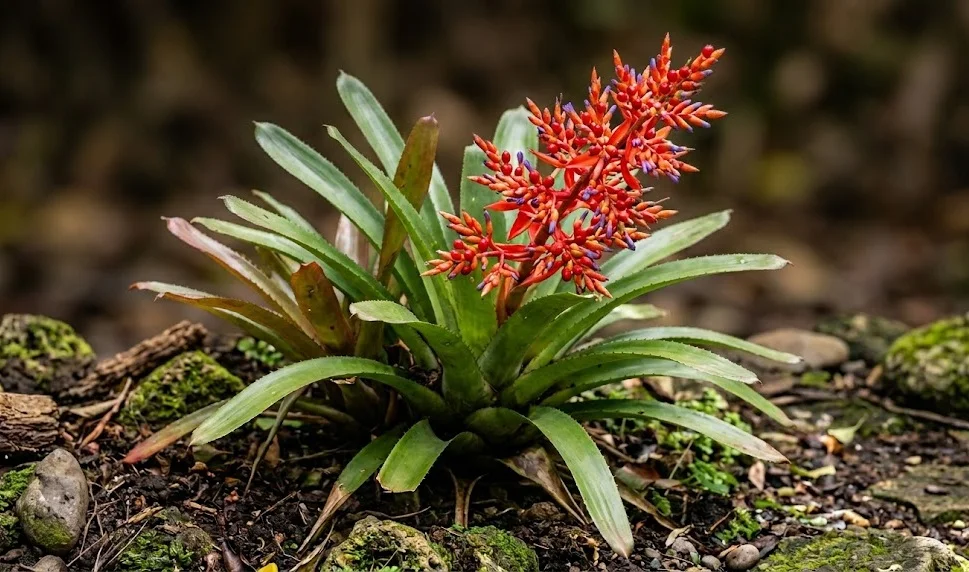

The transition into the winter months poses a unique set of challenges for the coral berry bromeliad, which is unequipped to handle frost or prolonged cold. In temperate climates, this tropical species must be moved indoors or into a climate-controlled environment to survive the dormant season. Managing the shifts in light, temperature, and humidity during this time is critical to preventing the plant from entering a state of decline. A professional overwintering strategy ensures that your bromeliad not only survives the winter but is ready to thrive once the growing season returns in the spring.
Cold sensitivity and winter preparation
The coral berry bromeliad is a true tropical plant and has absolutely no tolerance for freezing temperatures. Even temperatures below 10 degrees Celsius can cause significant physiological stress, leading to blackened leaf tips or a total collapse of the plant’s internal structure. As soon as the nighttime temperatures begin to consistently drop below 15 degrees Celsius, it is time to bring any outdoor-grown specimens inside. Planning this move early prevents the plant from experiencing the sudden shock of a late-season cold snap.
Before moving the plant indoors, it is essential to perform a thorough health check and a deep cleaning of the foliage and the central tank. This is the perfect time to inspect for any outdoor pests like spiders or aphids that might try to hitch a ride into your home. Use a gentle stream of water to wash off the leaves and flush out the central reservoir to remove any accumulated outdoor debris. Cleaning the plant ensures that you aren’t introducing unwanted biological elements into your indoor growing space or to your other houseplants.
Acclimatization is a key step that many gardeners skip, but it is vital for reducing the stress of moving from an outdoor to an indoor environment. The change in light intensity and humidity can be jarring for a plant that has spent several months in natural conditions. If possible, move the plant to a transitional area, like a porch or a cool mudroom, for a few days before bringing it into the main living space. This gradual shift allows the plant’s metabolic processes to adjust to the lower light and drier air of the home.
Selecting the right winter location within your home will determine the plant’s success over the next few months. A bright room with stable temperatures is ideal, preferably away from any direct sources of heat or cold drafts. While the plant will grow much slower during the winter, it still requires a significant amount of light to maintain its health and color. Understanding the microclimates within your own home is the hallmark of an expert gardener who can provide the best possible conditions for their tropical collection.
More articles on this topic
Indoor relocation and light management
Once inside, the primary challenge becomes providing enough light to compensate for the shorter, darker days of winter. In its native tropical environment, the coral berry bromeliad receives consistent light throughout the year, so a dark corner of a house is not sufficient. A south-facing or west-facing window is usually the best option, provided the plant is protected from the intense afternoon sun by a sheer curtain. If you notice the leaves becoming pale or the plant stretching toward the window, it is a clear sign that the light levels are too low.
In many regions, natural winter light is simply not enough to keep a tropical bromeliad in peak condition. This is where supplemental artificial lighting can make a professional difference in your plant’s health. LED grow lights are an energy-efficient way to provide the full spectrum of light the plant needs without generating excessive heat. Setting these lights on a timer to provide 10 to 12 hours of “daylight” will help the plant maintain its metabolic activity and prevent it from entering a deep, stressful dormancy.
Placement relative to heating vents is a critical consideration that is often overlooked during the indoor relocation process. Forced-air heating systems produce very dry, hot air that can quickly dehydrate the leaves and the central tank of the bromeliad. Keep the plant at least several feet away from any registers or radiators to avoid “cooking” the foliage. If you must place the plant near a heat source, you will need to be much more aggressive with your humidity management to compensate for the drying effect.
Finally, remember that the plant’s growth will slow down significantly during the winter months, even if you provide perfect light and temperature. This is a natural response to the season and is not a sign that the plant is failing. Avoid the temptation to move the plant around constantly in search of “better” light, as this can cause the plant to expend unnecessary energy adjusting to new orientations. Once you have found a suitable spot that meets all the basic requirements, let the plant settle in and remain undisturbed for the duration of the winter.
More articles on this topic
Humidity management in heated environments
Indoor heating is the greatest enemy of tropical plants during the winter, as it often drops relative humidity to desert-like levels. The coral berry bromeliad relies on moisture in the air to keep its leaf tissues healthy and to support the specialized trichomes on its surface. When the air is too dry, you will notice the leaf tips turning brown and brittle, a process known as “tip burn.” To prevent this aesthetic and physiological damage, you must take active steps to elevate the humidity surrounding your plants.
The most effective way to increase humidity for a professional collection is to use a high-quality ultrasonic humidifier. Placing the humidifier near your plants and running it consistently will maintain a stable moisture level of 50 to 60 percent. This not only benefits your bromeliads but also improves the overall air quality for people and other indoor plants. Monitor the humidity levels with a digital hygrometer to ensure your efforts are actually making a measurable difference in the environment.
Another classic technique is the use of a humidity tray, which is a shallow dish filled with pebbles and water. Place the pot on top of the pebbles, ensuring that the bottom of the pot does not actually touch the water to avoid root rot. As the water evaporates from the tray, it creates a localized pocket of humid air directly around the plant’s foliage. This is a low-tech but highly effective solution for individual specimens or small groups of plants on a shelf or tabletop.
Grouping your plants together is a natural way to boost humidity through a process called collective transpiration. As plants release moisture through their leaves, they create a small microclimate that is significantly more humid than the rest of the room. By placing your coral berry bromeliad among other tropical species like ferns or philodendrons, you can help them all survive the dry winter air together. This approach also makes your indoor garden look more lush and professional during the bleakest months of the year.
Adjusting the winter watering regime
The approach to watering must be fundamentally altered during the winter to reflect the plant’s reduced metabolic rate. Because the plant is growing much more slowly, it requires significantly less water in both its central tank and its potting medium. Over-watering in the winter is a common mistake that leads to root rot and fungal infections, as the water takes much longer to evaporate. A professional gardener knows to “listen” to the plant and the environment rather than sticking to a rigid, year-round schedule.
Keep the central tank filled, but perhaps only to about one-quarter or one-third of its capacity to reduce the risk of core rot. The water in the tank should still be flushed every few weeks, but be sure to use water that is at room temperature. Cold water from a tap can be particularly shocking to the plant when the ambient indoor temperature is already lower than its tropical ideal. If the water in the tank remains clear and odorless, you can leave it longer between flushes than you would in the summer.
Watering the soil should be done with extreme caution during the winter months. Allow the top two inches of the potting mix to dry out completely before adding any more moisture to the roots. You may find that you only need to water the soil once every three or four weeks in a typical indoor winter setting. Always check the moisture level manually with your finger or a moisture meter before adding water to ensure the substrate isn’t already damp deep inside the pot.
Finally, it is essential to cease all fertilization from late autumn until the early signs of spring appear. Adding nutrients to a plant that is in a semi-dormant state can lead to a toxic buildup of mineral salts in the soil or the tank. The plant simply cannot process the fertilizer when its growth has slowed, and the excess salts can burn the sensitive root and leaf tissues. By giving the plant a “rest” from feeding, you allow it to conserve its energy for the vigorous growth and flowering that will occur once the days lengthen again.