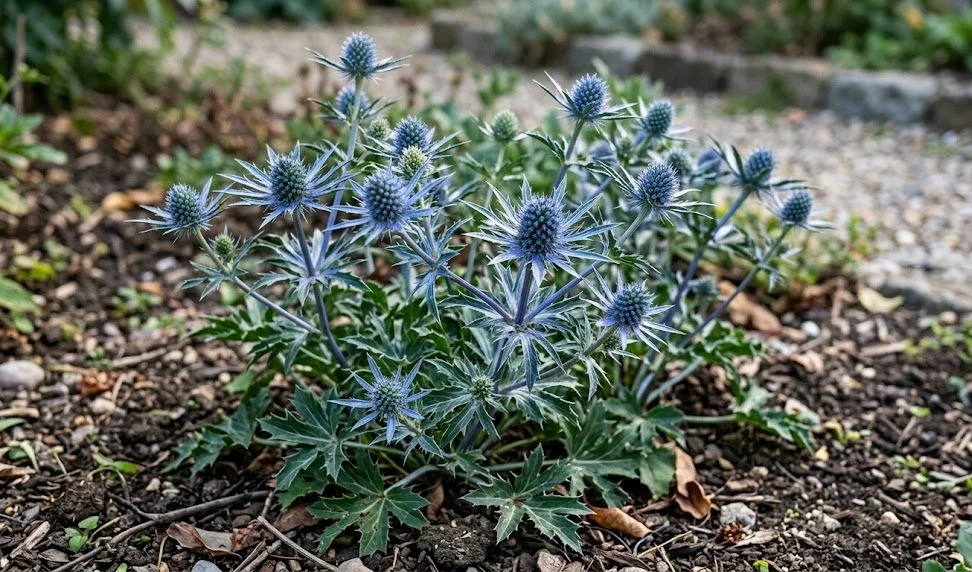

The irrigation and nutrient management of the blue eryngo are central to maintaining its structural integrity and vibrant metallic coloration. As a plant naturally adapted to arid and rocky environments, its needs are vastly different from those of typical lush garden perennials. Over-watering and over-fertilizing are common mistakes that can lead to a shortened lifespan and a loss of the plant’s unique aesthetic qualities. A professional approach focuses on mimicking natural cycles to promote a slow, steady growth that results in a more resilient specimen.
Watering strategies for this species must prioritize the prevention of saturated soil, which can quickly lead to root rot. During the first growing season, the plant requires regular moisture to help its deep taproot establish itself in the new environment. However, once the plant is mature, it becomes remarkably drought-tolerant and requires very little supplemental water. In most temperate climates, natural rainfall is often sufficient to meet the needs of an established blue eryngo.
When supplemental watering is necessary, it should be applied at the base of the plant rather than overhead. Keeping the foliage dry helps prevent the development of fungal diseases and ensures the crown does not trap moisture. The best time to water is early in the morning, allowing any accidental splashes to evaporate quickly in the sun. Irrigation should be deep and infrequent, encouraging the roots to grow further down into the soil profile in search of moisture.
During periods of prolonged drought, the plant may show signs of slight wilting, but it usually recovers quickly once hydration is restored. It is better to allow the soil to dry out completely between watering sessions than to keep it constantly damp. Professionals often use a soil moisture probe or simply their fingers to check the moisture levels several inches below the surface before deciding to irrigate. This disciplined approach to watering is the key to maintaining a healthy and long-lived plant.
Understanding nutrient requirements and soil fertility
The blue eryngo is a “lean” feeder, meaning it performs best in soils that are not overly enriched with nutrients. In its native habitat, it grows in sandy or calcareous soils that offer very little in the way of organic matter. High levels of nitrogen can cause the plant to grow too quickly, resulting in weak, floppy stems that cannot support the heavy flower heads. Therefore, the goal of fertilization is not to force growth but to provide a stable foundation for natural development.
More articles on this topic
In most garden settings, a single application of a balanced, slow-release fertilizer in early spring is all that is required. Alternatively, a thin layer of well-rotted compost spread around the base of the plant can provide enough nutrients for the entire season. This organic approach gradually improves the soil structure while releasing nutrients at a pace the plant can handle. Avoid placing fertilizer or compost directly against the crown to prevent potential rot issues.
If the soil is particularly poor or sandy, a professional might suggest a fertilizer with a higher potassium content to encourage stronger stems and more intense flower color. Phosphorus is also important for root development, especially for young plants that are still establishing their taproots. However, it is always best to perform a soil test before adding any amendments to avoid creating nutrient imbalances. Excess fertilizer can often do more harm than good for this specific perennial.
The timing of nutrient application is just as important as the type of fertilizer used. Applying fertilizer late in the summer or early autumn can stimulate new growth that will not have time to harden off before the first frost. This tender growth is highly susceptible to winter damage and can weaken the overall health of the plant. A professional nutrient schedule focuses on supporting the main growing phase in the spring and allowing the plant to naturally wind down as the season ends.
Managing hydration in different climate conditions
The local climate plays a significant role in determining how much and how often the blue eryngo should be watered. In regions with high humidity and frequent rainfall, the challenge is often keeping the plant dry enough. In these areas, planting in raised beds or incorporating extra grit into the soil can help manage excess moisture. The plant’s ability to withstand dry periods makes it an excellent choice for xeriscaping or water-wise garden designs.
More articles on this topic
In hotter, more arid climates, the plant may require more frequent attention during the height of summer. Even though it is drought-tolerant, extreme heat can stress the plant and reduce the duration of its flowering period. Providing a deep watering once every week or two during heatwaves can help the plant maintain its vigor without compromising its health. Mulching with a layer of stone or gravel can also help keep the root zone cool and reduce evaporation.
Winter hydration is another consideration that is often overlooked in professional gardening circles. While the plant is dormant, it still requires a very small amount of moisture to prevent the roots from desiccating completely. However, the most significant risk during winter is not dryness but excessive wetness from melting snow or heavy winter rains. Ensuring the site has excellent drainage is the best way to manage winter moisture levels and prevent crown loss.
Adjusting the watering routine as the seasons change is a hallmark of an expert gardener. As the days shorten and temperatures drop in the autumn, the plant’s water needs decrease significantly. Reducing irrigation at this time helps signal to the plant that it should begin preparing for dormancy. By following the natural rhythms of the environment, the gardener supports the plant’s internal biological clock and enhances its long-term survival.
Organic amendments and soil health
Focusing on the health of the soil as a living ecosystem provides the best long-term results for the blue eryngo. Using organic matter to improve soil texture is often more beneficial than using synthetic chemical fertilizers. Organic amendments like leaf mold or composted bark can help improve drainage in heavy soils while providing a slow source of nutrients. These materials also support beneficial soil microbes that help the plant’s roots absorb minerals more efficiently.
The use of mycorrhizal fungi during the planting process can also significantly enhance the plant’s ability to take up water and nutrients. These fungi form a symbiotic relationship with the roots, essentially extending the root system’s reach into the surrounding soil. This is particularly useful for taprooted plants that can sometimes struggle to establish in new locations. A professional gardener knows that a healthy subterranean environment is just as important as the visible parts of the plant.
Covering the soil surface with an inorganic mulch like pea gravel or crushed stone is a highly recommended practice. Unlike wood-based mulches, stone does not hold moisture against the crown and does not break down as quickly. It also helps to suppress weeds that would otherwise compete with the blue eryngo for nutrients and water. The aesthetic of a stone mulch also complements the architectural and rugged look of the plant itself.
Regularly monitoring the pH of the soil is another important aspect of maintaining the right nutrient environment. The blue eryngo prefers neutral to slightly alkaline conditions and may struggle in highly acidic soils. If the soil is too acidic, the plant may show signs of nutrient lock-out, where it cannot access the minerals it needs despite their presence in the soil. Adding small amounts of lime can help raise the pH to a more suitable level for this species.
Troubleshooting hydration and nutrition issues
Recognizing the early signs of watering or fertilizing problems can prevent permanent damage to the plant. If the leaves begin to turn yellow and feel soft or mushy, it is almost certainly a sign of over-watering or poor drainage. In such cases, the best course of action is to stop watering immediately and evaluate the soil conditions. If the problem persists, it may be necessary to move the plant to a drier location or improve the drainage around its current site.
Conversely, if the plant’s foliage looks crispy and brown at the edges, it may be suffering from extreme dehydration. While the blue eryngo is tough, even it has limits during prolonged periods of high heat and zero rainfall. A gentle, deep watering session can usually revive a dehydrated plant if caught early enough. It is important to avoid the temptation to over-compensate with too much water at once, as this can shock the system.
Issues related to over-fertilization often manifest as an abundance of lush, green leaves with very few or no flowers. If the stems are weak and require constant staking, it is a clear indication that the nitrogen levels are too high. To rectify this, the gardener should cease all fertilization and allow the plant to use up the excess nutrients over time. In some cases, adding a little extra grit or sand to the soil can help dilute the nutrient concentration.
A professional approach to care involves learning from these observations and adjusting the management plan accordingly. Every garden is unique, and what works in one location may need modification in another. By paying close attention to the blue eryngo’s response to watering and feeding, the gardener develops a deeper understanding of the plant’s specific needs. This knowledge leads to more confident decision-making and a more successful horticultural outcome.