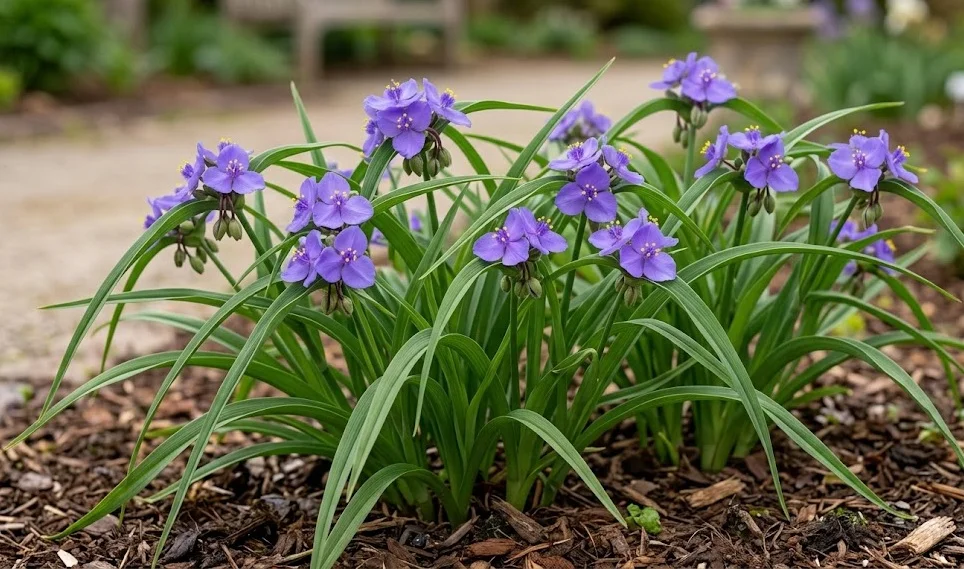

Watering is perhaps the most critical aspect of caring for garden spiderwort, as this plant is naturally adapted to moist environments. It is not a drought-tolerant species, and its foliage will quickly begin to wilt if the soil is allowed to dry out completely. To keep the leaves looking lush and the flowers blooming, you must establish a consistent moisture regime. The goal is to keep the soil feeling like a wrung-out sponge, never bone dry but also not saturated to the point of being muddy.
During the height of the summer heat, you may find it necessary to water your plants daily, especially if they are located in sunnier spots. It is always better to water deeply and less frequently than to provide light daily sprinkles that only reach the surface. Morning is the ideal time for this task, as it allows the foliage to dry before the cooler evening temperatures arrive. This practice significantly reduces the risk of fungal diseases that thrive on wet leaves during the night.
Choosing the right nutrients for your garden spiderwort will help it maintain its vibrant color and structural integrity. While these plants are not heavy feeders, they do benefit from a balanced application of fertilizer in the early spring. A slow-release granular product with an equal ratio of nitrogen, phosphorus, and potassium is usually sufficient for most garden soils. This provides a steady supply of energy that supports the rapid growth phase that occurs as the weather begins to warm up.
Organic fertilization methods are often preferred by professional gardeners who want to improve the overall soil health. Applying a thick layer of high-quality compost or leaf mold around the base of the plants acts as both a mulch and a fertilizer. As these organic materials break down, they release nutrients into the soil while also improving its ability to hold onto water. This approach creates a more sustainable environment for the beneficial soil organisms that help the spiderwort thrive naturally.
Monitoring the response of your plants to your watering and feeding routine is the best way to fine-tune your care. If you notice the leaf tips are turning brown, it might be an indication that the plant is receiving too much fertilizer or not enough water. Conversely, very pale or yellowing leaves can signal a nutrient deficiency, particularly a lack of nitrogen in the soil. By paying close attention to these visual cues, you can adjust your management techniques to meet the specific needs of your garden spiderwort.