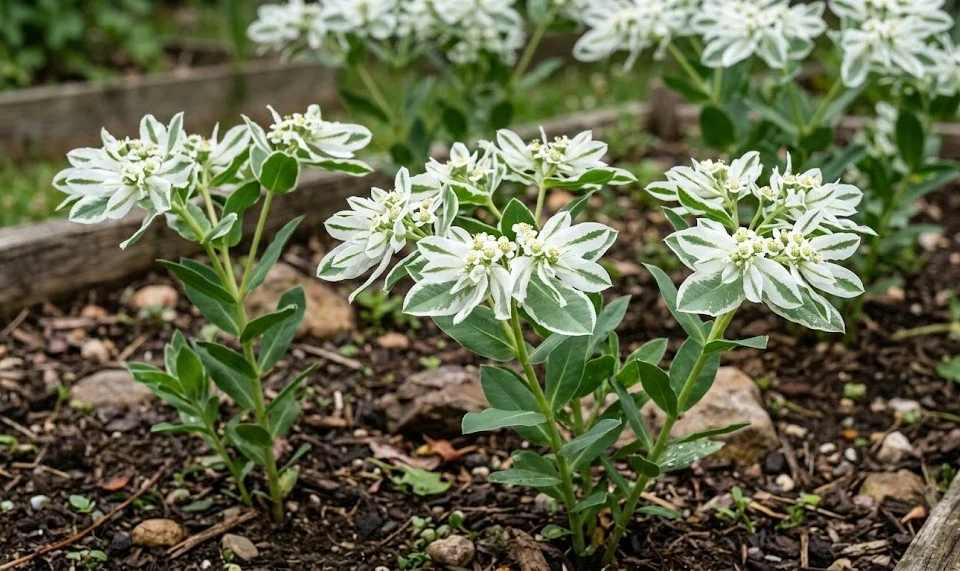

Successful planting of snow-on-the-mountain begins with timing your activities to match the warming soil of late spring. This plant is typically grown from seeds because it establishes itself quickly once the threat of frost has completely passed. You will notice that the seeds are relatively easy to handle and germinate with high success rates under the right conditions. Preparing your garden bed properly will ensure that the young seedlings have the best possible start in life.
Starting seeds indoors
If you want an early start, you can begin sowing the seeds indoors about six to eight weeks before the last frost. Use a high-quality seed starting mix and place the trays in a warm, bright location to encourage sprouting. It is vital to keep the soil consistently moist but never waterlogged during this delicate germination phase. Once the seedlings have developed a few sets of true leaves, they will be ready for a gradual hardening process.
Direct sowing in the garden
Many experienced gardeners prefer to sow the seeds directly into the garden soil once the ground has warmed up. You should clear the area of all debris and lightly rake the surface to create a fine seedbed for planting. Space the seeds according to the package instructions, usually burying them about a quarter inch deep in the earth. Water the area gently with a fine mist to avoid washing the seeds away from their designated spots.
More articles on this topic
The importance of soil temperature
Soil temperature plays a crucial role in how quickly your seeds will emerge from the dark ground. If the soil is too cold, the seeds may rot before they have a chance to begin their growth cycle. You should wait until the daytime temperatures are consistently high before committing your seeds to the outdoor environment. Using a simple soil thermometer can help you decide the perfect moment to start your planting activities.
Vegetative propagation techniques
While seeds are the most common method, some enthusiasts experiment with taking stem cuttings during the active growing season. You must be very careful with the milky sap when cutting the stems to ensure your own personal safety. Dip the cut end into a rooting hormone and place it in a well-draining potting medium to encourage growth. This method requires a bit more patience and controlled humidity to be successful compared to growing from seed.