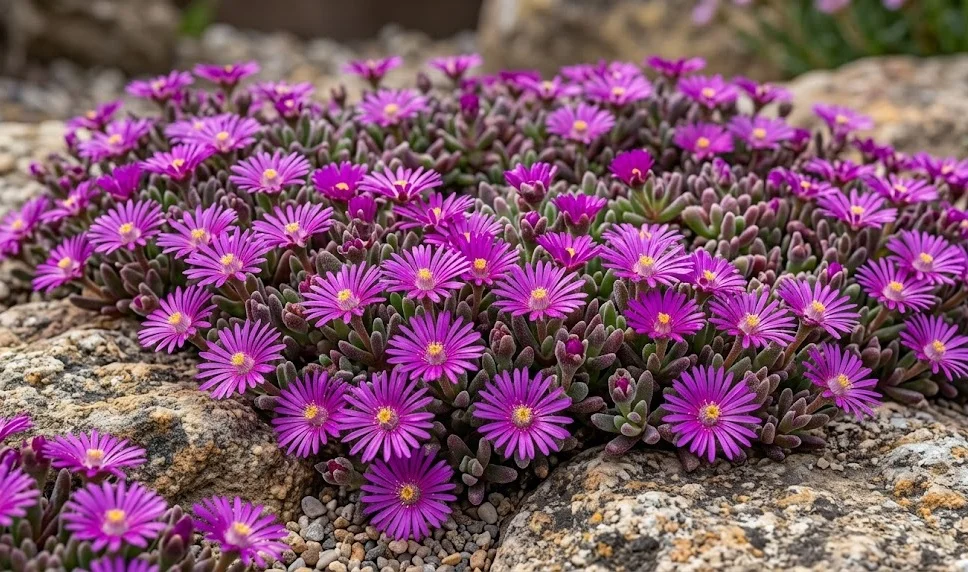

Maximizing solar exposure is the single most important factor in achieving the dense growth and prolific blooming that the hardy ice plant is famous for. You must recognize that these succulents are true sun-lovers, having evolved in open, rocky landscapes where shade is a rarity. Without sufficient light, the plant will quickly become leggy, lose its vibrant color, and produce fewer of its stunning purple flowers. Understanding how to manage light in your specific garden setting is a key skill for any professional or enthusiast gardener.
The ideal location for these plants is one that receives at least six to eight hours of direct, unobstructed sunlight every day. You should look for south or west-facing spots in your landscape that aren’t shaded by large trees or buildings during the middle of the day. This intense radiation is what fuels the plant’s metabolism and allows it to store the energy needed for its spectacular floral displays. In a garden with varying light levels, always reserve the sunniest areas for your ice plant collection.
Reflected light from nearby surfaces can also play a role in the plant’s overall health and growth rate. You might find that planting them near a light-colored stone wall or a paved walkway provides an extra boost of heat and light. This can be particularly beneficial in slightly cooler climates where every bit of solar energy helps to extend the growing season. Just be mindful of extreme heat buildup in mid-summer, which we have already discussed as a potential stressor.
If you have a garden with filtered light or partial shade, you may still be able to grow ice plants, but with some adjustments in expectations. You will notice that the growth habit becomes more open and the “carpet” effect may be less dense than in full sun. The flowering period might also be shorter or less intense, though the foliage can still remain attractive. A professional approach involves matching the plant to the light levels you have available or being creative in how you open up more sunny space.
Signs of light stress and adaptation
Monitoring your plants for signs of insufficient light is a vital part of your regular gardening routine. You should be concerned if you see the stems stretching out with large gaps between the leaves, a condition known as etiolation. This is the plant’s way of desperately reaching for a better light source, and it results in a much weaker and less attractive specimen. If you notice this happening, it is a clear signal that the plant needs to be moved to a brighter location.
More articles on this topic
The color of the foliage is another excellent indicator of whether the light levels are meeting the plant’s needs. In ideal conditions, the leaves should be a vibrant, healthy green, sometimes with a touch of red or purple at the tips. If the leaves become a pale, washed-out green or appear yellowish, it could be a sign that the plant is struggling with low light. Conversely, too much intense light after a period of shade can cause temporary bleaching, as we mentioned in the section on environmental stress.
Flowering behavior is perhaps the most obvious way the plant communicates its satisfaction with the available light. You will see the blossoms opening wide in the morning as soon as the sun hits them and closing up again in the late afternoon or during cloudy weather. This light-sensitive behavior is a fascinating adaptation that ensures the flowers are only open when pollinators are most active. If your plants are consistently failing to bloom despite being healthy, a lack of direct sunlight is the most likely culprit.
You can help your plants adapt to changing light levels by being thoughtful about any transitions you make in the garden. If you are moving a plant from a nursery or a shaded spot into full sun, do it gradually over several days to prevent shock. Start with just an hour or two of direct sun and slowly increase the exposure as the plant builds up its natural defenses. This professional technique ensures a smooth transition and keeps your succulent collection looking its best throughout the year.
Seasonal light shifts and garden design
The angle and intensity of sunlight change significantly as the seasons progress, and your garden design should take this into account. You should observe how shadows from buildings and deciduous trees move across your landscape during the spring and summer. A spot that is in full sun in June might be completely shaded in September, affecting the plant’s ability to prepare for winter. Professional garden planning involves anticipating these shifts to provide the most consistent light environment possible.
More articles on this topic
Deciduous trees offer a unique light dynamic that you can use to your advantage in certain climates. In the early spring, the leafless branches allow plenty of sun to reach the ground-level plants just as they are waking up. As the trees leaf out in the summer, they might provide a bit of welcome afternoon shade during the hottest part of the year. This natural rhythm can work well for ice plants if the total daily sun exposure remains high enough for their needs.
In urban or small-scale gardens, you can use mirrors or light-colored mulches to bounce more sunlight into darker corners. You will find that these creative solutions can make a significant difference in the vigor and flowering of sun-loving succulents. However, be careful not to create “hot spots” that could burn the foliage if the light is focused too intensely. This level of detail in light management is a hallmark of an expert gardener who understands the nuances of their space.
Ultimately, providing the right amount of light is about creating a balance that supports the plant’s natural beauty and resilience. You should view light as the primary fuel for your garden, and the ice plant as a high-performance machine that requires plenty of it. By carefully selecting your planting sites and monitoring your plants’ reactions, you will be rewarded with a spectacular show of color every year. Your expertise in light management will be evident in every healthy leaf and brilliant blossom in your collection.