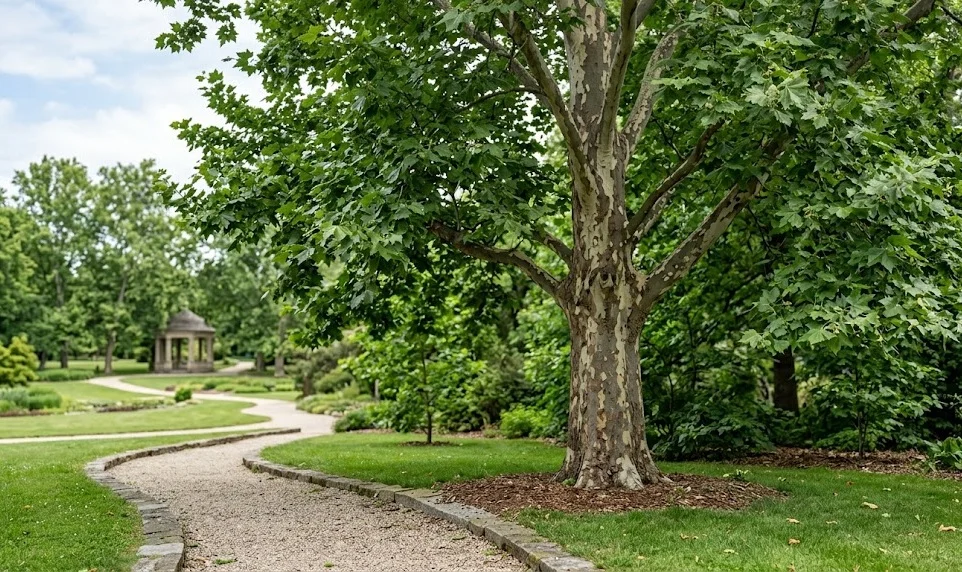

Managing the health and longevity of the London plane requires a consistent approach to soil management and structural monitoring. These majestic trees are known for their resilience in urban environments, yet they still demand specific attention to thrive over several decades. Understanding the balance between natural growth and human intervention is the first step for any serious gardener or urban planner. Professional care ensures that the tree maintains its iconic peeling bark and expansive canopy without succumbing to environmental stress.
Establishing a routine for soil inspection is vital for the long-term vitality of the London plane in various landscapes. High-quality mulch should be applied around the base to retain moisture and suppress competing weeds that steal nutrients. Compaction is a frequent issue in public spaces, so occasional aeration may be necessary to allow the root system to breathe properly. Monitoring the soil pH ensures that the tree can effectively absorb the minerals required for its characteristic vigorous growth throughout the seasons.
The aesthetic appeal of the London plane is often tied to its unique bark shedding process, which serves a functional purpose. This natural exfoliation allows the tree to shed pollutants and particulates that accumulate on the surface in busy metropolitan areas. While it might look unusual to the untrained eye, this process is a sign of a healthy, growing specimen that is actively expanding its girth. Caretakers should avoid peeling the bark prematurely, as the tree performs this task perfectly on its own timeline without external help.
Seasonal transitions bring different challenges for the care of these large deciduous trees during the middle of the year. In the heat of summer, providing deep hydration helps the tree withstand prolonged periods of drought and high temperatures. Autumn care focuses on clearing fallen leaves, which can harbor pathogens if left to decompose near the trunk for too long. Professional arborists recommend a thorough inspection during the dormant winter months to identify any structural weaknesses that were hidden by the summer foliage.
Soil health and nutrient management
Maintaining an optimal nutrient profile in the soil supports the dense leaf production that makes the London plane a prized shade tree. Organic matter should be integrated into the surrounding earth to improve the overall structure and water-holding capacity of the planting site. If the leaves appear pale or yellow during the peak growing season, it may indicate a nitrogen deficiency that requires targeted intervention. Testing the soil every few years provides a scientific basis for choosing the right supplements to sustain the tree’s massive biomass.
More articles on this topic
The physical space occupied by the root system must be protected from heavy machinery and excessive foot traffic to prevent root suffocation. London planes have extensive roots that can sometimes interfere with nearby infrastructure if the soil is too shallow or restricted. Providing a wide birth of soft landscaping around the trunk helps the tree establish a stable foundation against heavy winds and storms. Professionals often use organic compost teas to stimulate beneficial microbial activity, which enhances the tree’s natural defense mechanisms against environmental stressors.
Structural integrity and safety inspections
Regularly checking the canopy for dead or damaged wood is a critical safety measure for anyone managing these large-scale trees. The London plane can grow to immense heights, making the weight of its primary limbs a significant factor in its overall structural health. Weak crotches or narrow branch unions should be monitored for signs of cracking or splitting, especially after severe weather events. Using high-quality binoculars allows for a detailed inspection of the upper reaches of the tree without the immediate need for climbing equipment.
In urban settings, the interaction between the tree and the surrounding built environment must be managed with professional precision. Branches that grow too close to utility lines or buildings should be addressed before they cause damage or become a fire hazard. Cable bracing is sometimes employed by arborists to support heavy limbs that show signs of structural compromise but are otherwise healthy. These interventions help preserve the architectural form of the tree while ensuring the safety of the people and property located beneath its shade.
Environmental adaptability and resilience
The London plane is celebrated for its ability to withstand air pollution, which makes it a staple in industrial and urban reforestation projects. Its leaves are coated with a fine layer of hairs that trap dust and chemical particles, protecting the tree’s internal physiological processes. This adaptation allows the tree to maintain a high rate of photosynthesis even in environments where other species might struggle to survive. Constant exposure to heavy city air requires the tree to have a robust metabolic system to process and neutralize these external contaminants.
More articles on this topic
Despite its toughness, the tree can still experience stress from extreme weather fluctuations caused by changing climate patterns. Unusually long heatwaves or unexpected late frosts can impact the timing of bud break and the overall vigor of the new growth. Providing supplemental care during these periods of extreme weather helps the tree recover more quickly and maintain its growth trajectory. Observing the tree’s response to different environmental pressures allows gardeners to refine their care strategies and provide more personalized support for each individual specimen.
Seasonal monitoring and record keeping
Documenting the growth rate and leaf color of the London plane over several years provides valuable data for long-term management plans. Noticing subtle changes in the timing of leaf drop or the intensity of the autumn color can reveal underlying health trends. Professional managers often keep detailed logs of any treatments or pruning actions taken to track the tree’s response over time. This historical record is an essential tool for identifying recurring issues and planning for future maintenance needs in the landscape.
Communicating with other gardening professionals can provide insights into regional trends affecting the London plane in your specific area. Local climate variations play a huge role in how the tree develops and which care techniques prove to be the most effective. Sharing observations about pest cycles or moisture levels helps build a collective knowledge base for better tree stewardship. Staying informed about the latest research in arboriculture ensures that the care provided is based on the most current and effective scientific practices.