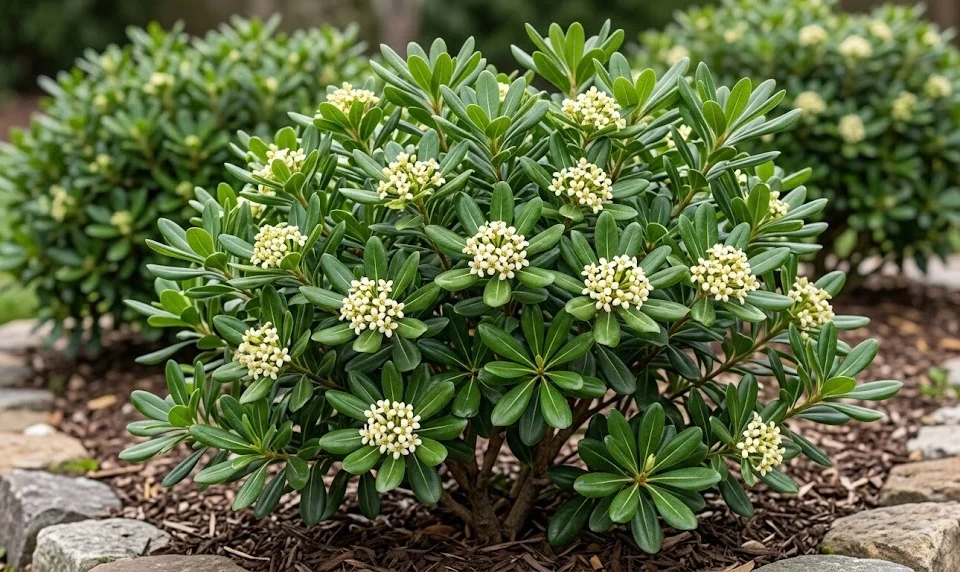

The Japanese cheesewood is highly regarded in the horticultural world for its exceptional adaptability to a wide range of light conditions. While it truly flourishes in full sun to partial shade, it is one of the few evergreens that can also maintain its beauty in more shaded garden corners. In full sun, the plant tends to grow more compactly, producing a denser canopy and a greater profusion of fragrant flowers. This makes it an excellent choice for south-facing walls or open landscapes where it can bask in the bright light of the day.
In regions with particularly hot and intense summers, providing some afternoon shade can be beneficial to prevent the leaves from becoming scorched. The ideal situation in these climates is “dappled sunlight,” where the plant receives bright light filtered through the canopy of taller trees. This mimics its natural habitat on the edges of forests, providing enough energy for growth without the stress of extreme heat. Observing how the sun moves across your garden will help you identify the perfect spot that balances these competing needs.
Light exposure also directly influences the color and texture of the foliage, which is a key aesthetic feature of this shrub. In brighter locations, the leaves often take on a lighter, more vibrant green hue and develop a thicker, more leathery feel. In deeper shade, the foliage tends to become a darker, richer green as the plant produces more chlorophyll to capture what little light is available. This versatility allows the Japanese cheesewood to serve as a unifying element in garden designs that transition from sunny borders to shaded woodland areas.
Flowering is perhaps the aspect of the plant most affected by the amount of light it receives during the spring and early summer. Specimens grown in full sun will almost always produce more flower clusters, filling the air with their signature orange-blossom scent. If your primary goal is a spectacular floral display, prioritizing a sunny location is the best strategy for success. However, even in partial shade, the plant will still produce enough blooms to be noticed and enjoyed by anyone passing by.
Managing shade and low-light areas
Growing Japanese cheesewood in shaded areas requires a slightly different approach to maintenance than growing it in full sun. While the plant is shade-tolerant, it will grow more slowly and may develop a more open, “leggy” habit as it stretches toward the light. You can manage this by performing regular light pruning to encourage branching and keep the shrub looking full and healthy. It is also important to avoid overwatering in shaded spots, as the soil will stay moist for much longer than in sunny locations.
More articles on this topic
Air circulation becomes even more critical in shaded areas where humidity can linger on the leaves for extended periods. Fungal diseases like powdery mildew or leaf spot are much more likely to occur when the foliage stays damp in the shade. To combat this, ensure the plant has plenty of space around it and is not crowded by other large shrubs or low-hanging tree branches. Thinning out some of the inner branches can also help air move through the canopy and keep the leaves dry and healthy.
The choice of variety can also make a difference when planting in lower light conditions, as some cultivars are better suited for shade than others. For example, variegated forms of the Japanese cheesewood often need a bit more light to maintain their striking leaf patterns and may revert to solid green in deep shade. If you have a particularly dark corner, choosing a standard green variety is usually the safest and most reliable option. Always check the specific recommendations for the cultivar you are purchasing to ensure it will thrive in your intended location.
In very deep shade, the plant may eventually become too sparse or fail to flower altogether, indicating that it has reached its physiological limit. If you notice the plant is struggling, you might consider thinning the overhead canopy of nearby trees to allow more light to reach the ground. Alternatively, using reflective surfaces like light-colored walls or garden mirrors can help bounce more light into the shaded area. By being creative and attentive, you can successfully incorporate this versatile evergreen into almost any part of your landscape.
Adapting to changing light conditions
It is common for the light levels in a garden to change over time as trees grow, buildings are constructed, or old structures are removed. The Japanese cheesewood is remarkably resilient to these shifts, but it may need some help to adapt to a sudden increase or decrease in light. If a large tree is removed and a shade-loving shrub is suddenly exposed to full sun, it can suffer from “light shock” or leaf burn. In such cases, providing temporary shade with a piece of lattice or shade cloth can give the plant time to adjust its leaf chemistry.
More articles on this topic
Conversely, if a sunny spot becomes increasingly shaded over the years, you may notice the plant’s growth slowing down and its flowering becoming less frequent. This is a natural response, and while the plant will likely survive, its role in your garden design may need to be re-evaluated. You can help the plant adapt by being more precise with your fertilization and watering, ensuring it has all the other resources it needs to stay strong. Sometimes, a more significant pruning can rejuvenate a shaded plant and help it make the most of the light that remains.
When moving a container-grown Japanese cheesewood, it is always best to do so gradually to avoid stressing the plant. If you want to move a pot from a shaded patio to a sunny deck, do it over several days, increasing the sun exposure by an hour or two each day. This “hardening off” process allows the leaves to thicken their protective cuticle and adjust their photosynthetic rate without being damaged. This careful approach ensures that the transition is seamless and that the plant continues to thrive in its new home.
In conclusion, understanding and managing the light requirements of the Japanese cheesewood is one of the keys to garden success. Its ability to grow in everything from full sun to deep shade makes it an invaluable tool for any landscape designer or home gardener. By observing your plant’s reaction to its environment and making small adjustments as needed, you can ensure it remains healthy and beautiful for years. Whether it’s a sunny hedge or a shaded specimen, this shrub will reward your attention with its lush foliage and intoxicating scent.