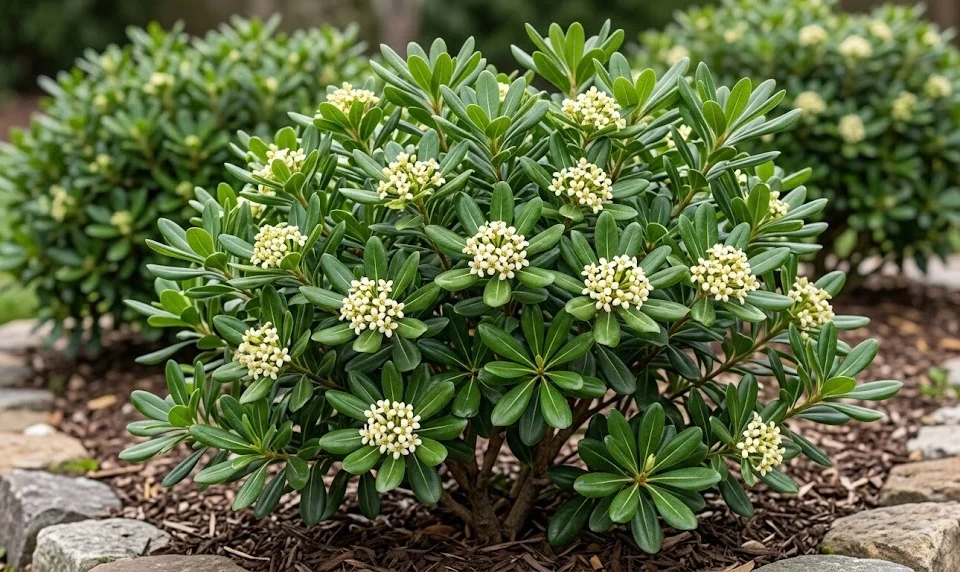

Providing the right amount of water is perhaps the most fundamental task in maintaining a healthy and vibrant Japanese cheesewood. During the first growing season, the primary goal is to ensure that the soil around the root ball stays consistently moist to encourage deep root penetration. You should aim to water deeply and less frequently rather than providing shallow daily sprinkles, which only encourage surface roots. This method teaches the plant to seek moisture further down in the soil, making it much more resilient in the long run.
Once the shrub has established its root system, it becomes remarkably drought-tolerant, but it still performs best with regular hydration. During periods of extreme heat or prolonged dry spells, even mature plants will appreciate a thorough soaking once a week. You can tell if the plant is thirsty by observing the leaves; if they lose their characteristic gloss or begin to droop slightly, it is time to get the hose out. Always try to water early in the morning or late in the evening to minimize evaporation and prevent leaf scorch.
The method of delivery is just as important as the quantity of water provided to the plant. Using a soaker hose or a drip irrigation system is highly effective because it delivers water directly to the soil surface without wetting the foliage. Keeping the leaves dry is a great way to prevent the development of fungal diseases that thrive in damp, stagnant conditions. If you must use a traditional sprinkler, ensure there is enough time for the leaves to dry completely before the sun sets.
Monitoring the drainage of your soil is essential to avoid the pitfalls of overwatering, which can be just as damaging as a drought. If you notice that water is standing around the base of the plant for more than an hour after watering, your soil may be too compacted or heavy. In such cases, it is better to skip a watering cycle and allow the soil to breathe before adding more moisture. Achieving the perfect balance of hydration requires a bit of trial and error as you learn the specific rhythms of your garden’s climate.
Understanding nutrient requirements
To maintain its lush, dark green foliage and produce a profusion of fragrant flowers, the Japanese cheesewood needs a steady supply of essential nutrients. While it is not a particularly “hungry” plant, it does benefit from regular feeding during the active growing season in spring and summer. Nitrogen is especially important for the development of healthy leaves, while phosphorus and potassium support root strength and flower production. A balanced, all-purpose fertilizer is usually sufficient to meet all these needs without over-complicating the process.
More articles on this topic
In many garden soils, natural decomposition of organic matter provides a baseline of nutrients, but supplemental feeding ensures the plant reaches its full potential. You can choose between granular slow-release fertilizers or liquid options, depending on your personal preference and the plant’s needs. Granular types are excellent for providing a steady stream of minerals over several months, reducing the risk of nutrient spikes. Liquid fertilizers, on the other hand, offer a quick boost that can be useful if the plant looks a bit tired or undernourished.
The timing of your fertilization efforts is crucial for the health of the shrub and the safety of the environment. The first application should ideally occur in early spring, just as the new growth starts to emerge from the buds. A second, lighter application in early summer will help the plant sustain its energy through the heat of the season. Avoid fertilizing in late autumn or winter, as this can stimulate new growth that is too soft to survive the upcoming cold weather.
It is always better to under-fertilize than to over-apply, as an excess of minerals can lead to salt buildup in the soil. High salt levels can damage the delicate root hairs, making it harder for the plant to absorb both water and nutrients. If you notice the tips of the leaves turning brown or looking burnt, it may be a sign of fertilizer toxicity. In such instances, flushing the soil with plenty of plain water can help wash away the excess salts and allow the roots to recover.
Organic vs. inorganic options
Choosing between organic and inorganic fertilizers is a decision that impacts not only your plants but also the overall health of your garden’s ecosystem. Organic options, such as well-rotted manure, compost, or seaweed extracts, work by improving the soil structure and feeding beneficial microbes. These slow-acting nutrients are released as the organic matter breaks down, providing a very natural and sustainable growth cycle. Many gardeners prefer this approach because it builds long-term soil fertility and encourages a diverse range of soil life.
More articles on this topic
Inorganic or synthetic fertilizers are engineered to provide specific ratios of nutrients in a form that is immediately available to the plant. They are often more concentrated and can be easier to measure and apply with precision, which is helpful for correcting specific deficiencies. For example, if your cheesewood is suffering from iron deficiency, a synthetic chelated iron supplement can provide a fast and effective remedy. However, these products do not contribute to soil health and can sometimes leach into the groundwater if used excessively.
A hybrid approach is often the most successful strategy for many home gardeners who want the best of both worlds. You can use compost as a top-dressing every spring to maintain soil quality and then supplement with a small amount of balanced synthetic fertilizer during peak growth. This combination ensures that the plant has access to both immediate energy and a long-term reservoir of organic goodness. Observing how your plant responds to different types of food will help you refine your strategy over the years.
Regardless of the type of fertilizer you choose, always follow the manufacturer’s instructions regarding application rates and safety. Applying fertilizer to dry soil can sometimes shock the roots, so it is a good idea to water the plant thoroughly before and after feeding. This helps distribute the nutrients more evenly through the root zone and prevents concentrated pockets of chemicals. Keeping a simple garden journal can help you track what you applied and when, allowing you to see the results of your efforts over time.
Signs of nutrient deficiencies and excess
Learning to read the leaves of your Japanese cheesewood is an invaluable skill that allows you to address nutritional issues before they become severe. One of the most common signs of a problem is chlorosis, where the leaves turn pale yellow while the veins remain green. This usually indicates a lack of iron or manganese, often caused by soil that is too alkaline for the plant’s liking. Adjusting the pH or applying a specialized foliar spray can often reverse this condition and restore the plant’s deep green color.
If you notice that the older leaves are turning yellow and falling off prematurely, the plant might be suffering from a nitrogen deficiency. Nitrogen is a mobile nutrient, meaning the plant will pull it from older growth to support new leaves at the tips of the branches. While some leaf drop is natural, an excessive amount suggests that the soil is depleted of this essential element. A balanced nitrogen-rich fertilizer will quickly help the plant regain its vigor and stop the premature shedding.
On the other hand, an overabundance of nutrients can cause its own set of problems that are equally concerning for the gardener. Dark, overly lush growth that is weak and floppy is often a sign of too much nitrogen, which can also make the plant more attractive to pests like aphids. If the edges of the leaves look scorched or brown, it could be a sign of potassium deficiency or, ironically, an excess of salts from over-fertilization. Striking the right balance is about providing just enough support without overwhelming the plant’s natural systems.
Stunted growth or a lack of flowers can sometimes be traced back to a phosphorus deficiency, although this is less common in established garden soils. Phosphorus is vital for energy transfer within the plant and is particularly important for root development and reproductive success. If your cheesewood seems stuck in time and refuses to bloom, a fertilizer with a higher middle number (phosphorus) might provide the necessary nudge. Always remember that environmental factors like light and water also play a role in these symptoms, so consider the whole picture before reaching for the fertilizer.
Seasonal adjustments for watering and feeding
As the seasons change, so too do the metabolic needs of your Japanese cheesewood, requiring a flexible approach to maintenance. In the spring, as the plant “wakes up” and begins to produce new shoots, both water and nutrient demands are at their highest. This is the time to be most diligent with your watering schedule and to provide the primary fertilizer application of the year. The goal is to provide a strong foundation for the intense period of growth and flowering that lies ahead.
Summer brings the challenge of high temperatures and increased evaporation, making moisture management the top priority for any gardener. Even though the plant is drought-tolerant, maintaining a consistent level of soil moisture will prevent the stress that can lead to pest infestations. You may need to increase the frequency of watering, but remember to keep the deep-soaking philosophy to encourage healthy roots. Mulching is particularly beneficial during these months to keep the root zone cool and hydrated against the summer sun.
As autumn approaches, the plant’s growth begins to slow down, and it starts preparing for the winter dormancy period. You should gradually reduce the frequency of watering to allow the wood to “harden off” and become more resistant to cold temperatures. This is also the time to stop all fertilization, as you do not want to encourage tender new growth that will be killed by the first frost. A final deep watering before the ground freezes can be helpful, especially in areas with dry winters, to ensure the evergreen leaves stay hydrated.
During the winter months, the Japanese cheesewood requires very little intervention, but it should not be completely forgotten. If you experience a particularly dry winter with no snow or rain, a light watering on a day when the ground is not frozen can prevent the leaves from drying out. Evergreens continue to lose moisture through their leaves even in winter, a process known as transpiration, which can be accelerated by cold winds. By staying mindful of the plant’s needs throughout the entire year, you ensure its health and beauty for the long term.