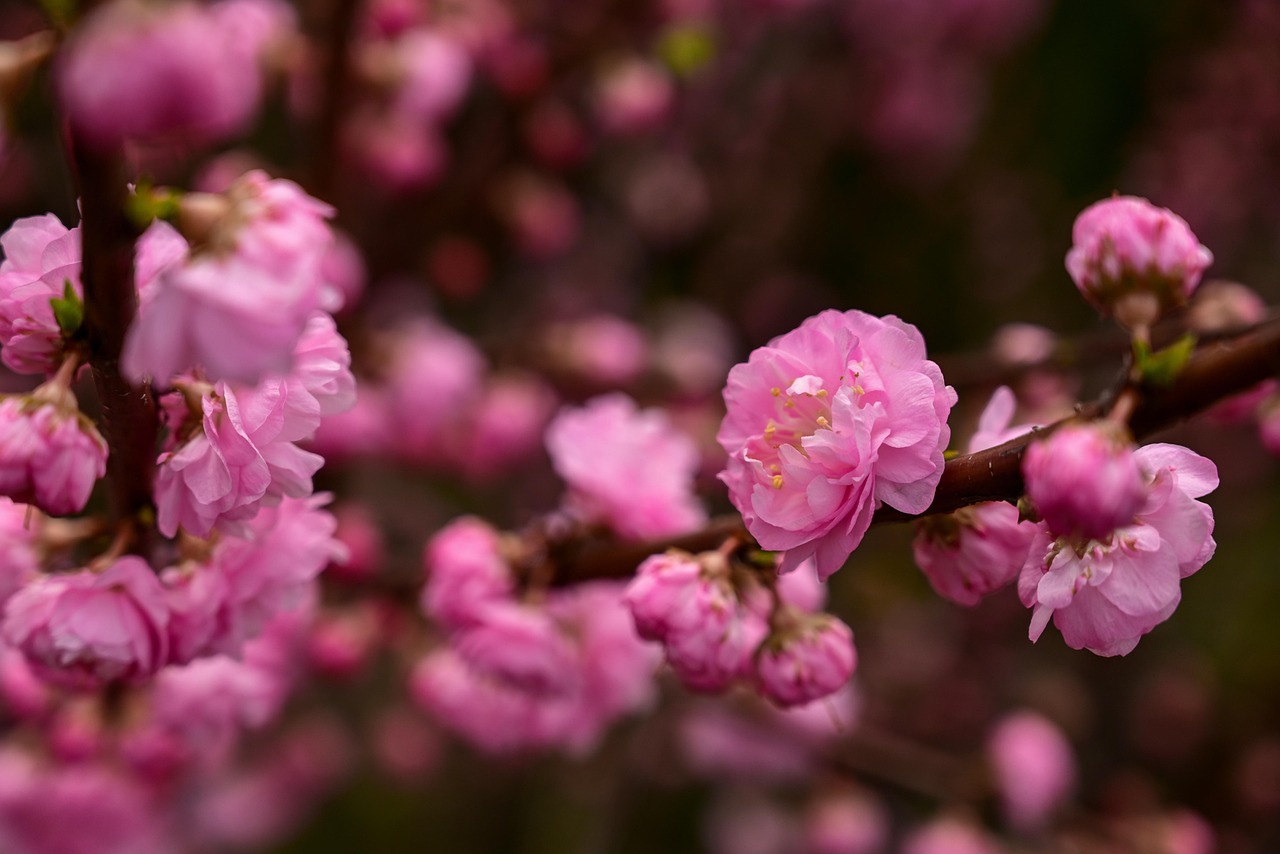

Successfully establishing a flowering almond in your garden begins with a thoughtful approach to the planting process and an understanding of its reproductive potential. This ornamental shrub is not only a visual delight but also a relatively straightforward subject for those interested in expanding their plant collection. Whether you are starting with a nursery-bought specimen or attempting to create new plants from existing ones, the timing and technique are paramount. By following professional standards, you can ensure that your new additions thrive and continue the cycle of spring beauty in your landscape.
Choosing the perfect site
Before you even pick up a shovel, you must identify a location that meets the biological requirements of the flowering almond. It demands full sun for at least six to eight hours a day to produce the dense clusters of flowers it is known for. While it can survive in partial shade, the growth will likely be thinner and the blooming significantly less impressive. You should also look for a spot that is protected from strong, drying winds that can damage the delicate petals in the spring.
The soil at the chosen site must have excellent drainage to prevent the roots from rotting in stagnant water. You should perform a simple drainage test by digging a small hole and filling it with water to see how quickly it disappears. If the water lingers for more than an hour, you will need to amend the area with organic matter or choose a different location. A slightly elevated spot or a gentle slope is often ideal because it naturally prevents water from pooling around the base of the plant.
Space is another critical consideration, as this shrub can eventually reach a width and height of several feet. You should research the specific variety you have chosen to ensure it has enough room to reach its mature size without being crowded. Planting it too close to walls or other large shrubs can restrict airflow and lead to increased disease pressure over time. Giving the plant enough breathing room will also make future maintenance tasks like pruning much easier and more effective.
Finally, consider the visual role the plant will play in your overall garden design throughout the seasons. Since it is deciduous and has its most dramatic impact in the spring, it works well when paired with evergreen backdrops or summer-blooming perennials. You should also consider the view from inside your home, as the spring blossoms are a wonderful sight to enjoy from a window. Planning the placement with both aesthetics and biology in mind will lead to a much more satisfying gardening experience.
More articles on this topic
The planting process
The best time to plant a flowering almond is during the dormant season, either in the late autumn or the very early spring. Planting during dormancy allows the root system to begin establishing itself without the stress of supporting active leaf growth or flowers. If you are planting in the spring, try to get the shrub into the ground as soon as the soil is workable and before the buds begin to break. This timing gives the plant a head start on the growing season and reduces the risk of transplant shock.
When you are ready to plant, dig a hole that is twice as wide as the root ball but no deeper than the container it came in. It is a common mistake to plant too deep, which can suffocate the roots and lead to trunk rot at the soil line. The top of the root ball should be level with or slightly above the surrounding soil surface to allow for settling. Scuffing the sides of the hole with your shovel can also help the roots penetrate the surrounding soil more easily.
Carefully remove the shrub from its nursery pot and gently loosen any roots that have started to circle around the ball. Place the plant in the center of the hole and fill it halfway with a mixture of native soil and a bit of compost. Water the hole at this stage to settle the soil and remove any large air pockets that could dry out the roots. Once the water has drained, finish filling the hole and firm the soil gently with your hands, avoiding heavy tamping.
Immediately after planting, apply a thick layer of organic mulch around the base of the shrub, keeping it a few inches away from the trunk. This mulch helps retain moisture, suppresses weeds, and regulates the soil temperature as the new roots begin to grow. You should water the newly planted shrub deeply once or twice a week, depending on the weather, for the first full growing season. Consistent moisture is the most important factor in helping a new plant survive the transition to its permanent home.
More articles on this topic
Propagation from softwood cuttings
Expanding your collection of flowering almonds is most easily achieved through the use of softwood cuttings taken in the early summer. At this time of year, the new growth is flexible but has started to mature enough to hold its shape. You should select healthy, non-flowering shoots that are about six inches long and have several sets of leaves. Taking cuttings in the cool of the morning when the plant is most hydrated will significantly increase your chances of success.
Prepare the cuttings by removing the leaves from the bottom half of the stem to expose the nodes where roots will form. It is often helpful to dip the cut end into a rooting hormone powder or gel to stimulate faster and more uniform root development. Insert the cuttings into a pot filled with a sterile, well-draining medium like a mix of peat and perlite. Ensure that at least two nodes are buried beneath the surface, as these are the points where the new roots are most likely to emerge.
To maintain high humidity around the cuttings, you can cover the pot with a clear plastic bag or place it in a mini greenhouse. Keep the cuttings in a bright location but out of direct sunlight, which could overheat the delicate stems and kill them. You should mist the cuttings regularly to keep the leaves hydrated while the roots are still developing. In about four to six weeks, you can gently tug on the cuttings to see if they have anchored themselves with new roots.
Once the cuttings have established a strong root system, they can be transplanted into individual pots with regular potting soil. You should continue to grow them in a sheltered location for the remainder of the season to allow them to gain strength. It is usually best to wait until the following spring to plant these young shrubs out into the garden. This gradual hardening-off process ensures that the new plants are robust enough to handle the environmental challenges of the open landscape.
Advanced propagation techniques
Hardwood cuttings offer another method for propagation, though they generally take longer to root than softwood versions. These cuttings are taken in late autumn or early winter after the leaves have fallen and the plant is fully dormant. You should select straight, one-year-old stems and cut them into sections about eight to ten inches long. Unlike softwood cuttings, these can often be bundled together and buried in a trench of sand over the winter.
In the spring, these hardwood cuttings are dug up and planted into a nursery bed where they will hopefully begin to grow roots and leaves. This method is often used by professional growers because it requires less intensive daily care than softwood cuttings. However, the success rate can be lower, so it is wise to take more cuttings than you actually need. Persistence and patience are key when working with dormant wood, as it can take several months to see results.
Grafting is a more complex technique often used to create the “tree” form of the flowering almond on a standard trunk. This involves joining a piece of the ornamental shrub (the scion) onto the root system of a compatible species (the rootstock). While this is usually done in commercial nurseries, an adventurous home gardener can certainly attempt it with the right tools and timing. Successful grafting requires precise cuts and firm contact between the cambium layers of the two different plants.
Layering is a low-stress propagation method where a low-hanging branch is bent down to the ground and partially buried. You should nick the underside of the branch and treat it with rooting hormone before pinning it into the soil. Over the course of a year, the buried section will develop its own roots while still being nourished by the parent plant. Once a strong root system has formed, the new plant can be severed from the mother and moved to a new location.

