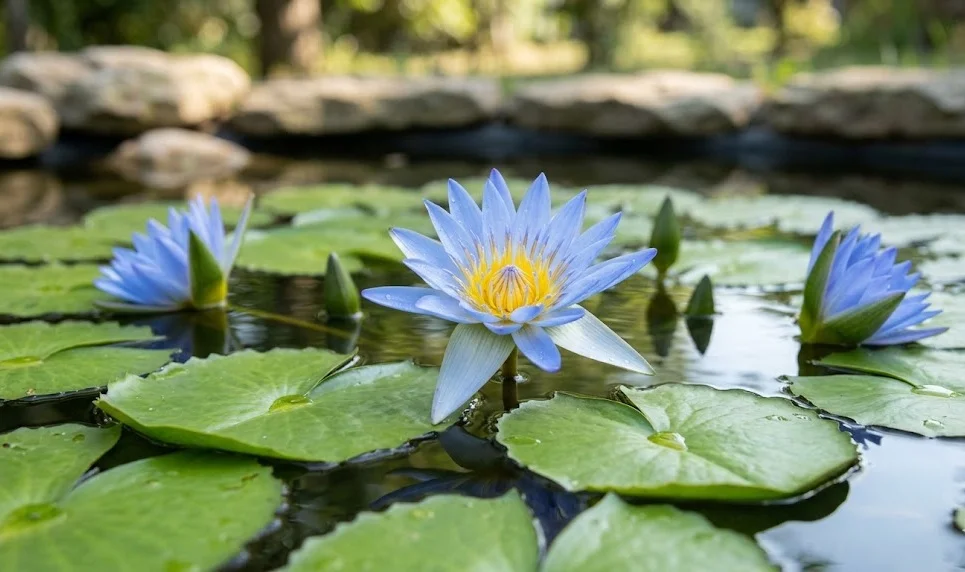

Pruning and cutting back the blue water lily is a vital maintenance task that ensures the plant remains healthy, productive, and aesthetically pleasing. Regular intervention prevents the accumulation of decaying matter, which can negatively impact water quality and harbor pests. By removing old foliage and spent flowers, the gardener directs the plant’s energy toward new growth and vibrant blooms. A professional pruning routine is essential for maintaining the ecological balance of the pond and the long-term vigor of this spectacular aquatic species.
Routine maintenance and deadheading
The most frequent pruning task for a blue water lily is the removal of spent flowers, a process commonly known as deadheading. Once a flower has finished its three-to-four-day blooming cycle, it will naturally begin to sink below the water surface to develop seeds. By cutting these old flowers off before they submerge, you prevent the plant from wasting valuable energy on seed production. This redirected energy is then available to fuel the development of new buds, ensuring a continuous display of color throughout the summer.
To deadhead correctly, follow the flower stem down as far as possible toward the crown of the plant and make a clean cut. It is important to remove the entire stem rather than just the flower head to prevent the remaining tissue from rotting underwater. Professional gardeners often use long-handled aquatic shears to reach the base of the plant without having to enter the water. This consistent attention keeps the plant looking tidy and encourages a much longer and more prolific flowering season.
In addition to flowers, old or yellowing lily pads should be removed regularly to maintain the plant’s health and appearance. As new leaves emerge from the center of the crown, the older leaves on the outer edges will naturally begin to decline. These aging leaves become less efficient at photosynthesis and can become a target for pests like aphids or snails. Removing them as soon as they show signs of yellowing prevents them from decaying and polluting the pond water.
Maintaining a clear surface area is another important goal of routine pruning, as the blue water lily can grow quite vigorously. If the leaves begin to overlap or push each other out of the water, it limits the air circulation and light reaching the rest of the pond. A professional standard is to ensure that no more than sixty to seventy percent of the water’s surface is covered by foliage. Regular thinning of the leaves ensures that both the lily and the pond’s oxygenating plants can function at their best.
More articles on this topic
End of season cutting and cleanup
As the autumn temperatures begin to drop and the plant’s growth slows down, a more comprehensive pruning session is required. This “cutting back” process prepares the blue water lily for its dormant winter period and is a critical step in overwintering. You will notice the leaves turning brown and the stems becoming soft as the plant moves its nutrients into the rhizome. This is the natural signal that it is time to perform the final cleanup of the year.
The goal of end-of-season pruning is to remove all the surface and submerged foliage, leaving only the central crown intact. Use sharp, sterilized shears to cut all stems back to within five to ten centimeters of the soil surface. Removing this bulk of organic matter is vital because if it is left to rot in the pond over winter, it can cause a dangerous spike in ammonia levels. A clean plant is much less likely to suffer from fungal infections or rot while it is dormant.
During this cleanup, it is also a professional practice to inspect the crown and the top of the soil for any signs of pests or disease. Any debris that has collected on top of the pot, such as fallen leaves from nearby trees or accumulated silt, should be gently cleared away. This ensures that the plant is entering its winter rest in the best possible condition. Taking the time to do a thorough job in the autumn saves a significant amount of work when the new growing season begins in spring.
If the plant is to be overwintered in the pond, the cut-back lily can now be moved to its deeper winter position. If it is being brought indoors, the cleaned pot is much easier to handle and store without the mess of dying leaves. This seasonal transition is a fundamental part of the professional care cycle and respects the natural life stages of the blue water lily. A well-pruned plant is a resilient plant that will return with renewed energy once the water warms up again.
More articles on this topic
Tools and hygienic practices for pruning
Using the correct tools is essential for performing clean, professional cuts that do not damage the sensitive tissues of the lily. A pair of high-quality aquatic pruning shears with a long handle is the most useful tool for any pond owner. These allow for precise cuts deep underwater while providing enough leverage to slice through the often-thick stems of a mature lily. Keeping the blades sharp is critical, as dull tools can crush the stems, leading to increased risk of rot and disease.
Hygiene is the other half of the professional pruning equation, as tools can easily spread pathogens between different plants in the pond. Before starting work, and especially between pruning different specimens, the blades should be disinfected with a quick wipe of rubbing alcohol. This simple step prevents the transmission of fungal spores or bacterial infections that could devastate your entire aquatic collection. It is a small habit that demonstrates a high level of horticultural skill and care for the environment.
When pruning, it is important to handle the plant gently to avoid bruising the delicate new shoots that may be emerging from the crown. Always make your cuts in one smooth motion rather than sawing through the stems, which can create ragged edges that are slow to heal. After pruning, be sure to remove all the cut material from the pond immediately using a net or by hand. Leaving “floaters” in the water defeats the purpose of pruning and can clog pond filters or pumps.
Finally, observing the plant’s reaction to pruning can provide valuable feedback on your technique and the plant’s overall vigor. A healthy blue water lily should respond to regular deadheading by producing more buds within a week or two. If the plant seems to struggle after a pruning session, it may be a sign that it needs more nutrients or that the water quality needs adjustment. By combining technical skill with careful observation, you can ensure that your blue water lily remains a stunning and healthy feature of your garden for many years to come.