
Mastering the light requirements of these perennials is essential for producing the most spectacular and consistent floral displays in your garden. You should understand that light is the primary source of energy that fuels everything from root development to the intensity of the petal colors. While they are adaptable, providing the optimal solar exposure will significantly improve the health and longevity of your plants. This professional guide explains how to manage light levels to achieve peak performance from your garden irises.
Optimal solar exposure
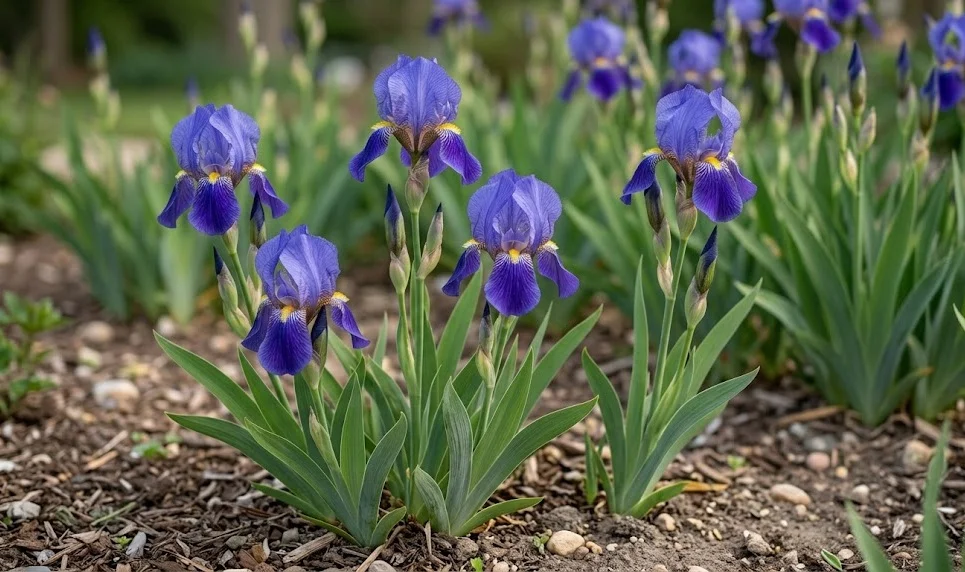
To reach their full potential, these plants generally require at least six to eight hours of direct sunlight every day. You should place them in the sunniest spots of your garden where they are not shaded by large trees or structures for most of the day. Full sun exposure encourages the development of strong, sturdy stalks that can support the weight of the large flowers. Without enough light, the plants may become “leggy” and prone to flopping over, which ruins the aesthetic appeal of the display.
The morning sun is particularly valuable because it helps dry the dew off the foliage quickly, reducing the risk of fungal diseases. You should prioritize locations that receive clear eastern exposure if you have a choice of where to plant your collection. The intense afternoon sun is also beneficial, provided the plants are well-hydrated and the soil is not allowed to become bone-dry. Sunlight is the engine that drives the storage of energy in the rhizomes for the following year’s growth.
In very hot climates, a small amount of light afternoon shade can actually be beneficial to prevent the colors from fading too quickly. You should observe how the light moves across your garden throughout the day to find the perfect balance for your specific region. The goal is to provide as much light as possible without causing heat stress or scorching the delicate petal tissues. Professional gardeners often use the placement of other plants to provide this subtle, filtered light during the hottest part of the day.
If you find that your irises are not blooming well, the most likely culprit is a lack of sufficient sunlight. You should consider moving them to a brighter location if they have been overshadowed by the growth of nearby shrubs or trees over time. The change in performance after moving a “sun-starved” plant to a bright spot can be quite dramatic in the following season. Consistent, high-quality light is the single most important factor in the success of these beautiful perennials.
More articles on this topic
Managing partial shade conditions
While full sun is the ideal, many varieties can still perform reasonably well in locations that receive only partial shade. You should expect that plants grown in less-than-optimal light will produce fewer flowers and may bloom slightly later than those in full sun. However, the foliage can often remain quite lush and attractive even when the floral display is somewhat diminished. Understanding these trade-offs allows you to integrate the plants into more diverse areas of your landscape design.
When planting in partial shade, you must be even more diligent about providing excellent drainage and air circulation. The reduced light means that moisture will evaporate more slowly from the soil and the foliage, increasing the risk of rot and leaf spot. You should space the plants a bit further apart in shaded areas to compensate for this slower drying time. A professional approach involves adjusting all your cultural practices to match the specific light conditions of each planting site.
You should also be aware that the intensity of the “shade” matters just as much as the number of hours of direct light. Dappled light through a high, thin canopy of trees is much better for the plants than the deep, dark shade found under low-hanging evergreens. If you can prune the lower branches of nearby trees to let in more light, your irises will respond with better growth and more flowers. Managing the environment is often as important as managing the plants themselves in a professional garden.
Choosing the right varieties can also make a big difference in how well your garden performs in limited light. Some cultivars are known for being more shade-tolerant than others, so you should research the specific needs of each plant you add to your collection. Even within the same species, there can be significant differences in how individual varieties respond to lower light levels. Matching the plant to the place is a fundamental skill of successful horticultural management.
More articles on this topic
Light and bloom induction
The relationship between light and the timing of the bloom cycle is a complex biological process that you can use to your advantage. You should know that the plant uses the changing length of the days to determine when it is time to start producing flower stalks. Consistent light levels throughout the early spring are necessary to ensure that this process is not interrupted or delayed. A sudden change in light exposure, such as a large tree leafing out, can sometimes cause the plant to “abort” its flower buds.
Reflected light from light-colored walls or fences can also provide an extra boost of energy to plants in marginally shaded areas. You should consider the entire environment around the plant, not just the light coming directly from the sky. Using these subtle environmental factors can help you succeed with plants in spots where they might otherwise struggle. It is this attention to detail that separates a professional gardener from a casual hobbyist.
During the post-bloom period, light remains critical as the plant begins the work of building up its reserves for the next year. You should never cut back the green foliage, as this is the only way the plant can capture light and turn it into energy. Even though the flowers are gone, the leaves need full sun to perform their job effectively until they naturally begin to decline in the autumn. Neglecting the light needs of the plant in the late summer will directly lead to a poor show the following spring.
Finally, you should keep a garden journal to record how different light levels affect the performance of your plants over several years. This data will allow you to make informed decisions about where to place new additions and when to move existing ones. Every garden has its own unique light patterns, and learning them is a key part of becoming an expert in your own landscape. Your commitment to understanding and managing light will be rewarded with a healthy, vibrant, and beautiful iris collection.