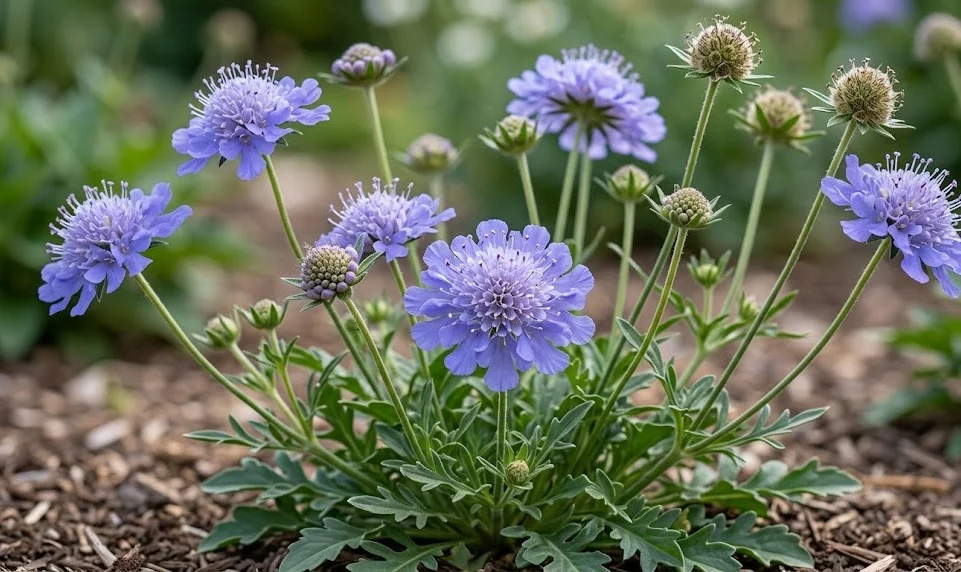

Sunlight is the primary driver of growth and flowering for the Caucasian pincushion flower, and it requires a generous amount of it to thrive. For the best results, you should place these perennials in a location that receives at least six to eight hours of direct, unfiltered sun every day. This high level of light intensity is what fuels the production of the large, nectar-rich blooms that the species is famous for. Without enough light, the plant will struggle to produce buds and may become weak and spindly over time.
In addition to the number of flowers, the quality of the light also affects the color and sturdiness of the plant’s stems. Plants grown in full sun typically have much stronger, more upright stalks that can support the weight of the blossoms without flopping. The colors of the petals are also much more vibrant and true to the variety when they are exposed to plenty of natural light. If your garden has areas of shifting light, aim for the spot that gets the strongest morning and midday sun for these specific plants.
While the plant loves the sun, you should also be aware of the intensity of the light in your specific geographic region. In very southern or high-altitude locations, the midday sun can sometimes be so intense that it causes the delicate petals to fade or scorch. In these specific cases, a spot that provides a bit of filtered afternoon shade can actually be beneficial for preserving the beauty of the blooms. Understanding the balance between “enough” and “too much” is part of the professional skill set required for top-tier gardening.
Observing how the sun moves across your garden throughout the different seasons will help you pick the absolute best spot for planting. A location that is sunny in the spring might become shaded by a leafy tree as the summer progresses, which can impact the plant’s performance. You want a site that maintains its sunny character from the time the first shoots appear until the last flowers fade in the autumn. This consistent light exposure is the foundation of a healthy and productive Caucasian pincushion flower display.
Impacts of shade and low-light conditions
When the Caucasian pincushion flower is planted in too much shade, it will quickly show signs of distress and poor performance. The most obvious symptom is a significant reduction in the number of flowers, as the plant simply doesn’t have the energy to produce them. You might also notice that the stems become “leggy” or elongated as they stretch toward the nearest source of light. This weakened structure makes the plant much more susceptible to damage from wind, rain, and the weight of its own foliage.
More articles on this topic
In lower light conditions, the foliage itself may become a darker, duller green and may be more prone to fungal diseases like powdery mildew. This is because the leaves take longer to dry out after rain or dew when they aren’t exposed to the direct drying power of the sun. The lack of air movement and light creates a microclimate that is unfortunately perfect for many common garden pathogens. If your plants look “unhappy” and are not blooming, a lack of adequate light is the first factor you should investigate.
If you have a shaded garden but still want to grow these beautiful flowers, you might need to get creative with your placement. Try planting them in containers that can be moved to the sunniest spots of the patio or deck as the light changes through the day. You can also use reflective surfaces, like light-colored walls or fences, to bounce more light back onto the plants in partially shaded areas. However, for the best results, there is simply no substitute for the raw power of direct, natural sunlight.
Professional gardeners often use the “sun-loving” nature of this plant to their advantage in garden design. By placing them in the brightest spots, you create focal points that draw the eye and provide a sense of warmth and energy to the landscape. Pairing them with other sun-loving perennials like coneflowers or salvia ensures that the entire border thrives under the same environmental conditions. Avoiding the “shade trap” is a simple but effective rule for anyone looking to master the cultivation of this stunning Caucasian native.
Adapting to microclimates and seasonal shifts
Every garden has unique microclimates that can affect how much light your Caucasian pincushion flowers actually receive on a daily basis. A spot near a south-facing brick wall will be much hotter and brighter than a spot in the middle of a lawn, even if they both get “full sun.” You should take these factors into account when deciding on your watering and care routines, as high-light, high-heat areas will dry out much faster. Being aware of these subtle differences is what allows a professional to achieve exceptional results in any environment.
More articles on this topic
As the seasons shift from spring to summer and finally to autumn, the angle and intensity of the sun change significantly. In the early spring, the sun is lower in the sky and may not reach certain parts of the garden that will be fully illuminated by June. Conversely, as the days shorten in September, some areas may fall into shadow earlier in the afternoon, potentially cutting the flowering season short. Planning your garden layout with these annual cycles in mind ensures that your plants always have the light they need to succeed.
If you find that a plant is not performing well in its current location due to light issues, don’t be afraid to move it. Early spring or late autumn are the best times to transplant your pincushion flowers to a sunnier or more protected spot. They generally handle moving quite well as long as you take a large enough root ball and water them in thoroughly after the transition. This flexibility allows you to fine-tune your garden design based on the real-world performance of your plants over several years.
Ultimately, providing the right light is about understanding the biological needs of the plant and matching them with your garden’s reality. The Caucasian pincushion flower is a creature of the open, sunny highlands, and it will always look its best when it feels “at home” in the sun. By prioritizing light in your care strategy, you are ensuring a vibrant, healthy, and flower-filled garden for years to come. Professional-level plant care starts with respecting these fundamental requirements and acting as a good steward of your garden’s natural resources.