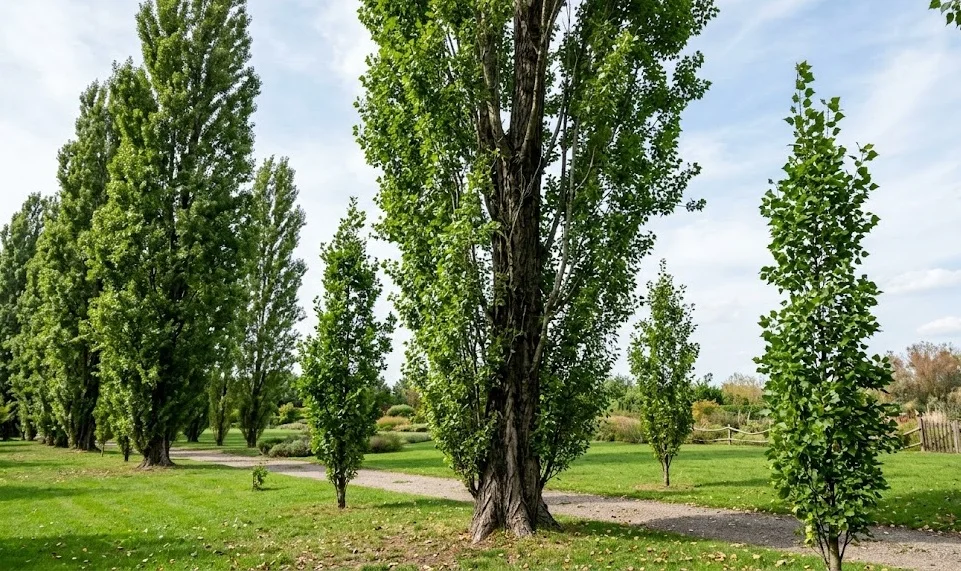

Pruning is a professional necessity for maintaining the health and iconic shape of the lombardy poplar throughout its life. Because these trees grow so rapidly, they can quickly develop structural issues that require manual intervention to correct. The primary goal of pruning is to remove dead, damaged, or diseased wood while encouraging a strong central leader. A well-pruned tree is not only more beautiful but also much safer and more resilient to the elements.
Structural pruning is best performed while the tree is still young to establish a solid framework for future growth. You should identify the strongest vertical stem to be the main leader and remove any competing stems that try to grow alongside it. This ensures that the tree maintains its narrow, columnar form rather than becoming a multi-trunked shrub. Removing these “competitors” early on prevents the development of weak crotches that could split in the wind.
Narrow-angled branches are a common feature of this variety, but they can be a point of failure as the tree matures. These branches often trap bark between them and the main trunk, which prevents a strong physical connection from forming. If possible, you should remove these branches or thin them out to reduce the weight they put on the trunk. This professional technique improves the tree’s overall integrity and extends its lifespan in your landscape.
Always use sharp, high-quality pruning shears or saws to ensure clean cuts that heal quickly. Ragged or torn bark from a dull tool creates an open invitation for pests and diseases to enter the tree. Make your cuts just outside the branch collar, which is the slightly swollen area where the branch meets the trunk. This allows the tree to use its natural healing processes to seal the wound effectively without the need for artificial dressings.
Maintenance and health
Regular maintenance pruning involves removing any suckers that sprout from the base of the tree or along the lower trunk. These suckers are unproductive and draw valuable energy away from the main parts of the tree where it is needed. Keeping the base clean also enhances the vertical aesthetic of the poplar, making it look more professional and intentional. You can simply snip these off as soon as they appear throughout the growing season.
More articles on this topic
Thinning out the inner canopy is another important task that improves air circulation and light penetration. In a dense tree like the lombardy poplar, the inner branches can often die off due to a lack of sunlight and fresh air. By selectively removing some of the smaller, inner twigs, you are helping the tree stay healthy from the inside out. This practice also reduces the “sail effect” during high winds, making the tree more stable.
If you notice any branches that are crossing or rubbing against each other, one of them should be removed. Rubbing bark creates wounds that never heal properly and can become entry points for fungal cankers. It is always better to sacrifice one small branch to save the health of a larger, more important one. Professional gardeners keep a close eye on the interior of the tree to catch these issues before they become major problems.
Drastic “topping” or cutting back the top of the tree should be avoided at all costs, as it ruins the natural form. Topping leads to a flush of weak, vertical sprouts that are poorly attached and very prone to breaking. If a tree has grown too tall for its location, it is often better to remove it and plant a smaller species instead. Professional pruning is about enhancing the tree’s natural beauty, not fighting against its fundamental nature.
Tools and timing
The absolute best time to perform major pruning on a lombardy poplar is during the late winter or very early spring. At this time, the tree is dormant, which means there is no sap flowing to attract pests or spread diseases. You can also see the structure of the branches much more clearly when the leaves are gone, making it easier to decide which cuts to make. Winter pruning also gives the tree a chance to start healing as soon as the spring growth begins.
More articles on this topic
For smaller branches and twigs, a pair of bypass pruners is the most professional tool to use. These act like scissors and provide a clean, precise cut that doesn’t crush the delicate plant tissues. For larger branches that are more than an inch thick, a pruning saw or loppers will be necessary to get through the wood. Always keep your tools clean and disinfected with a simple alcohol solution between trees to prevent the spread of infections.
Safety is a major consideration when pruning tall trees like poplars, and you should never work beyond your comfort level. If a branch is too high to reach from the ground or a small ladder, it is time to call in a professional arborist. They have the specialized equipment and training to safely remove large limbs and work at great heights. Investing in professional help for major structural work is a wise decision for both you and your tree.
Finally, remember that pruning is an ongoing process rather than a one-time event in the life of a tree. By doing a little bit of maintenance every year, you can avoid the need for major, stressful interventions later. A well-maintained lombardy poplar is a stunning sight and a source of pride for any dedicated gardener. Your efforts in pruning will be reflected in the tree’s health, safety, and magnificent vertical presence in your garden.