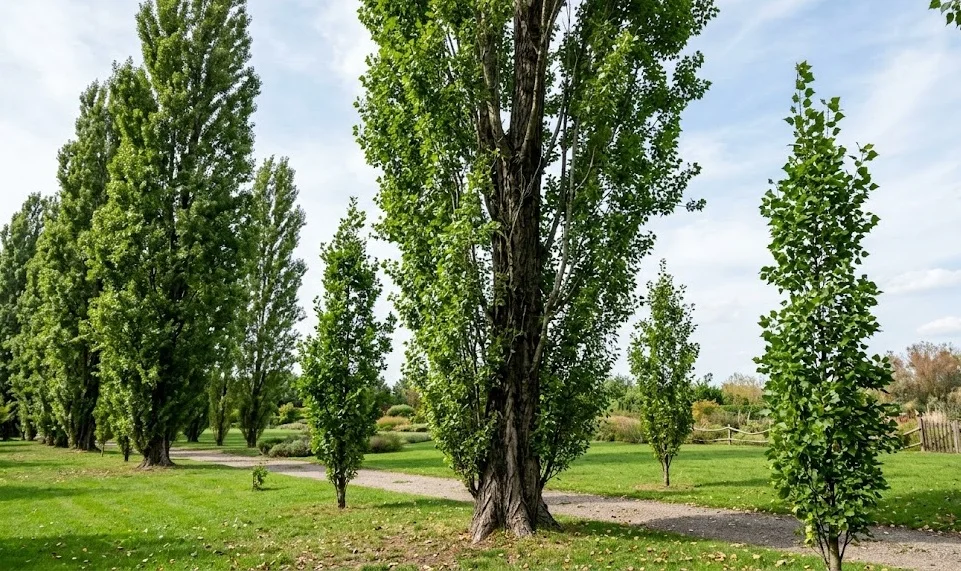

The lombardy poplar is a sun-loving species that requires a significant amount of direct sunlight to grow properly. Professional arborists recommend that these trees receive at least six to eight hours of full sun every day. Sunlight provides the energy necessary for the tree’s rapid growth and the maintenance of its dense, green foliage. Without adequate light, the tree will quickly become weak, sparse, and more susceptible to various health problems.
When light levels are sufficient, the tree can produce all the carbohydrates it needs through the process of photosynthesis. This energy is used to build strong wood, develop a robust root system, and produce the iconic vertical branches. In full sun, the leaves will be a vibrant, healthy green and will grow closely together along the stems. This density is what gives the tree its unique architectural value in a landscape design.
If a lombardy poplar is planted in a location that is too shaded, its growth will slow down dramatically. The tree may try to “reach” for the light, resulting in a distorted shape or a leaning trunk that is structurally unsound. The branches will become leggy and thin, with fewer leaves to provide energy for the specimen. Over time, a lack of light can lead to the premature death of the tree as it cannot sustain its high metabolic needs.
Choosing a south-facing or open location is the best way to ensure your tree gets the light it craves. Avoid planting them too close to taller buildings or larger, established trees that might cast long shadows. In a professional landscape, these poplars are often used in open fields or as high-impact accents in sunny garden corners. Providing maximum light exposure is the first step toward a successful and towering poplar.
Effects of shade
While the lombardy poplar is hardy, it has a very low tolerance for significant shade throughout the day. When the tree is shaded, it becomes stressed, which makes it a prime target for pests like aphids and borers. Shade also tends to keep the foliage damp for longer periods, which creates the perfect environment for fungal diseases to thrive. A tree in the shade will often have a dull, lackluster appearance compared to one in the sun.
More articles on this topic
Internal branch dieback is a common result of a poplar being shaded by its own dense growth or by nearby plants. The tree will naturally shed branches that are not receiving enough light to be productive and “cost-effective” for its energy budget. This can lead to a hollow-looking center and a loss of the tight, columnar form that is so desirable. Regular thinning can help, but it cannot fully compensate for a fundamentally poor planting site.
In partial shade, you may notice that the tree grows much slower than expected for this specific variety. While it may survive, it will never reach its full potential in terms of height or visual impact. The leaves may also be smaller and turn yellow or drop earlier in the autumn than those on trees in full sun. For a professional gardener, this lack of vigor is a clear sign that the environmental conditions are not ideal.
Shade can also impact the tree’s ability to recover from physical damage or disease. Without the energy from the sun, the healing process is much slower and less effective, leaving the tree vulnerable for longer. This is why it is so important to evaluate the light patterns in your garden throughout the entire year before planting. A site that is sunny in the winter may be heavily shaded by other trees once their leaves emerge in the spring.
Optimizing light for growth
To get the most out of your lombardy poplar, you should position it where it will not be obstructed by future landscape changes. Consider how other trees in your garden will grow over the next decade and whether they will eventually shade your poplar. It is much easier to choose the right spot now than to try and move a large tree or prune surrounding plants later. A professional plan takes the long-term light dynamics of the entire property into account.
More articles on this topic
Spacing is another professional consideration that affects how much light each individual tree receives. If you are planting a row of poplars for a windbreak, space them far enough apart so they do not shade each other out. A distance of about eight to ten feet between trees is usually sufficient to allow for good light penetration and air movement. This ensures that every tree in the row remains healthy and maintains its foliage all the way to the ground.
If you have an existing tree that is starting to show signs of shade stress, you might be able to improve the situation. Pruning back the branches of nearby trees can let in more sunlight and give the poplar the boost it needs. Sometimes, simply removing a lower limb from a neighboring oak or maple can make a significant difference in the light levels. This targeted maintenance can save a struggling poplar and restore its vitality.
Ultimately, light is the most important “food” for a lombardy poplar, and you must provide it in abundance. By respecting the tree’s high light requirements, you are ensuring a fast-growing, healthy, and beautiful specimen. The majestic silhouette of a well-lit poplar is a testament to the importance of proper site selection. Your dedication to finding the sunniest spot will be rewarded with a tree that stands tall and proud for years to’ come.