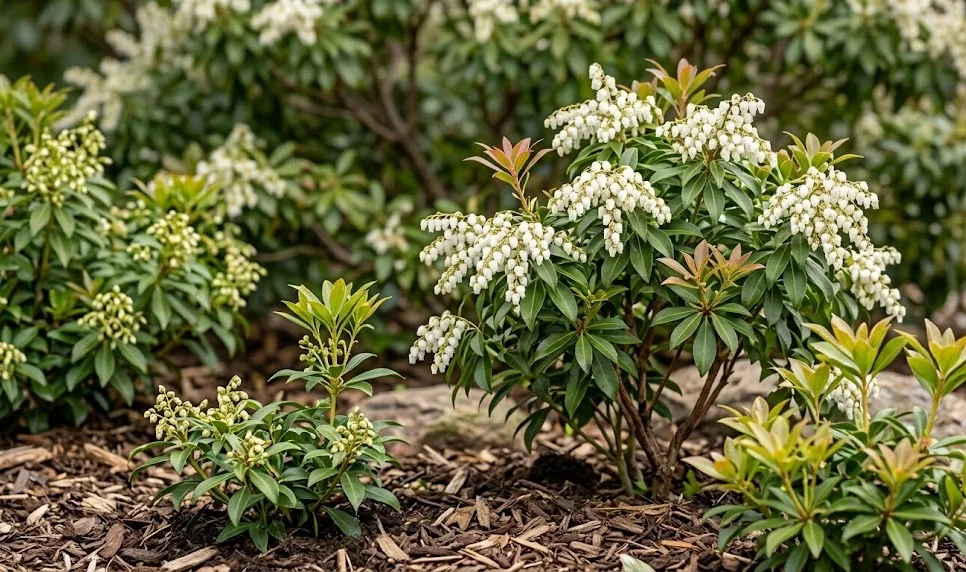

Effective irrigation is the most vital component of maintaining a healthy Japanese andromeda, as this plant has very little tolerance for prolonged drought. Because it possesses a shallow and fibrous root system, it cannot reach deep into the ground to find moisture during dry spells. You must ensure that the soil remains consistently damp, but never saturated, to support the lush evergreen foliage and the development of flower buds. Developing a professional watering schedule will prevent the leaf scorch and branch dieback that often plague neglected specimens.
The amount of water required by your shrub will vary significantly depending on the season, the weather, and the type of soil in your garden. During the active growing season in spring and summer, the plant’s demand for hydration is at its peak as it produces new stems and sets next year’s buds. You should monitor the soil moisture daily during heatwaves, as the large leaves can lose a tremendous amount of water through transpiration. Providing a deep soaking once or twice a week is usually more effective than frequent, light sprinklings that do not reach the lower roots.
In the autumn, you should continue to water the plant even as the temperatures begin to drop and the growth slows down. This is a critical time for the shrub to hydrate its tissues in preparation for the winter months, when the ground may freeze and make water inaccessible. Many gardeners make the mistake of stopping their irrigation routines too early, leaving the plant vulnerable to winter desiccation. A well-hydrated plant is much more resilient to the stresses of freezing temperatures and drying winds.
Even during the winter, your Japanese andromeda may require supplemental water if the weather is unusually dry and the ground is not frozen. Evergreens continue to lose moisture through their leaves throughout the winter, a process that is accelerated by bright sun and cold winds. If you experience a “dry winter,” you should take advantage of any warm spells to give the soil a thorough watering. This proactive approach ensures that the plant enters the spring season in the best possible condition, ready to produce a spectacular floral display.
Principles of professional fertilization
Fertilizing Japanese andromeda is not about forcing rapid growth, but about providing the specific nutrients required for its unique metabolic processes. As an ericaceous plant, it has a specialized relationship with soil fungi and requires an acidic environment to absorb minerals like iron and magnesium. You should use a high-quality fertilizer formulated specifically for acid-loving plants, which typically contains nitrogen in the form of ammonium. Applying nutrients at the right time and in the right amounts will result in deep green foliage and a higher density of blooms.
More articles on this topic
The best time to apply fertilizer is in the early spring, just as the new growth begins to emerge and the flower buds start to swell. This timing ensures that the nutrients are available when the plant’s demand is highest and helps support the intense energy required for flowering. You should spread the fertilizer evenly around the drip line of the shrub, where the most active feeder roots are located. Avoid placing granules directly against the main trunk, as the concentrated salts can cause chemical burns to the bark and the shallow roots.
A second, lighter application can be made in early summer after the flowers have faded and the new foliage has fully expanded. This helps the plant replenish its energy reserves and provides the necessary building blocks for the flower buds that will form for the following year. However, you must avoid any fertilization after midsummer, as this can stimulate soft growth that will not have time to harden off before the first frosts. Late-season fertilization is one of the leading causes of winter damage in these shrubs and should be strictly avoided.
Always follow the manufacturer’s instructions regarding dosage, and remember that with this species, less is often more. Over-fertilizing can lead to a buildup of salts in the soil, which can damage the sensitive roots and lead to leaf margins turning brown. If you have enriched your soil with plenty of organic matter, you may find that the plant requires very little supplemental fertilizer to stay healthy. Professional gardeners often rely more on regular mulching with acidic materials than on heavy chemical inputs to maintain the plant’s vigor.
Recognizing and correcting nutritional deficiencies
Monitoring the appearance of the leaves is the best way to determine if your watering and fertilizing routines are meeting the plant’s needs. The most common nutritional issue for Japanese andromeda is iron chlorosis, which manifests as yellowing leaves with distinctly green veins. This condition is usually not caused by a lack of iron in the soil, but by a pH level that is too high, making the iron insoluble. You can temporarily fix this with a foliar spray of chelated iron, but the long-term solution is to lower the soil pH with elemental sulfur.
More articles on this topic
Magnesium deficiency is another issue that can occasionally occur, especially in very sandy soils where nutrients are easily leached away. This typically shows up as a yellowing or bronzing of the older leaves, while the new growth remains relatively green. You can address this by applying a small amount of Epsom salts (magnesium sulfate) dissolved in water around the base of the plant. This provides a quick source of magnesium without significantly altering the soil pH, helping the plant regain its healthy color.
Nitrogen deficiency is characterized by a general paling of all the leaves and a noticeable slowdown in the growth rate of the shrub. If the entire plant looks stunted and the foliage is a light yellowish-green, it may be time to increase the nitrogen component of your fertilizer. However, you should rule out waterlogging first, as roots sitting in stagnant water cannot absorb nitrogen and will produce similar symptoms. A healthy plant should have glossy, dark green leaves that feel firm to the touch throughout the growing season.
Sometimes, the symptoms of “leaf burn” are mistaken for a lack of nutrients when they are actually caused by the over-application of fertilizer. If you see the tips and edges of the leaves turning brown and crisp shortly after you have fertilized, the plant is likely suffering from salt stress. In this case, you should immediately flush the soil with large amounts of fresh water to wash away the excess salts from the root zone. Learning to distinguish between a deficiency and an overdose is a key skill for any professional gardener.
Water quality and its impact on soil chemistry
The quality of the water you use for irrigation can have a significant long-term impact on the health of your Japanese andromeda. In many areas, tap water is quite “hard,” meaning it contains high levels of calcium and magnesium carbonates that act as liming agents. Over time, consistent use of hard water will slowly raise the pH of the soil, making it increasingly difficult for the plant to thrive. If you must use hard tap water, you will need to be more aggressive with your soil acidification efforts to compensate for this shift.
Rainwater is the ideal source of hydration for all acid-loving plants, as it is naturally soft and slightly acidic. Many professional growers install rain barrels to collect and store water specifically for their more sensitive specimens like the Japanese andromeda. Not only is rainwater better for the soil chemistry, but it also lacks the chlorine and fluoride often found in municipal water supplies. Using natural water sources is a sustainable practice that mimics the conditions the plant experiences in its native mountain habitats.
If you are using an automated irrigation system, you should periodically check the output to ensure that the water is reaching the ground and not just wetting the foliage. Constant moisture on the leaves can encourage the development of fungal diseases, especially in humid climates with poor air circulation. It is always better to deliver water directly to the soil surface using drip lines or soaker hoses, which also minimizes evaporation losses. This targeted approach ensures that the roots receive the maximum benefit from every gallon of water you provide.
During periods of extreme heat, you might be tempted to water in the middle of the day to cool the plant down. However, this is the least efficient time to irrigate, as much of the water will evaporate before it can soak into the ground. The best time to water is in the early morning, which allows the plant to hydrate before the sun reaches its peak and gives any wet foliage time to dry. Professional moisture management is about timing and technique as much as it is about the quantity of water delivered.
Maintaining the balance of soil moisture and nutrients
The relationship between water and nutrients is dynamic, as water is the medium through which the plant absorbs everything it needs from the soil. In very wet years, nutrients can be leached out of the root zone more quickly, requiring you to be more diligent with your fertilization. Conversely, in very dry years, the concentration of salts in the soil can become dangerously high if the water levels drop too low. Maintaining a consistent balance between these two factors is the secret to growing a truly prize-winning Japanese andromeda.
A thick layer of organic mulch is your best ally in maintaining this balance, as it acts as both a sponge for water and a slow-release source of nutrients. As the mulch decomposes, it releases mild acids and organic compounds that keep the soil chemistry stable and the moisture levels even. You should think of the mulch as a living extension of the soil that buffers the plant against the extremes of the external environment. This natural system reduces the need for human intervention and creates a more resilient and self-sustaining plant.
Observing the plant’s growth over several seasons will help you fine-tune your watering and fertilizing routines to suit your specific microclimate. No two gardens are exactly alike, and the general guidelines found in books must always be adapted to the reality of your local conditions. You might find that your plant needs more water if it is in a particularly sunny spot, or less fertilizer if your soil is naturally rich in organic matter. Professional gardening is a process of constant observation, evaluation, and adjustment based on the feedback the plant provides.
Ultimately, the goal of your watering and fertilizing efforts is to create a plant that is so healthy it can naturally resist pests and diseases. A well-nourished and hydrated Japanese andromeda will have thick, waxy leaves that are difficult for insects to penetrate and a robust immune system. By investing time and attention into these fundamental care tasks, you are building the long-term success of your garden landscape. The beauty of the cascading flowers and the vibrant new growth is the ultimate reward for your professional dedication to the plant’s well-being.