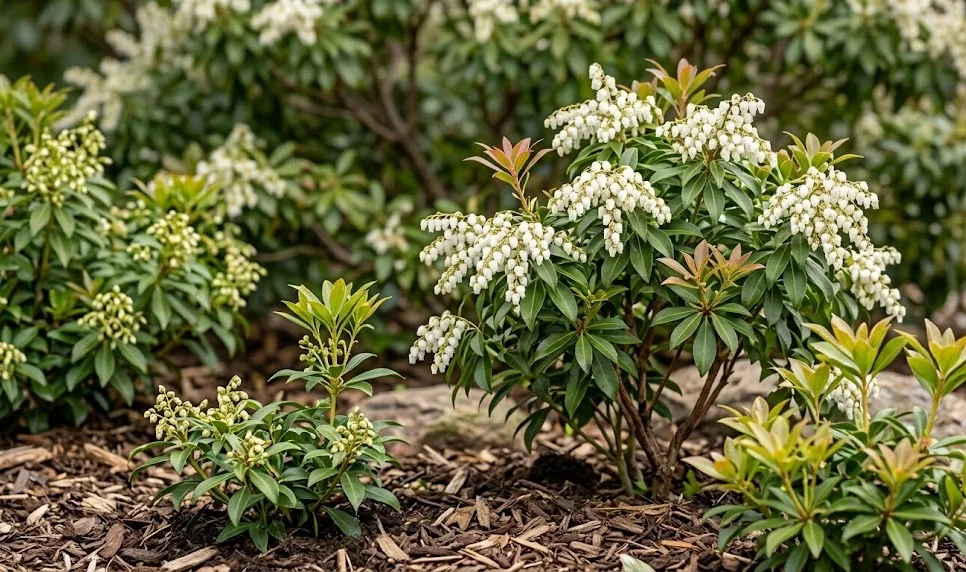

Pruning Japanese andromeda is a task that requires both precision and a clear understanding of the plant’s natural growth habits. This evergreen shrub is generally slow-growing and maintains a naturally attractive mounding shape, which means it does not require frequent or heavy pruning to look its best. However, strategic cutting back is essential for removing deadwood, controlling the size of the specimen, and encouraging the production of more flowers. You should approach the pruning process with a “less is more” philosophy, focusing on enhancing the plant’s inherent form rather than trying to force it into an unnatural shape.
The most important rule of pruning this species is timing, as the flower buds for the following year are formed in the late summer and autumn. If you prune too late in the season, you will inadvertently remove the potential for spring blooms, leaving the plant with only foliage for the next year. The absolute best time to prune is immediately after the flowers have faded in the spring, but before the new growth has fully hardened off. This allows the plant to use the entire growing season to recover and set a new crop of buds for the next display.
Professional pruning involves using the right tools and keeping them in excellent condition to ensure clean cuts that heal quickly. You should use sharp, high-quality bypass pruners for most of the work, and perhaps a small pruning saw for any older, thicker branches. Dull blades can crush the delicate stems of the Japanese andromeda, creating jagged wounds that are much more susceptible to infection by fungal pathogens. Always sterilize your tools with alcohol before you begin and after you finish to prevent the spread of diseases between different plants in your garden.
When you are ready to make a cut, you should always look for a healthy bud or a branch junction to prune back to. Avoid leaving “stubs,” which are short lengths of stem with no leaves or buds, as these will simply die back and can become an entry point for pests. Making a clean, angled cut just above a node will stimulate the plant to produce new, vigorous growth from that point. This targeted approach allows you to control the direction of the plant’s growth and maintain its dense, lush appearance over many years.
Techniques for shaping and rejuvenation
Maintaining the compact, mounding shape of the Japanese andromeda is usually a matter of thinning out a few of the longest branches each year. You should selectively remove these “wayward” stems by cutting them back to a point deep within the canopy of the shrub. This technique, known as thinning, allows more light and air to reach the center of the plant without changing its overall size or character. It also prevents the shrub from becoming too dense and “hollow” on the inside, which can lead to health problems over time.
More articles on this topic
If you have an older specimen that has become leggy, sparse, or overgrown for its space, you may need to perform a more radical rejuvenation pruning. This involves removing up to one-third of the oldest branches right at the ground level, which encourages the plant to send up new, vibrant shoots from the base. You should spread this process over three years to avoid shocking the plant and to ensure it always has enough foliage to produce energy. Rejuvenation is a slow process but can breathe new life into a tired shrub and restore its beauty.
Deadheading, or removing the spent flower clusters, is another form of pruning that can benefit the plant’s appearance and health. While not strictly necessary for the plant’s survival, removing the old flowers prevents the shrub from putting energy into seed production. This energy can then be redirected into the growth of new stems and the development of next year’s flower buds. You should simply snip off the faded flower stalks just above the first set of leaves, being careful not to damage the emerging new growth underneath.
Always keep in mind the final mature size of your specific cultivar when you are making decisions about shaping and cutting back. Some dwarf varieties will naturally stay small and require almost no pruning, while larger types may need regular attention to keep them within bounds. You should never try to “shear” a Japanese andromeda into a formal hedge or a geometric shape, as this destroys its elegant, cascading texture and leads to a buildup of deadwood. Respecting the natural architecture of the plant is the key to professional-looking results in the garden landscape.
Managing damaged and diseased wood
Environmental stress, such as heavy snow or strong winds, can occasionally cause physical damage to the branches of your Japanese andromeda. You should prune out any broken or split stems as soon as you notice them, regardless of the time of year. A clean cut is much better for the plant than a jagged break, as it allows the tissues to seal over more effectively and reduces the risk of secondary infections. If a large branch has broken, you should follow it back to a healthy junction and make your cut there.
More articles on this topic
Diseased wood must be handled with extreme care to prevent the problem from spreading to the rest of the shrub or to other plants in your garden. If you see signs of canker, dieback, or severe fungal infection on a branch, you should cut it out immediately, well below the visible symptoms. You must be diligent about sterilizing your pruning shears between every single cut when dealing with diseased material. This disciplined approach is essential for containing the problem and ensuring the long-term survival of your specimen.
Monitoring the interior of the shrub is also important, as dead branches can accumulate over time and harbor pests like scale or mites. You should periodically reach into the center of the plant and remove any small, brittle twigs that are no longer producing leaves. This improves the air circulation throughout the entire canopy and makes it much easier to inspect the plant for health issues. A clean interior is a sign of a well-maintained and professionally cared-for shrub.
Finally, remember that the Japanese andromeda is a resilient plant that can recover from even significant pruning if it is healthy and well-supported. Following any major cutting back, you should ensure the plant is properly watered and mulched to help it recover from the stress. Avoid fertilizing immediately after heavy pruning, as you want the plant to focus on healing its wounds before it starts producing a massive flush of new growth. By combining thoughtful pruning with consistent general care, you can maintain your Japanese andromeda as a stunning and healthy feature of your garden for its entire life.