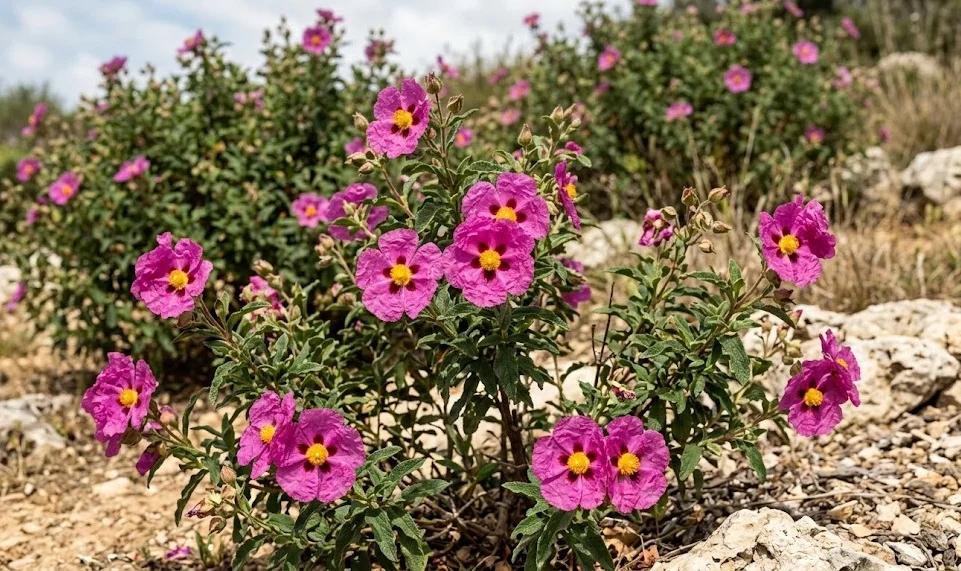

Wintering of the purple rockrose is a critical phase for gardeners in regions where temperatures frequently drop below freezing. While this hybrid is surprisingly hardy for a Mediterranean shrub, it is not invincible to the combined effects of extreme cold and wet winter soil. Success during the dormant season depends on a combination of proper site selection, physical protection, and careful monitoring of environmental conditions. By taking the right steps before the first frost arrives, you can ensure that your shrubs emerge in the spring ready for another season of spectacular growth.
Understanding cold hardiness and frost limits
The purple rockrose is generally rated as hardy down to about 15 to 20 degrees Fahrenheit, which corresponds to many temperate gardening zones. However, this hardiness is not just about the absolute temperature but also about how quickly the temperature drops and how long it stays there. A sudden, sharp frost after a period of warm weather can be much more damaging than a gradual cooling of the season. Knowing the typical winter patterns in your specific area will help you decide how much protection your plants might need.
Cold winds are often more dangerous than the cold air itself because they cause desiccation, or the drying out of the evergreen leaves. When the ground is frozen, the roots cannot take up water to replace the moisture lost through the foliage during a windy day. This can lead to “winter burn,” where the edges of the leaves turn brown and brittle. Planting your rockroses in a location that is naturally sheltered from the prevailing winter winds is a significant advantage for their survival.
The age and health of the plant also play a major role in its ability to withstand a harsh winter. A young plant with a limited root system is much more vulnerable to frost heave and temperature fluctuations than a mature, well-established specimen. Similarly, a plant that was stressed by pests or drought during the summer will enter the winter with fewer energy reserves to cope with the cold. Ensuring your plants are healthy throughout the growing season is the first step in successful wintering.
In very cold climates, the purple rockrose is often treated as a “short-lived” perennial or a container plant that is moved indoors during the winter. If you live on the edge of its hardiness range, you should accept that a particularly severe winter might kill the plant despite your best efforts. This is part of the risk and reward of growing Mediterranean species in cooler regions. Always keep a backup plan, such as having some cuttings overwintering in a more protected environment.
More articles on this topic
Protective mulching and root insulation
One of the most effective ways to protect your purple rockrose during the winter is by applying a thick layer of mulch around the base. Unlike summer mulching which focuses on moisture retention, winter mulching is designed to insulate the soil and prevent rapid freezing and thawing. This “blanket” helps keep the root temperature more stable, which is crucial for the plant’s long-term health. Use a loose, well-draining material like bark chips, straw, or even pine needles for this purpose.
It is extremely important to keep the mulch a few inches away from the main stem of the shrub to avoid trapping moisture against the bark. Constant contact with wet mulch can lead to fungal infections or rot, which can kill the plant more surely than the cold itself. The mulch should extend out to the “drip line” of the plant, which is the area directly beneath the outer edges of the foliage. This ensures that the entire root zone receives the benefit of the insulation.
In regions with very heavy winter rainfall, you might want to use a mineral mulch like gravel instead of organic materials. Gravel provides excellent insulation without holding onto excess water that could cause the roots to rot in cold, wet conditions. You can even combine a layer of organic mulch with a top layer of gravel to get the best of both worlds. The goal is to create a dry, insulated environment that mimics the plant’s natural winter habitat as closely as possible.
If you are expecting an exceptionally cold snap, you can temporarily pile extra mulch higher around the base of the plant for added protection. Just remember to spread it back out once the extreme weather has passed to allow the soil to breathe again. This extra effort during a cold “emergency” can often mean the difference between a plant that survives and one that perishes. Proper mulching is a simple, low-cost insurance policy for your valuable garden specimens.
More articles on this topic
Using horticultural fleece and structures
For plants that are particularly exposed or for young specimens, physical covers like horticultural fleece can provide a few degrees of extra warmth. This specialized fabric is breathable, allowing air and light to reach the plant while trapping a layer of warmer air underneath. You should wrap the fleece loosely around the shrub and secure it with garden twine so it doesn’t blow away in the wind. Avoid using plastic sheeting, as it can cause moisture to build up and potentially cook the plant on a sunny day.
If you have several rockroses in a row, you can create a temporary “tunnel” or framework using hoops and frost cloth. This structure provides a collective protective environment that is often more effective than wrapping individual plants. Make sure the cloth reaches all the way to the ground and is weighted down with stones or soil to keep the warmth inside. You should remove the covers during warm spells to prevent the plants from “waking up” too early and becoming vulnerable to a late frost.
In very windy areas, a simple windbreak made of burlap or lattice can be more effective than a direct cover. Placing the windbreak on the side of the prevailing winter winds will significantly reduce the desiccation effect on the evergreen leaves. The windbreak should be tall enough to protect the entire height of the shrub but doesn’t need to touch the plant itself. This passive form of protection is often easier to manage and less stressful for the plant than being wrapped in fabric.
Container-grown purple rockroses are the easiest to protect because they can be moved to a more sheltered location. A cold frame, an unheated greenhouse, or even a protected porch can provide just enough shelter to keep the plant safe. If you move them under a roof, remember that they will still need a very small amount of water occasionally to keep the roots from drying out completely. The goal is to keep them in a “refrigerated” state rather than a “frozen” or “toasty” one.
Transitioning back to spring growth
As the days begin to lengthen and the soil starts to warm, your purple rockrose will slowly begin to emerge from its winter dormancy. This is a delicate time, as a late-season frost can easily damage the tender new growth that the plant is starting to produce. You should wait until the danger of major frost has passed before you remove your protective mulches and covers. Slowly acclimating the plant to the increasing light and temperature is the safest way to transition into spring.
Inspect the plant carefully for any signs of winter damage, such as brown leaves or dead branch tips. Do not be in a hurry to prune these away immediately, as they can sometimes provide a bit of protection for the interior of the plant. Wait until you see clear signs of new green shoots appearing before you make any decisions about cutting back. Often, a branch that looks dead in late winter will actually sprout new leaves once the weather truly warms up.
Once the plant is actively growing, you can gradually resume your normal maintenance routine, including light watering if the spring is dry. This is also a good time to check if any frost heave has pushed the plant partially out of the ground. If you notice the root crown is exposed, gently firm it back into the soil and add a fresh layer of light mulch. A quick check-up in the spring ensures that any minor winter issues don’t become major problems during the growing season.
Finally, take a moment to appreciate the resilience of your purple rockrose for having survived another winter cycle. Each year the plant successfully overwintered, it becomes stronger and more adapted to your local microclimate. The experience you gain each winter will help you become a better steward of your garden and its inhabitants. Successfully wintering these Mediterranean beauties is a true mark of a dedicated and knowledgeable gardener.