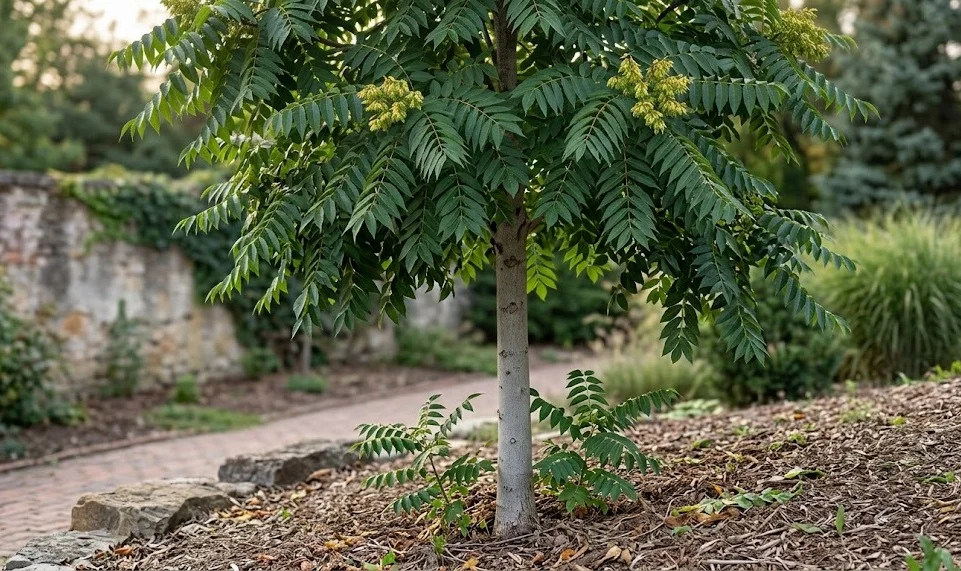

The management of this species’ expansive canopy through regular pruning is a critical task for maintaining safety and aesthetic balance in any garden. You should understand that due to its rapid growth rate, a “wait and see” approach is rarely successful and can lead to unmanageable problems later on. Expert arborists recommend establishing a clear pruning plan while the tree is still young to guide its development into a strong and stable form. It is important to have the right tools and a clear understanding of the tree’s biology before you make your first cut.
Corrective pruning focuses on removing structural defects and ensuring that the tree has a single, strong central leader to support its weight. You should look for “co-dominant stems,” where two main trunks compete for dominance, as these are weak points that are prone to splitting as the tree matures. Removing one of these stems early in the tree’s life is a simple way to prevent a catastrophic failure during a future storm or heavy snow event. Professional tree care involves making these strategic decisions to ensure the long-term safety and longevity of the specimen.
Timing your pruning efforts is just as important as the technique you use, with the dormant winter season being the ideal window for most major work. You will find that when the leaves are gone, it is much easier to see the underlying branch structure and identify any crossing or damaged limbs. Since the tree is dormant, the risk of “bleeding” sap or attracting certain pests to the fresh cuts is significantly reduced compared to the active growing season. A winter pruning session allows the tree to focus its spring energy on new, healthy growth from the strategically placed buds that remain.
Safety should always be your top priority when working on a tree of this size and vigor, especially as it reaches into the upper levels of the canopy. You should never attempt to prune large branches or work high off the ground without the proper training and safety equipment. For major height reductions or structural work on mature specimens, it is always worth the investment to hire a certified professional arborist who has the tools and expertise to do the job safely. Maintaining your tree through careful and professional pruning ensures it remains a beautiful and safe asset for your property.
Corrective pruning and structural training
Building a strong skeletal framework for your tree is a process that begins in the first few years and requires a consistent and observant eye. You should aim to maintain a well-spaced set of “scaffold” branches that radiate out from the main trunk at wide, strong angles. Branches that grow at a very sharp, narrow angle are much more likely to break because they develop “included bark” which prevents a solid union with the trunk. Removing these potential weak points early on is the mark of a proactive and expert garden manager.
More articles on this topic
Thinning the canopy is another important technique that improves air circulation and light penetration to the inner parts of the tree. You should selectively remove some of the smaller branches from the center of the crown to create a more open and “airy” structure. This practice reduces the “sail effect” during high winds, making the tree less likely to be uprooted or have its major limbs snapped by the force of the air. A well-thinned tree is not only safer but also more resistant to the fungal leaf diseases that thrive in stagnant, humid environments.
Managing the “root suckers” and epicormic shoots that frequently emerge from the base and the trunk is a unique challenge with this particular species. You should remove these opportunistic growths as soon as they appear, as they steal energy from the main canopy and can quickly turn a single tree into a messy thicket. Using a sharp pair of bypass pruners to cut these shoots as close to the trunk as possible prevents them from becoming large enough to cause structural issues. Consistent vigilance is the only way to keep the tree’s growth focused on its primary architectural form.
As the tree reaches its mature size, your pruning focus will shift from training to maintaining the existing structure and removing any dead or declining wood. You should inspect the canopy once a year for “deadwooding,” which is the process of taking out brittle branches that are no longer contributing to the tree’s health. Removing this dead material improves the visual clarity of the tree’s form and eliminates a major safety hazard for anyone walking beneath the canopy. Keeping a mature tree “clean” and well-maintained is a rewarding part of long-term landscape management.
Height management and crown reduction
Controlling the overall height of the tree is a common necessity in residential or urban settings where space is limited and safety is a primary concern. You should consider a “crown reduction” if the tree is starting to interfere with overhead lines or is casting too much shade on neighboring properties. This technique involves cutting back the highest branches to a lateral limb that is at least one-third the diameter of the branch being removed. This “drop-crotch” pruning maintains a natural appearance while effectively lowering the overall profile of the tree.
More articles on this topic
Avoid the practice of “topping,” which involves cutting the main branches back to a predetermined height without regard for the tree’s natural growth points. You will find that topping leads to the rapid growth of weak, “water-sprout” shoots that are poorly attached and very prone to breaking as they gain weight. It also leaves large, open wounds that are difficult for the tree to heal and can become entry points for decay-causing fungi. Professional arborists always recommend against topping, as it permanently ruins the tree’s structure and creates a long-term safety liability.
Directional pruning can be used to steer the growth of the tree away from buildings, paths, or other valuable features in your landscape. You should identify the branches that are growing in an undesirable direction and prune them back to a bud or a lateral branch that is pointing in a better direction. This “training” allows you to enjoy the presence of a large tree even in a relatively tight space by managing its horizontal and vertical expansion. Mastering the art of directional pruning gives you much more control over the final “footprint” of your tree.
When a major reduction is necessary, it is often best to spread the work over two or three years to avoid shocking the tree’s system. You should never remove more than twenty-five percent of the living canopy in a single growing season, as the tree needs its leaves to produce the energy it needs for healing. A gradual approach allows the tree to adjust to the loss of foliage and maintain its root health throughout the process. Patience and a long-term perspective are essential for successful and sustainable height management in any large botanical specimen.
Timing of cuts and tool maintenance
While the dormant season is generally best for major structural work, minor pruning can be done at other times of the year if the need arises. You should remove dead, damaged, or diseased wood as soon as you notice it, regardless of the season, to prevent further issues from developing. However, avoid heavy pruning in the late summer or early autumn, as this can stimulate new growth that won’t have time to “harden off” before the winter. Following the natural rhythms of the tree ensures that your work supports, rather than hinders, its overall health.
Using the right tool for the job is a fundamental rule that every professional and home gardener should follow for the best results. You should use sharp, high-quality bypass pruners for small twigs, loppers for medium branches, and a specialized pruning saw for anything larger than a few centimeters. Clean, smooth cuts heal much faster and are less likely to become infected than the ragged, crushed edges produced by dull or improper tools. Investing in a set of professional-grade pruning equipment will make your work much easier and more effective over time.
Sanitation is a critical step that you must never skip, especially when moving between different trees or working on a specimen with a known health issue. You should wipe your blades with a solution of seventy percent isopropyl alcohol or a ten percent bleach solution after every few cuts. This simple practice prevents the invisible spread of fungal spores and bacterial pathogens that can be carried on the surface of your tools. Keeping your equipment clean and sharp is just as important as the technique you use to make the actual cuts.
Finally, you should always step back and look at the “big picture” of the tree’s form after every few major pruning decisions. It is easy to get caught up in the details of a single branch and lose sight of how the overall canopy is being affected by your work. Frequent pauses to assess the balance and symmetry of the tree will help you avoid over-pruning or creating a lopsided appearance. Your goal is to work with the tree’s natural beauty to create a specimen that is both safe and visually stunning for years to come.