
Understanding the specific hydration and nutritional needs of the edelweiss is fundamental to maintaining its health and iconic appearance. This plant has adapted over millennia to thrive in the mineral-rich, yet water-scarce environments of high-altitude mountain ranges. Consequently, applying standard gardening practices designed for lush, lowland perennials will often lead to failure. A professional approach involves a “less is more” philosophy, where precision and timing are far more important than quantity.
Watering is perhaps the most misunderstood aspect of edelweiss care, as many gardeners assume that mountain plants need constant moisture. In reality, the edelweiss is highly drought-tolerant and actually prefers its substrate to dry out significantly between watering sessions. Overwatering is the most common cause of root rot, a condition that can kill the plant quickly and silently. Observing the plant’s reaction to the environment is the best way to determine when it truly needs a drink.
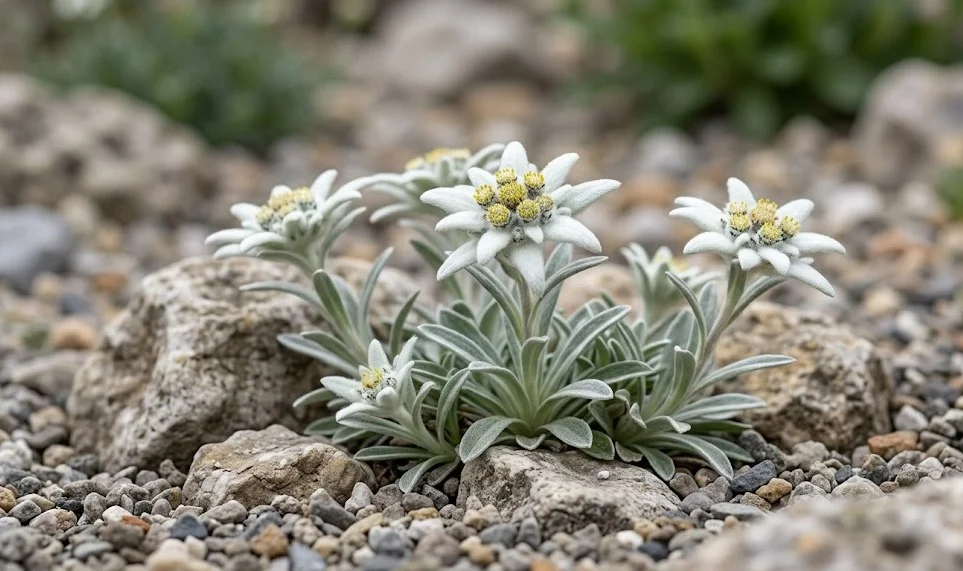
Fertilization follows a similar logic, as the plant is naturally tuned to extract everything it needs from very poor, stony soil. Adding rich organic matter or high-nitrogen fertilizers can cause the plant to grow too quickly, resulting in weak stems and a loss of its silver color. The characteristic woolly hairs on the bracts are actually a defense mechanism against intense sun and dehydration, and they thrive best in low-nutrient conditions. Therefore, any supplemental feeding must be done with extreme caution and specialized products.
Achieving the perfect balance requires a keen eye and an understanding of the local climate and soil conditions. What works in a dry, sandy garden may not be appropriate for a garden with heavy clay or high humidity. By adjusting your watering and feeding schedule to match the plant’s natural requirements, you can ensure a vibrant and long-lasting display. This detailed guide explores the nuances of moisture management and mineral nutrition for this fascinating alpine species.
Principles of alpine moisture management
The primary rule for watering edelweiss is to focus on the roots while keeping the foliage as dry as possible. Water trapped in the dense, felt-like hairs of the leaves can quickly lead to fungal growth or rot, especially in humid conditions. Using a watering can with a long, thin spout allows you to deliver moisture directly to the soil without splashing the crown. This simple technique significantly reduces the risk of disease and keeps the plant looking its best.
More articles on this topic
Early morning is the ideal time to water, as it allows any accidental moisture on the leaves to evaporate quickly as the sun rises. Watering in the evening can be risky, as the plant remains damp throughout the night, providing the perfect environment for mold and pests. In the wild, these plants often receive moisture from melting snow or morning mists that dry out rapidly. Emulating this cycle in the garden helps the plant maintain its natural health and resilience.
During the active growing season, a deep watering once every week or two is usually sufficient, depending on the temperature and wind. The goal is to encourage the roots to grow deep into the substrate in search of moisture, rather than staying near the surface. If the top few centimeters of the soil feel dry to the touch, it is usually safe to provide a moderate amount of water. Always ensure that your pots or garden beds have excellent drainage to allow any excess water to escape immediately.
In periods of extreme heat or prolonged drought, the plant may show signs of slight wilting, which is its way of conserving energy. Do not panic and drown the plant in water; instead, provide a controlled amount to help it through the peak of the heat. Once the temperature drops, the edelweiss will typically recover its turgidity and look healthy again. Consistency and moderation are the hallmarks of a professional watering strategy for all high-altitude botanical specimens.
Designing for optimal drainage
The foundation of successful moisture management is not the watering schedule itself, but the design of the drainage system. Without a way for water to exit the root zone quickly, even the most careful watering will eventually lead to soil saturation. In containers, this means having multiple large drainage holes and using a layer of stones or broken pottery at the bottom. In the ground, it often requires creating a raised bed or a specialized rockery with a deep layer of gravel.
More articles on this topic
The choice of substrate plays a massive role in how water moves through the environment surrounding the roots. A mixture that includes large amounts of coarse sand, perlite, or pumice creates large pore spaces that prevent water from being held by capillary action. This structure allows air to follow the water into the soil, providing the oxygen that roots need for cellular respiration. Plants grown in such a medium are far less likely to suffer from the “wet feet” that plague so many alpine gardens.
If you find that your garden soil holds onto water for too long, you can improve the drainage by incorporating “grit” into the top thirty centimeters. This mineral material breaks up heavy soil particles and creates channels for water to flow through more easily. Many experts also recommend planting edelweiss on a slight incline or between vertical rocks. This position ensures that gravity pulls water away from the crown, which is the most sensitive part of the plant.
Mulching with a layer of sharp gravel or decorative stone also helps with drainage and moisture regulation. This layer prevents rain from splashing soil onto the leaves and keeps the area around the base of the plant clean and dry. It also acts as a barrier that slows down evaporation from the soil surface, keeping the roots cool while the top stays dry. A well-designed drainage system is the best insurance policy you can have for your edelweiss collection.
Mineral requirements and feeding strategies
Because the edelweiss originates from limestone-rich areas, it has a specific need for minerals like calcium and magnesium. These elements are essential for the structural strength of the plant and the development of its protective woolly bracts. If your soil is deficient in these minerals, the plant may appear stunted or lose its characteristic white brilliance. Providing a slow-release mineral supplement can help bridge this gap without causing the problems associated with traditional fertilizers.
Nitrogen should be used very sparingly, as its main function is to promote lush, green vegetative growth. For an alpine plant like edelweiss, too much nitrogen leads to “soft” growth that is susceptible to frost damage and insect attacks. It also reduces the plant’s ability to produce the dense hairs that make it so distinctive and beautiful. A low-nitrogen, high-potassium formula is much better suited to the needs of a plant that must remain compact and sturdy.
Professional growers often use a very diluted liquid fertilizer once in the early spring as the plant emerges from dormancy. This provides a small boost of energy to support the initial growth and the development of flower buds. After this single application, further feeding is usually unnecessary and potentially harmful for the rest of the season. The plant’s ability to survive in nutrient-poor environments is one of its most remarkable traits and should be respected.
If you prefer a more natural approach, adding a small amount of crushed limestone or dolomitic lime to the soil can provide a steady supply of minerals. These materials break down slowly over several years, mimicking the natural weathering process found in the mountains. This method is much safer than using synthetic fertilizers, as there is no risk of “burning” the roots or causing a nutrient imbalance. Maintaining a mineral-focused environment is the key to long-term success with this species.
Identifying and correcting nutrient imbalances
Watching the color and texture of the leaves can provide a lot of information about the nutritional status of your edelweiss. A lack of calcium often manifests as a yellowing of the new growth or a failure of the bracts to turn white. If you notice these symptoms, it is worth checking the pH of your soil and adding a lime supplement if necessary. Conversely, if the plant looks overly dark green and the stems are floppy, it is likely receiving too much nitrogen.
Iron deficiency can also be an issue in very alkaline soils, causing the leaves to turn yellow while the veins remain green. This condition, known as chlorosis, can be treated with a specialized chelated iron supplement if it becomes severe. However, in most cases, maintaining a neutral to slightly alkaline pH will keep the necessary micronutrients available to the plant. Regular observation allows you to catch these minor imbalances before they affect the overall health of the specimen.
Over-fertilization can lead to an accumulation of salts in the soil, which dehydrates the roots and causes the leaf tips to turn brown. If you suspect you have over-applied fertilizer, you can “flush” the soil by watering heavily with pure rainwater several times. This helps to wash the excess salts out of the root zone and restore a more natural balance to the substrate. It is always better to under-feed than to over-feed when dealing with specialized alpine flora.
Understanding that the edelweiss is a slow-growing plant helps in managing expectations regarding its nutritional response. It will not show immediate changes after a feeding, and trying to force it to grow faster will only lead to problems. Patience is a necessary virtue when working with plants that have evolved for the slow pace of mountain life. By providing a stable, mineral-rich environment, you allow the plant to reach its full potential at its own natural speed.
Seasonal variations in watering needs
The amount of water an edelweiss needs changes significantly as it moves through its annual life cycle. In the spring, when growth is most rapid, the plant requires more consistent moisture to support its developing tissues. This is the period when the soil should be checked most frequently to ensure it does not dry out completely for too long. Once the flowers begin to fade and the heat of summer arrives, the watering frequency can be reduced.
During the autumn, the plant begins to prepare for its winter dormancy by slowing down its metabolic processes. Reducing the water supply at this time helps the plant “harden off” and reduces the risk of rot during the damp fall months. The goal is to go into the winter with a plant that is sturdy and not overly hydrated. This transition is vital for ensuring that the edelweiss can survive the freezing temperatures and snow cover that lie ahead.
In the winter, watering is usually unnecessary unless you are in an area with very dry, snow-free winters and porous soil. If the ground is frozen, the plant cannot take up water anyway, and adding moisture only increases the risk of ice damage to the crown. Most alpine plants are adapted to being completely dry and dormant under a blanket of snow for several months. Trusting the plant’s natural survival mechanisms is often the best course of action during the cold season.
As the cycle begins again in the spring, the return of moisture from melting snow or early rains triggers the emergence of new growth. This natural timing is perfect for the plant’s needs and rarely requires intervention from the gardener. By aligning your care with these seasonal shifts, you provide the most authentic and supportive environment possible. Successful watering and fertilization are about working with nature rather than trying to control it.