
Determining the ideal light exposure for black salsify is a fundamental step in ensuring a healthy and productive crop. While this vegetable is quite hardy, its growth rate and the ultimate size of the root are directly linked to the amount of solar energy it can capture through its foliage. You must carefully select a planting site that balances the need for full sun with the realities of your local climate and garden layout. Understanding the nuances of light management will help you produce roots that are not only large but also high in the essential nutrients that make this vegetable so valuable.
The importance of full sun for root expansion
For the most robust development, black salsify should ideally be planted in a location that receives at least six to eight hours of direct sunlight every day. Sunlight is the fuel that powers photosynthesis, the process by which the plant converts carbon dioxide and water into the sugars that are stored in the taproot. Without adequate light, the plant will struggle to build the energy reserves necessary to produce a thick and succulent vegetable. A sunny site ensures that the plant can maximize its growth potential during the long summer months.
In northern climates or areas with shorter growing seasons, maximizing light exposure is even more critical for success. You should place your salsify beds in the most open part of the garden, away from the shadows cast by tall trees, fences, or buildings. Even partial shade during the peak growing hours can significantly slow down the plant’s development and lead to a disappointing harvest. If your garden is naturally shaded, you may need to reconsider your placement or use reflective mulches to boost the light levels reaching the foliage.
The orientation of your planting rows can also influence how much light each individual plant receives throughout the day. Running your rows in a north-south direction allows the sunlight to reach both sides of the plants as the sun moves across the sky. This ensures more uniform growth and prevents the plants on one side of a row from shading out their neighbors. Professional growers often pay close attention to these seemingly small details to ensure the highest possible yield from their available space.
As the plants grow and their foliage becomes more dense, the interior leaves may begin to experience some natural shading from the outer canopy. This is one reason why proper spacing is so important; it allows light to penetrate deeper into the plant and reach more of the leaf surface. By maintaining a clean and well-spaced garden, you ensure that every leaf is contributing to the growth of the underground root. Consistent and high-quality light is the secret ingredient in many award-winning vegetable gardens.
More articles on this topic
Effects of shade on root quality and diameter
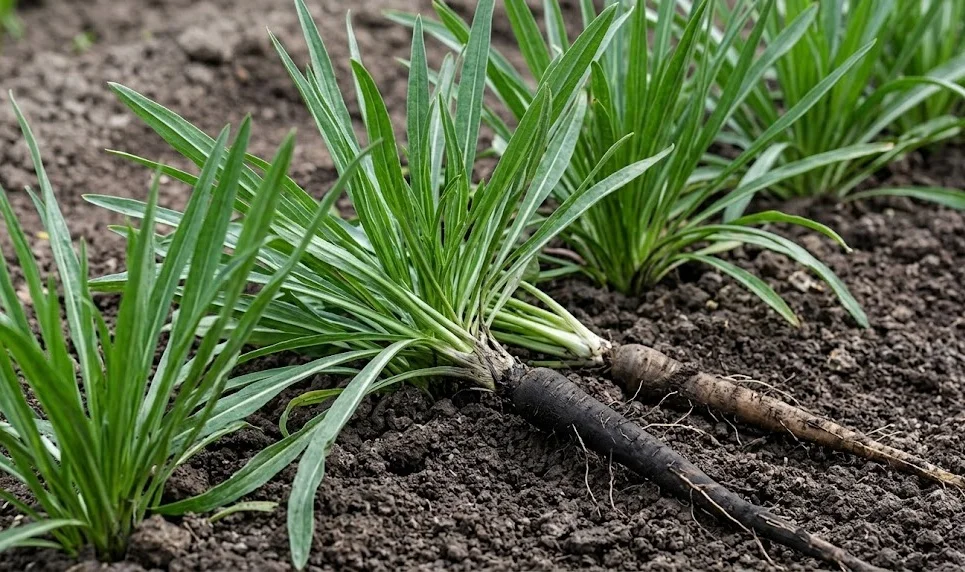
When black salsify is grown in conditions with insufficient light, the most obvious result is a significant decrease in the diameter of the taproot. The plant will prioritize leaf growth in an attempt to capture more light, often resulting in long, spindly foliage and thin, fibrous roots. These “pencil-thin” roots are not only less rewarding to harvest but are also much more difficult to peel and prepare for the kitchen. Avoiding shade is the most effective way to ensure that your crop develops the thick, fleshy texture that is so highly prized.
In addition to smaller size, shaded plants are often more susceptible to various pests and diseases that thrive in cool, damp environments. Without the drying power of the sun, the foliage remains wet for longer after rain or irrigation, creating an ideal habitat for fungal spores. The weakened state of the plant also makes it less able to defend itself against the attacks of insects or physiological stressors. A sunny location provides a natural “immune boost” to the plants, keeping them healthy and vibrant throughout the season.
If you must grow black salsify in a spot with less-than-ideal light, you can try to mitigate the effects by choosing varieties that are known for their shade tolerance. Some cultivars have been selected for their ability to perform reasonably well in partial sun, although they will still never reach the same potential as those in full sun. You might also consider starting your plants a bit earlier in the season to give them more time to accumulate the light energy they need. However, for the best results, there is simply no substitute for the power of the direct sun.
Interestingly, too much light can also be an issue if it is accompanied by extreme heat and drought conditions. In very hot climates, the intense afternoon sun can cause the plants to wilt or even suffer from sunscald on the leaves. In these specific cases, providing a small amount of light shade during the hottest part of the day can actually be beneficial. This is the only exception to the general rule that more light is always better for the development of black salsify.
More articles on this topic
Managing the light environment throughout the season
As the seasons change, the angle and intensity of the sun will shift, altering the light patterns in your garden. It is important to observe your planting site at different times of the year to ensure that the light levels remain adequate for the entire growing period. A spot that is sunny in the early spring might become shaded by the leaves of a nearby tree later in the summer. Being aware of these dynamic changes allows you to adjust your garden plan and place your crops where they will thrive the most.
The height of neighboring plants can also impact the amount of light reaching your black salsify crop. You should avoid planting tall vegetables like corn, pole beans, or sun-loving flowers directly to the south of your salsify rows. These “garden giants” can cast long shadows that will significantly reduce the light available to your low-growing root crops. Strategic intercropping, where you place shorter plants around the base of the salsify, is a much better way to utilize your garden space without sacrificing light.
Reflective mulches, such as white plastic or specialized metallic films, can be used to bounce extra light back up onto the undersides of the leaves. This technique is often used by professional growers to increase the total amount of light available to the plants, particularly in cloudy or shaded environments. While it may not be necessary for every home garden, it can be a useful tool for those looking to maximize their yields. Anything you can do to increase the plant’s light intake will be reflected in the quality of the final harvest.
Finally, remember that the light requirements of the plant will change as it enters its second year and begins the process of flowering. The tall flower stalks will naturally reach toward the sun, competing for light with any neighboring plants that are still in their first year. If you are saving seeds, you must ensure that the flowering plants do not shade out your new crop of young seedlings. Managing the light environment is an ongoing task that requires constant observation and a willingness to adapt your garden layout as needed.