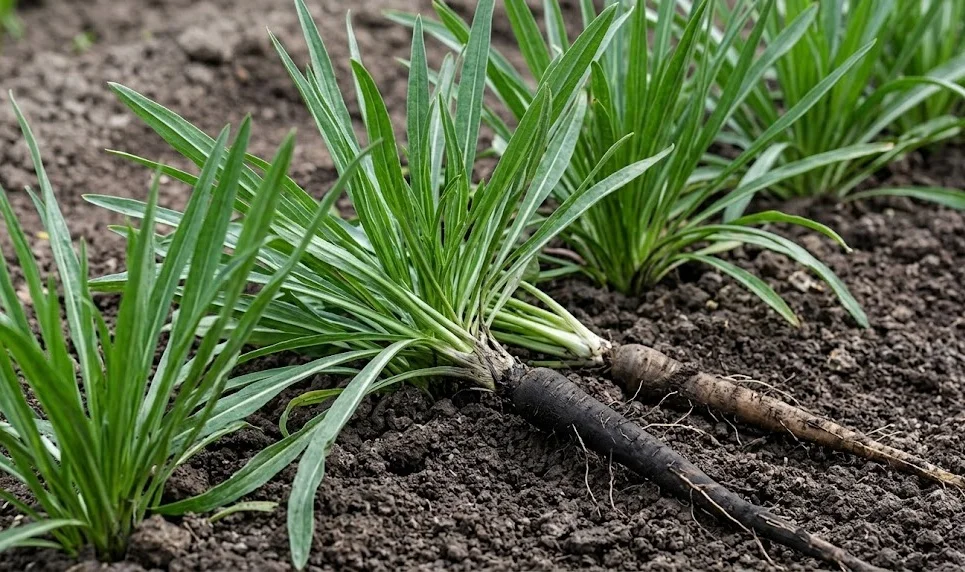

Managing the hydraulic and nutritional needs of black salsify is a delicate balancing act that directly impacts the texture and flavor of the roots. Unlike many other root crops, this vegetable requires a very consistent supply of moisture and a specific ratio of minerals to avoid becoming woody or bitter. You must develop a keen understanding of your soil’s ability to hold water and nutrients to tailor your approach effectively. A well-designed irrigation and feeding schedule will reward you with long, straight, and succulent roots that are a delight to the palate.
Understanding the moisture requirements of the taproot
The deep-reaching nature of the salsify taproot means that it requires moisture not just at the surface, but throughout the entire soil profile. During the early stages of growth, the top few centimeters must remain damp to support the emerging seedlings and their young roots. As the plants mature and the roots extend deeper, you should shift your focus to providing deep irrigation that encourages the roots to grow downward. Surface-level watering alone can lead to shallow root systems that are much more susceptible to drought stress.
You will find that the plant’s demand for water increases significantly during the hot summer months when transpiration rates are at their peak. If the soil is allowed to dry out completely, the plant may go into a survival mode, resulting in the development of tough, fibrous tissues within the root. This change is often irreversible and significantly reduces the culinary value of the harvest. Consistent moisture is the key to maintaining the cellular expansion necessary for a tender and high-quality vegetable.
On the other hand, excessive watering or poor drainage can be just as detrimental as a lack of water. Saturated soil conditions deprive the roots of oxygen, leading to physiological stress and an increased risk of fungal infections such as root rot. You should aim for a “damp but not sodden” soil state, which can be checked by feeling the soil a few centimeters below the surface. Adjusting your watering frequency based on rainfall and local humidity levels prevents the extremes that can damage the crop.
The type of soil in your garden will largely dictate how often you need to apply water to your black salsify crop. Sandy soils drain quickly and require more frequent, light applications to keep the moisture levels stable. Clay soils, conversely, hold water much longer but can become compacted and airless if overwatered. By understanding these soil dynamics, you can create a customized watering plan that meets the specific needs of your plants while conserving water resources.
More articles on this topic
Irrigation systems and timing for efficiency
The method you choose for delivering water can have a significant impact on both the health of the plants and the efficiency of your garden operations. Drip irrigation is often considered the gold standard for root crops because it delivers water directly to the soil surface without wetting the foliage. This targeted approach reduces water waste through evaporation and minimizes the risk of leaf-borne diseases. Installing a simple drip tape system along the rows of salsify allows for a slow, steady soak that reaches deep into the root zone.
If you prefer to use overhead sprinklers, it is vital to time your watering sessions to minimize the duration that the leaves remain wet. Watering in the early morning allows the rising sun to dry the foliage quickly, reducing the window of opportunity for fungal pathogens to germinate. Avoid watering late in the evening, as the damp conditions overnight are an open invitation for mildew and other moisture-loving problems. A consistent morning routine is the best way to support the plant’s natural rhythm and maintain its overall health.
Manual watering with a hose or watering can is also effective, provided you take the time to ensure the water is actually penetrating the soil. It is often better to provide a single, deep watering once or twice a week rather than light daily sprinkling. Deep watering encourages the roots to search for moisture in the lower levels of the soil, resulting in a more resilient and better-developed taproot. You should pay close attention to any signs of runoff, which indicates that the soil has reached its absorption capacity and you should pause.
Automating your irrigation system with a simple timer can take much of the guesswork out of maintaining the correct moisture levels. Timers can be programmed to run during the optimal morning hours and can be adjusted easily as the weather conditions change throughout the season. Some advanced systems even use soil moisture sensors to trigger irrigation only when the ground actually needs it. Embracing these technologies can save you time and ensure that your black salsify never experiences the stress of water fluctuations.
More articles on this topic
Nutritional needs and soil testing protocols
Providing the correct balance of nutrients is essential for the long-term development of the high-energy starches stored in the salsify root. Before you apply any fertilizers, it is highly recommended to conduct a professional soil test to determine the baseline levels of nitrogen, phosphorus, and potassium. This scientific approach prevents the over-application of specific minerals that could lead to environmental runoff or plant toxicity. Understanding your soil’s current nutrient status allows you to create a targeted fertilization plan that is both effective and sustainable.
Nitrogen is necessary for the initial development of the leaf canopy, but you must use it with caution as the plants mature. Excessive nitrogen late in the season can stimulate lush foliar growth at the expense of the root, resulting in small, underdeveloped vegetables. Most expert growers prefer to provide a moderate amount of nitrogen during the first two months and then taper off as the season progresses. This shift in focus encourages the plant to move its energy from the leaves down into the expanding taproot.
Phosphorus and potassium are particularly important for root development and overall plant hardiness. Phosphorus supports cellular division and energy transfer within the plant, which is critical for the growth of a long and healthy root. Potassium helps to regulate water movement and enhances the plant’s resistance to diseases and temperature extremes. Ensuring that these two macro-nutrients are available in sufficient quantities is the secret to producing a robust and flavorful crop of black salsify.
In addition to the primary macronutrients, trace minerals such as boron and magnesium play supporting roles in the plant’s metabolic processes. While they are needed in much smaller quantities, a deficiency in these micronutrients can lead to stunted growth or internal browning of the root. A well-balanced fertilizer or the addition of mineral-rich compost can usually provide these essential elements. Regular monitoring of the plant’s growth will help you identify any subtle signs of nutrient imbalance before they affect the final harvest.
Organic vs. synthetic amendments and application methods
Choosing between organic and synthetic fertilizers is a decision that impacts the long-term health of your soil and the surrounding ecosystem. Organic options, such as well-rotted manure, bone meal, or seaweed extract, provide a slow-release source of nutrients that also improves soil structure. These materials encourage the growth of beneficial soil microbes, which help to break down organic matter and make nutrients more available to the plants. Many gardeners prefer the holistic benefits of organic amendments for their long-term sustainability.
Synthetic fertilizers, on the other hand, offer precise control over nutrient ratios and are immediately available to the plant’s root system. They can be particularly useful for correcting a specific deficiency identified by a soil test or for providing a quick boost during critical growth phases. However, they must be used carefully to avoid “burning” the delicate roots with excessive salt concentrations. If you choose to use synthetic products, always follow the manufacturer’s instructions and apply them to damp soil to facilitate absorption.
The method of application is just as important as the choice of fertilizer itself for ensuring maximum effectiveness. Top-dressing, which involves spreading the amendment on the soil surface around the base of the plants, is a common and effective technique. You should gently scratch the fertilizer into the top few centimeters of soil and then water the area thoroughly to move the nutrients down to the root zone. Avoid placing concentrated fertilizer directly against the stems of the plants, as this can cause localized tissue damage.
Foliar feeding, the application of liquid nutrients directly to the leaves, can provide a rapid nutritional boost when the plants are under stress. This method is often used to deliver micronutrients that may be tied up in the soil due to pH imbalances. While foliar feeding is not a replacement for a solid soil-based fertilization program, it can be a valuable tool in your professional gardening toolkit. Integrating multiple application methods allows you to respond dynamically to the changing needs of your black salsify crop.
Identifying and correcting nutrient deficiency signs
Being able to read the visual cues provided by the plant allows you to intervene quickly when nutritional problems arise. A nitrogen deficiency often manifests as overall stunted growth and a pale yellowing of the older leaves, starting from the tips. If you notice this pattern, a light application of a nitrogen-rich organic liquid, such as compost tea, can often revitalize the crop. Conversely, if the leaves are exceptionally dark green and soft, you may be providing too much nitrogen and should reduce your applications.
Phosphorus deficiency is sometimes harder to spot, but it can appear as a purplish tint on the stems or the underside of the leaves. Because phosphorus moves slowly through the soil, it is often best to incorporate it deeply into the planting bed before sowing. If a deficiency appears during the growing season, a water-soluble phosphorus fertilizer can provide a more immediate solution. Maintaining a neutral soil pH is also important, as highly acidic or alkaline conditions can make phosphorus chemically unavailable to the roots.
Potassium issues often show up as browning or “scorching” along the edges of the mature leaves, along with a general loss of vigor. This can lead to roots that are thin and lacking in flavor, as the plant struggles to manage its internal water and sugar balance. Regular applications of wood ash or specialized potassium supplements can help to correct this issue and improve the quality of the harvest. Monitoring the entire plant, from the leaf tips to the base of the crown, ensures that you catch these signs early.
Finally, keep an eye out for signs of micronutrient imbalances, which can be just as damaging as a lack of the major elements. For example, a boron deficiency can cause the heart of the root to turn black and hollow, a condition that is often not discovered until the harvest. If your soil test indicates low levels of these minerals, a targeted micronutrient spray can prevent significant losses. Developing a professional eye for these details is what separates the casual gardener from the expert grower of black salsify.