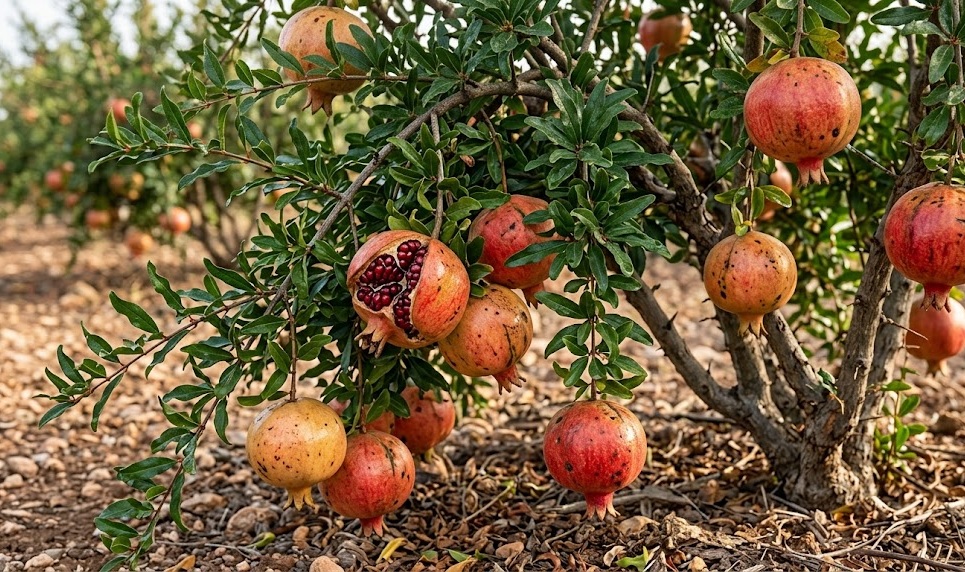

Mastering the art of pruning is essential for anyone who wishes to maintain a healthy, productive, and aesthetically pleasing pomegranate tree. You must understand that pruning is not merely about controlling the size of the plant; it is a strategic intervention that directs the tree’s energy toward fruit production and structural strength. A well-pruned tree enjoys better air circulation and light penetration, which are the primary defenses against many common pests and diseases. Learning when and how to make the right cuts is a fundamental skill for every professional horticulturalist.
The primary goal of pruning a pomegranate is to create a balanced structure that can support a heavy load of fruit without breaking. You should decide early on whether you want to grow your pomegranate as a single-trunk tree or as a multi-stemmed shrub, as this will dictate your pruning strategy for the life of the plant. Multi-stemmed forms are often more resilient in colder climates, while single-trunk specimens offer a more formal look and easier maintenance around the base. Consistency in your structural vision allows the tree to develop a predictable and manageable growth habit over time.
Pruning also serves as a rejuvenation process, where you remove old, unproductive wood to make room for new, vigorous fruiting branches. Pomegranates typically produce their best fruit on wood that is two to three years old, so a constant cycle of renewal is necessary for high yields. By selectively thinning the canopy each year, you ensure that the tree never becomes overly dense or stagnant in its growth. This proactive approach to canopy management keeps the tree in a state of perpetual youth and high productivity throughout its long life.
Timing is a critical factor in the success of your pruning efforts, as the tree’s response to a cut varies depending on its current growth phase. You will find that most major structural pruning should be done during the dormant winter months when the tree’s energy is stored safely in its roots and main limbs. Pruning during this time minimizes stress on the plant and allows you to clearly see the structure of the branches without the distraction of leaves. A well-timed pruning session sets the stage for a burst of healthy new growth as soon as the spring temperatures begin to rise.
Structural training and early growth
The first few years of a pomegranate’s life are the most important for establishing the framework that will support all future growth and fruit. You should begin by selecting the strongest stems to form the main structure and removing any weak, crossing, or poorly placed branches. If you are aiming for a single-trunk tree, you must diligently remove all suckers and side branches from the bottom two or three feet of the main stem. This focus on the early architecture of the tree prevents many structural problems that are difficult to correct once the wood becomes thick and hard.
More articles on this topic
If you prefer a multi-stemmed shrub, you should select three to five well-spaced main trunks and allow them to grow outward and upward in a vase-like shape. This form is particularly useful in areas with a risk of winter dieback, as the loss of one stem does not mean the loss of the entire plant. You should ensure that the main stems do not originate from the exact same spot on the root crown to prevent future crowding and weak attachments. A well-distributed set of main limbs creates a stable and open structure that is easy to manage as the tree matures.
Heading cuts, which involve shortening a branch, can be used during the first few seasons to encourage branching and create a denser canopy. You should make these cuts just above an outward-facing bud to direct the new growth away from the center of the tree. This technique helps you build a sturdy framework of lateral branches that will eventually become the primary fruiting wood. Being intentional with every cut during the training phase is the mark of a professional who is thinking years into the future of their garden.
Sucker control is a task that starts early and continues throughout the life of the pomegranate tree, especially for those grown as single-trunk specimens. These vigorous shoots emerge from the base of the tree and can quickly sap the energy away from the main fruiting canopy if they are not removed. You should prune them off as close to the root crown as possible, ideally as soon as they appear in the spring and summer. Keeping the base of the tree clean and clear is a simple but vital part of maintaining the desired form and health of your plant.
Annual maintenance and thinning techniques
Once the main structure of your pomegranate is established, your focus should shift to annual maintenance pruning to keep the canopy open and productive. You should start by removing any wood that is dead, damaged, or diseased, as these branches can become entry points for pests and decay. This “sanitary pruning” should be done every year, regardless of any other goals you have for the tree’s size or shape. Keeping the tree clean of dead wood is the easiest way to maintain a professional and healthy appearance in your agricultural plot.
More articles on this topic
Thinning cuts, which involve removing an entire branch back to its point of origin, are the best way to manage the density of the canopy. You should look for branches that are growing toward the center of the tree or those that are crossing and rubbing against each other. Removing these interior branches allows more light and air to reach the center of the tree, which is essential for fruit ripening and disease prevention. A well-thinned canopy should be open enough that a bird could fly through it without hitting its wings on the branches.
When pruning to encourage fruit production, you must remember that pomegranates bloom on the tips of the current season’s growth. If you perform a heavy “haircut” on the entire outside of the tree, you may inadvertently remove all the potential flower buds for the coming year. Instead, you should practice selective thinning of older fruiting spurs to encourage the tree to produce new, vigorous ones. This nuanced approach ensures that you are always maintaining a balance between the growth of the tree and the size of your eventual harvest.
You should also keep an eye on the height of the tree, especially if you wish to harvest the fruit without the need for tall ladders. Shortening the topmost branches back to a lateral limb can help keep the fruit within easy reach and prevent the tree from becoming top-heavy. This “height control” pruning is best done in the late winter, allowing the tree to recover quickly and produce its new fruiting wood at a manageable level. Managing the scale of the tree makes all other maintenance tasks, from spraying to harvesting, much more efficient and safe.
Tools and best practices for clean cuts
Using the right tools for the job is just as important as knowing where to make the cuts on your pomegranate tree. You should have a sharp pair of bypass pruners for small twigs, a set of loppers for medium-sized branches, and a pruning saw for anything larger than an inch in diameter. Keeping your tools clean and sharp ensures that every cut is smooth and that the living tissue is not crushed or torn during the process. Sharp tools also make the work much easier for you, reducing hand fatigue and allowing for more precise control over every action.
Before you begin pruning, you should disinfect your tools with a solution of rubbing alcohol or a mild bleach mixture to prevent the spread of disease. This is especially important if you are moving between different trees or if you have previously pruned a plant that showed signs of infection. You will find that this simple professional habit can prevent the accidental transfer of pathogens like bacterial blight across your entire orchard. Taking a few minutes to clean your equipment is a small investment that protects the long-term health of your prized pomegranate collection.
When making a cut, you should always position your pruners so that the cutting blade is closest to the part of the tree that will remain. This ensures that any slight crushing occurs on the branch being removed rather than on the permanent structure of the tree. You should make your cuts at a slight angle, just outside the “branch collar,” which is the swollen area where a limb joins the trunk or a larger branch. Cutting into the collar can interfere with the tree’s natural healing process, while leaving too much of a “stub” can lead to decay and infection.
Large branches should be removed using the “three-cut method” to prevent the heavy wood from tearing the bark down the trunk as it falls. First, make an undercut about a foot away from the trunk, then a second cut from the top slightly further out to remove the bulk of the branch. Finally, make a clean, final cut just outside the branch collar to remove the remaining stub safely and professionally. This technique ensures that the tree can heal quickly and that the main structure remains intact and beautiful for many seasons to come.