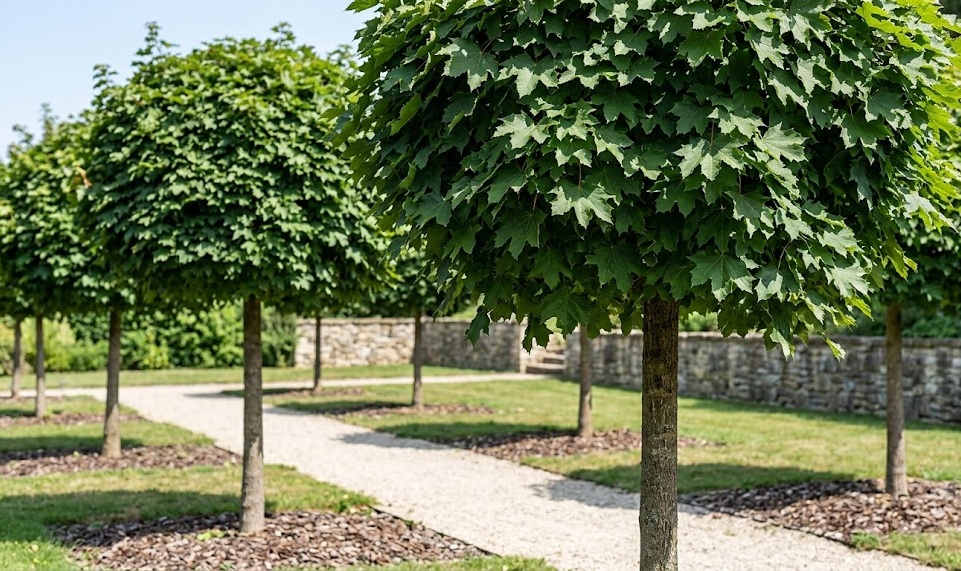

Correct hydration and nutrient management are the twin pillars of maintaining a thriving Norway maple ‘Globosum’ in any landscape setting. While this cultivar is known for its urban toughness, its dense foliage and unique growth habit demand a consistent supply of resources to stay healthy. You must balance the application of water and fertilizer to reflect the tree’s age, the local soil conditions, and the current weather patterns. A professional approach involves understanding that over-care can be just as damaging as neglect, particularly when it comes to soil saturation and chemical imbalances. Consistent monitoring is the only way to ensure the tree receives exactly what it needs for optimal performance.
The watering needs of this maple vary significantly depending on the season and the maturity of the tree. Newly planted specimens require frequent, shallow watering to keep the root ball moist while the roots transition into the surrounding soil. As the tree matures, you should shift to a deep-watering strategy that encourages the roots to seek moisture further down in the soil profile. This builds a more resilient tree that can withstand short periods of drought without showing signs of leaf scorch or premature drop.
Fertilization should never be an automatic task but rather a response to the specific needs of the tree and the soil. You should conduct a soil test every few years to determine which nutrients are lacking before applying any amendments. Over-fertilizing with nitrogen can lead to rapid, weak growth that is more susceptible to storm damage and pest infestations. A professional gardener aims for steady, balanced growth that reinforces the natural spherical shape of the ‘Globosum’ crown.
Water quality is another factor that is often overlooked in the care of urban maples. If you are using recycled water or highly treated municipal water, be aware of the potential for salt or chlorine buildup in the soil. Occasionally flushing the soil with clean rainwater or deep, fresh water applications can help mitigate these issues. Observing the health of the leaf margins will give you a clear indication of whether the tree is struggling with the chemical composition of its water source.
Hydration needs by age
The first year of a Norway maple ‘Globosum”s life in its new location is its most vulnerable period regarding water. You should aim to keep the soil consistently moist but never soggy, which usually requires watering two to three times a week. The amount of water depends on the size of the tree, but a general rule is to provide several liters for every inch of trunk diameter. This intensive care ensures that the root ball does not dry out, which is the leading cause of transplant failure.
More articles on this topic
In years two through five, the tree is considered “establishing” and its water needs become slightly more flexible. You should monitor the weather closely and provide supplemental water during dry spells that last more than a week. The roots are now expanding beyond the original planting hole, so you should water a larger area around the base of the tree. This encourages the root system to grow outward, providing better stability and access to a wider range of soil nutrients.
A mature Norway maple ‘Globosum’ is relatively drought-tolerant but will still benefit from deep soaking during prolonged heatwaves. You should look for signs of stress, such as a slight drooping of the leaves or a change in the intensity of the green color. If these signs appear, a slow, deep watering that reaches the entire root zone is necessary. Mature trees have a large canopy that loses a significant amount of water through transpiration on hot, windy days.
The method of delivery is just as important as the quantity of water provided. Using a soaker hose or a drip irrigation system is far more efficient than overhead sprinklers, as it delivers water directly to the soil. This reduces evaporation and prevents the foliage from staying wet for long periods, which can encourage fungal diseases. You should water early in the morning to allow any excess moisture on the soil surface to evaporate during the day.
Seasonal watering schedules
Spring watering is often supplemented by natural rainfall, but you should not rely on the weather alone. As the tree breaks dormancy and begins to push out new leaves, its internal water demand spikes dramatically. You should check the soil moisture levels weekly during this period to ensure the tree has the hydraulic pressure needed for leaf expansion. If the spring is unusually dry, providing extra water now will help the tree build the energy reserves it needs for the summer.
More articles on this topic
Summer is the most challenging season for the Norway maple ‘Globosum’ due to high temperatures and increased evaporation rates. You should increase the frequency of watering during July and August, focusing on maintaining a cool and moist root environment. Mulching becomes your best ally during these months by preventing the sun from baking the soil surface. You should avoid watering during the hottest part of the day, as much of the water will be lost to the atmosphere before it reaches the roots.
In the autumn, you should gradually reduce the frequency of watering to encourage the tree to begin its hardening-off process. The goal is to keep the roots hydrated without stimulating new, tender growth that could be damaged by the first frosts. However, you must ensure the tree goes into the winter with adequate moisture, as dry roots are more susceptible to freezing damage. A final deep watering in late autumn, after the leaves have fallen but before the ground freezes, is a professional secret for winter success.
Winter watering is rarely necessary in temperate climates unless there is a severe and prolonged winter drought. If the ground is not frozen and there has been no precipitation for several weeks, you may provide a small amount of water to prevent root desiccation. This is especially important for young trees that have not yet developed a deep root system. You should always wait for a day when the temperature is above freezing to ensure the water can actually penetrate the soil.
Nutrient requirements
The Norway maple ‘Globosum’ requires a variety of macronutrients and micronutrients to maintain its dense, spherical form. Nitrogen is essential for the leafy growth that gives the tree its character, while phosphorus supports root development and overall plant health. Potassium is the third major element, playing a critical role in the tree’s ability to regulate water and resist diseases. You should look for a balanced fertilizer, such as a 10-10-10 formula, for general maintenance.
Micronutrients like iron, manganese, and zinc are needed in much smaller quantities but are just as vital for the tree’s metabolic processes. In alkaline soils, these minerals often become chemically bound and unavailable to the tree, leading to yellowing leaves. You can address this by using acidified fertilizers or by applying the missing minerals in a chelated form that the roots can easily absorb. Regular leaf analysis can provide a precise picture of which micronutrients might be lacking in your specific environment.
The timing of fertilizer application is crucial to avoid wasting product and to ensure the tree can use it effectively. The best time to fertilize is in the early spring, just before or as the new growth begins to emerge. This provides a nutrient boost exactly when the tree is most active and hungry for resources. You should avoid fertilizing late in the summer, as this can stimulate new growth that will not have enough time to mature before the winter cold arrives.
Organic fertilizers, such as composted manure or specialized tree spikes, offer a slow-release source of nutrients that mimics natural processes. These products improve the soil biology by supporting beneficial microbes and earthworms, which in turn help the tree’s roots. If you choose to use synthetic fertilizers, be sure to follow the manufacturer’s instructions exactly to avoid over-application. Burning the roots with excessive chemical salts is a common mistake that can set a tree’s health back by several years.
Application techniques
When applying granular fertilizer, you should spread it evenly over the entire root zone, which extends slightly beyond the drip line of the canopy. Avoid piling fertilizer against the trunk, as the concentrated chemicals can damage the bark and lead to infections. You should lightly rake the fertilizer into the top inch of soil or mulch to prevent it from washing away during a heavy rain. Watering the area immediately after application helps move the nutrients down into the root zone where they are needed.
Deep-root feeding is a professional technique where liquid fertilizer is injected directly into the soil at a depth of 15 to 20 centimeters. This method bypasses the grass or groundcover and delivers the nutrients exactly where the tree’s feeder roots are located. It also helps to aerate the soil, which is particularly beneficial in urban areas with compacted ground. If you have multiple maples or a large specimen, investing in a professional deep-root treatment once a year can produce dramatic results.
Foliar feeding is another option, though it is usually reserved for correcting specific micronutrient deficiencies rather than general fertilization. You can spray a diluted nutrient solution directly onto the leaves, which the tree can absorb very quickly through its stomata. This is a temporary fix and should always be combined with soil-based treatments for a long-term solution. You should only perform foliar feeding on a calm day when the leaves can remain wet long enough for the nutrients to be absorbed.
Monitoring the tree’s response to your fertilization program is the final step in the process. You should see a consistent leaf color, a healthy amount of new annual growth, and a quick recovery from any minor environmental stresses. If the tree does not seem to be responding, it may be due to other factors like poor drainage or pest issues that are preventing nutrient uptake. A professional gardener is always ready to adjust their strategy based on the living evidence provided by the tree itself.