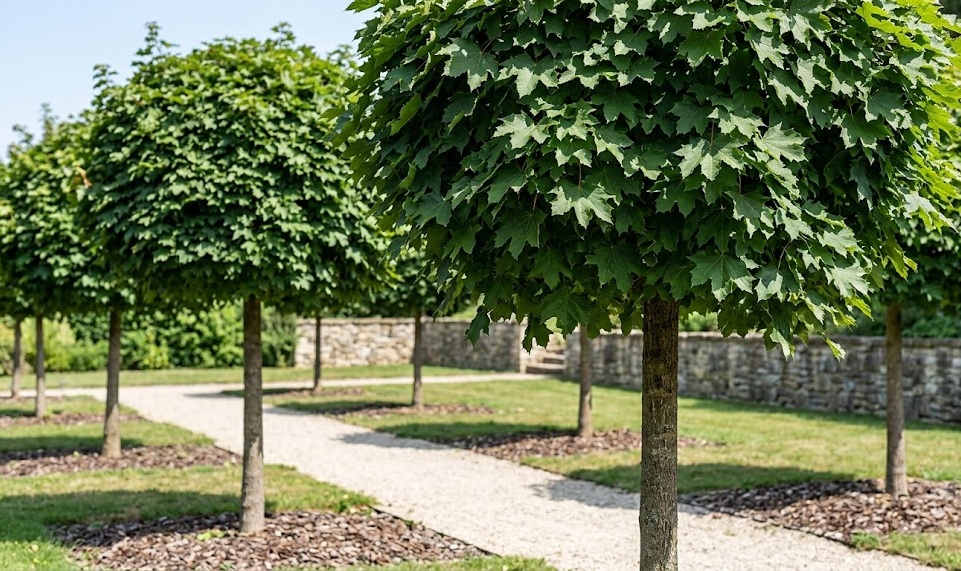

The care of the Norway maple ‘Globosum’ requires a systematic approach to ensure its unique spherical crown remains healthy and aesthetically pleasing throughout the seasons. This cultivar is highly valued in urban landscaping due to its compact growth habit and its ability to provide shade without occupying excessive vertical space. Maintaining its health involves monitoring soil conditions, ensuring proper hydration, and protecting the tree from environmental stressors that might affect its foliage. Professional gardeners prioritize this tree for its predictable form, but consistent attention is necessary to maintain its structural integrity over several decades.
The root system of this maple is relatively shallow and spreading, which means it is sensitive to soil compaction and drastic changes in ground level. You should avoid heavy machinery or high foot traffic near the base of the tree to prevent damaging the fine feeder roots that absorb nutrients. Mulching the area around the trunk with organic matter can help regulate soil temperature and retain moisture, which is vital for the tree’s stability. Regularly checking the soil density will allow you to intervene if the ground becomes too hard for efficient water penetration.
The spherical crown of the ‘Globosum’ variety is naturally occurring, yet it still benefits from occasional thinning to improve air circulation within the dense foliage. This practice reduces the risk of fungal infections that often thrive in stagnant, humid environments inside the canopy. You should look for crossing branches or those growing toward the center of the sphere, as these can cause bark abrasions and weaken the tree. A well-ventilated crown ensures that sunlight reaches the inner leaves, promoting a more uniform and vibrant green appearance during the growing season.
Urban environments present specific challenges for this maple, such as reflected heat from pavement and exposure to road salts during the winter months. To mitigate these effects, it is helpful to wash the foliage occasionally during the summer to remove dust and pollutants that can clog the leaf pores. Soil testing every few years is recommended to ensure that the pH remains slightly acidic to neutral, which is the optimal range for nutrient uptake. If you notice any yellowing of the leaves, it may indicate a micronutrient deficiency or an imbalance caused by urban runoff.
Soil quality and preparation
The success of the Norway maple ‘Globosum’ is deeply rooted in the quality of the soil where it is established. It thrives best in well-drained, fertile loams that offer a consistent supply of nutrients without becoming waterlogged. You must ensure that the planting site does not have a high clay content that retains too much water, as this can lead to root rot. Testing the drainage capacity of the soil before planting is a professional standard that prevents many long-term health issues.
More articles on this topic
Organic matter plays a crucial role in maintaining the soil structure and providing a slow-release source of nitrogen and minerals. Incorporating well-rotted compost or leaf mold into the surrounding soil during the early stages of the tree’s life will encourage vigorous root development. You should maintain a mulch layer that is several inches thick but keep it away from direct contact with the bark of the trunk. This barrier prevents competition from weeds and grass, which can aggressively steal moisture and nutrients from the maple’s shallow root zone.
Salinity is a major concern for maples planted near roadsides or in coastal areas where salt spray is common. The ‘Globosum’ variety is moderately sensitive to salt, which can cause marginal leaf scorch and reduced growth rates. If you are caring for a tree in a high-salt area, regular deep watering can help flush accumulated salts through the soil profile. Monitoring the leaf edges for browning is the first step in identifying salt stress before it becomes a systemic problem for the tree.
Nutrient availability is often dictated by the soil pH, and this maple prefers a range between 6.0 and 7.5 for optimal health. If the soil becomes too alkaline, the tree may suffer from iron chlorosis, characterized by yellow leaves with green veins. You can correct this by applying chelated iron or sulfur-based soil conditioners to lower the pH gradually over time. Consistent monitoring of the soil chemistry ensures that the tree has access to all the essential elements required for its distinctive dense growth.
Managing growth and space
The predictable size of the Norway maple ‘Globosum’ makes it an excellent choice for narrow streets and small gardens. Because it is typically grafted onto a standard trunk, the height of the crown is determined by the graft point, while the sphere itself expands horizontally. You should plan the surrounding landscape with the final diameter of the crown in mind, which can reach up to five or six meters. Providing enough space for the canopy to expand without touching buildings or other trees is essential for maintaining its perfect round shape.
More articles on this topic
While the tree is known for its slow to moderate growth rate, you should still observe the annual extension of its branches to gauge its overall health. Healthy specimens will produce lush, dark green leaves that create a solid wall of foliage by early summer. If the growth seems stunted or the leaves are smaller than usual, it may be a sign of environmental stress or root restriction. Adjusting your care routine based on these visual cues is part of the professional management of the species.
Competition with nearby plants can limit the resources available to the maple, especially during periods of drought. Large shrubs or aggressive groundcovers planted too close to the trunk will compete for the same shallow water and nutrient sources. You should maintain a clear zone around the base of the tree to allow for easy inspection and to reduce the risk of mechanical damage from lawnmowers. Keeping the area tidy also prevents the accumulation of debris that can harbor pests or fungal spores.
The structural integrity of the graft union is a critical point that requires regular inspection during the tree’s life. Any damage to this area can compromise the transport of water and nutrients between the rootstock and the spherical canopy. You should ensure that no suckers are allowed to grow from the rootstock, as these will divert energy away from the ‘Globosum’ crown. Removing these shoots immediately as they appear will maintain the tree’s unique silhouette and ensure the graft remains strong.
Seasonal care routines
Spring is the most active time for the Norway maple ‘Globosum’, as it requires a boost of nutrients to support new leaf production. Applying a balanced, slow-release fertilizer in early spring will provide the necessary elements for a successful growing season. You should also inspect the tree for any winter damage, such as frost cracks or broken branches, and address them before the sap starts flowing heavily. This proactive approach sets the foundation for a healthy canopy that can withstand the heat of the coming months.
During the summer, the primary focus shifts to moisture management and protecting the foliage from intense solar radiation. If the weather is exceptionally dry, the tree may require supplemental watering even if it is well-established. You should water deeply and infrequently rather than providing light, daily sprinkles, as this encourages the roots to grow deeper into the soil. Watching for signs of wilting or leaf drop will tell you if the tree is struggling with the high temperatures of mid-summer.
Autumn care involves preparing the maple for the dormant season by reducing fertilization and monitoring the natural leaf drop. The Norway maple ‘Globosum’ often displays a beautiful yellow color before the leaves fall, adding late-season interest to the landscape. You should collect and dispose of the fallen leaves, especially if there were any signs of fungal issues like tar spot during the summer. Cleaning up the area around the tree reduces the population of overwintering pests and pathogens.
Winter is the time for structural assessments and ensuring that the tree is protected from physical damage. Heavy snow or ice can weigh down the dense branches of the spherical crown, potentially causing breakage. You should gently brush off heavy snow accumulations if they seem to be straining the limbs. Additionally, applying a dormant oil spray in late winter can help control scale insects and other pests that hide in the bark during the cold months.
Environmental resilience
One of the reasons the Norway maple ‘Globosum’ is so popular is its remarkable resilience to various environmental conditions. It can tolerate a degree of air pollution that would kill more sensitive species, making it a staple of industrial and urban zones. However, even the toughest trees have limits, and you should be aware of the signs of chronic stress caused by poor air quality. Providing optimal soil and water can help the tree build the internal reserves it needs to filter toxins and thrive in harsh settings.
Wind resistance is another strength of this cultivar, as its compact and dense crown is less likely to catch the wind like a traditional tall tree. This makes it a safe choice for planting near pedestrian walkways or parking lots where falling limbs could be a hazard. You should still check the canopy for any signs of internal decay that could weaken the wood over time. Regular professional inspections can identify hidden issues before they lead to structural failure during a storm.
Temperature fluctuations, especially late spring frosts, can sometimes damage the emerging buds of the maple. If a hard frost is predicted after the leaves have started to break, young trees may benefit from temporary covering. While mature specimens are generally hardy, the soft new growth is the most vulnerable part of the plant. If damage occurs, the tree will usually recover by producing a second flush of leaves, though this can temporarily reduce its aesthetic appeal.
Adaptability to different light levels allows this tree to be used in various parts of the garden. It prefers full sun but can manage in partial shade, though the density of the crown may be slightly reduced in lower light. You should observe how the tree reacts to its specific location and adjust other care factors like watering to compensate for the light intensity. A tree in full sun will naturally require more water than one in a shaded, cooler spot.
Urban planting considerations
When planting the Norway maple ‘Globosum’ in an urban setting, the surrounding infrastructure must be considered. Concrete sidewalks and asphalt roads act as heat sinks, raising the ambient temperature around the tree significantly. You should choose a planting location that allows for some natural cooling, perhaps by grouping trees or using permeable paving nearby. This prevents the “heat island” effect from causing premature leaf scorch and dehydration.
Root barriers are often necessary when planting this maple near underground utilities or sidewalk edges. Although the roots are not notoriously invasive, the spreading nature of the maple root system can eventually lift light pavement if not managed. Installing a physical barrier during the planting process directs the roots downward and away from sensitive structures. This is a standard practice in professional municipal landscaping to ensure the longevity of both the tree and the surrounding hardscape.
Vandalism and accidental damage are unfortunate realities of urban tree care that you must prepare for. Using sturdy tree guards during the first few years of growth can protect the trunk from physical impact and chewing by animals. You should also ensure that the tree is pruned high enough so that it does not obstruct pedestrian traffic or sightlines for drivers. Maintaining clear visibility is not only a safety requirement but also helps integrate the tree into the community environment.
Public perception of urban greenery is enhanced when trees like the Norway maple ‘Globosum’ are well-maintained. A healthy, perfectly round tree serves as a focal point and can even increase the value of the surrounding property. You should engage in regular maintenance not just for the health of the tree, but to ensure it continues to serve its purpose as a decorative and functional element of the landscape. A neglected tree in a public space can quickly become a liability rather than an asset.
Long-term health strategies
Ensuring the longevity of a Norway maple ‘Globosum’ requires a long-term vision that extends beyond the current growing season. Regular health audits by a certified arborist can identify subtle changes in growth patterns or bark condition that an amateur might miss. These professionals can use specialized tools to check for internal rot or root health without damaging the tree. Investing in professional oversight is the best way to guarantee that the tree reaches its full potential age.
Genetic stability is generally high in this cultivar, but you should always be on the lookout for “reversions” where a branch starts to grow like a standard Norway maple. These branches will be much more vigorous and will quickly ruin the spherical shape of the ‘Globosum’. You must prune these out entirely as soon as they are identified to maintain the integrity of the variety. This vigilance is a small but necessary part of keeping the tree true to its intended form.
Watering strategies should evolve as the tree matures and its root system expands further into the landscape. An older tree may not need frequent surface watering, but it will benefit from deep soaking during extended heatwaves. You should monitor the soil moisture at a deeper level to ensure the core root ball is not drying out. This transition from intensive young-tree care to supportive mature-tree care is a hallmark of an expert gardener.
Final considerations for long-term health include the impact of climate change on local weather patterns. As summers become hotter and winters more unpredictable, the care requirements for the Norway maple ‘Globosum’ may need to be adjusted. Staying informed about new pests or diseases moving into your region allows you to be prepared for future challenges. A proactive, informed approach ensures that this beautiful maple continues to grace your garden or city for many years to come.