
Pruning and mechanical height regulation are among the most essential maintenance tasks for ensuring the long-term health and productivity of a white clover stand. For this species, pruning is primarily accomplished through mowing or grazing, which serves to remove old biomass and stimulate new, vigorous growth. This intervention is not just for aesthetics; it plays a critical role in managing the plant’s physiological balance and its competition with other species. A professional approach to cutting back ensures that the stand remains dense and resilient throughout the growing season.
The timing and height of the cut are the two most important variables that a grower must manage with precision. Cutting too frequently or too low can stress the plant and deplete its energy reserves, while infrequent cutting can lead to a leggy and unstable canopy. Understanding the growth cycle of the creeping stolons is the key to determining the best mechanical management strategy. This article details the professional standards and techniques for pruning and cutting back white clover in various agricultural and horticultural contexts.
Stimulating growth and regulating stolon density
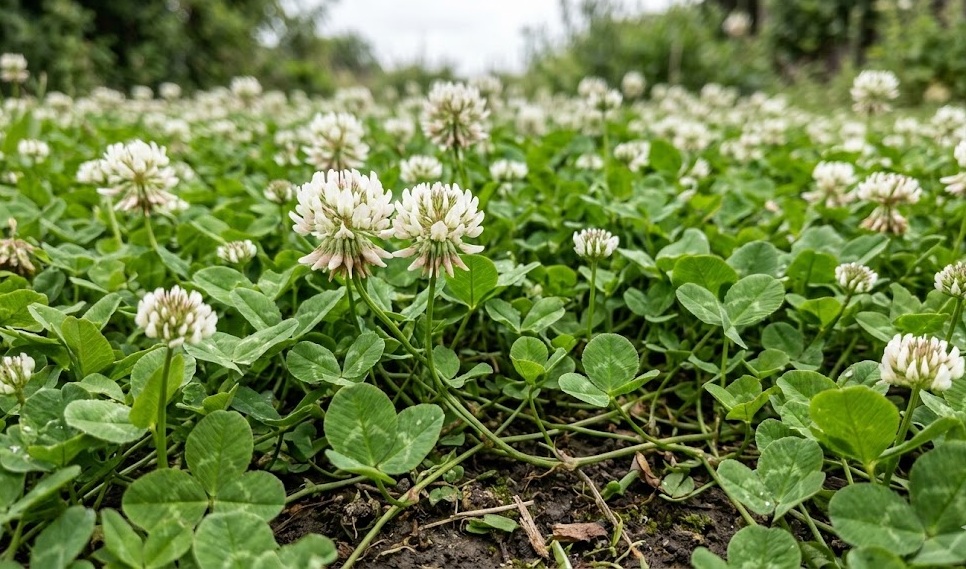
The primary objective of pruning this species is to encourage the continuous production of new leaves and the branching of the horizontal stolons. When the older leaves are removed, the plant redirects its energy into the growing points at the nodes of the creeping stems. This results in a thicker mat of vegetation that is better at capturing light and suppressing the growth of unwanted weeds. Regular cutting back is the engine that drives the density and uniformity of a high-quality clover stand.
Managing the density of the stand through mechanical means also helps to prevent the buildup of excess thatch at the soil surface. Too much old, decaying material can trap moisture and restrict air circulation, creating an ideal environment for various fungal pathogens. By periodically removing the upper part of the canopy, the grower allows more air and light to reach the base of the plant. This simple physical intervention is one of the most effective ways to maintain a healthy and disease-free environment.
The response of the plant to being cut back depends heavily on its current state of health and the environmental conditions. During periods of rapid growth in the spring, the clover can handle more frequent and aggressive pruning without a significant loss of vigor. In contrast, during the heat of summer or the transition into winter, the cutting height should be increased to protect the plant from stress. A professional grower adjusts their mechanical management in real-time based on the observed needs of the crop.
More articles on this topic
Observation of the stolon network after a cut provides valuable information about the effectiveness of the pruning strategy. Ideally, the stand should show a quick recovery with a flush of vibrant new green leaves within a few days. If the recovery is slow or if bare patches become visible, it may indicate that the cut was too low or that the plant is under-nourished. Refining the cutting routine based on these observations is a core part of professional horticultural management.
Rejuvenation pruning and biomass management
Over time, a stand of white clover can become woody or less productive as the older stolons lose their vigor and ability to root effectively. Rejuvenation pruning involves a more significant cutback designed to remove this old biomass and stimulate the growth of fresh, young tissue. This is often done in the early spring or after a period of intense flowering to reset the growth cycle of the stand. While it may look drastic at first, a well-timed rejuvenation cut can significantly extend the productive life of the crop.
The biomass removed during the pruning process is a valuable resource that should be managed thoughtfully within the agricultural or garden system. In many cases, the clippings can be left on the surface to decompose and return nutrients and organic matter to the soil. This “grass-cycling” approach supports the natural nutrient cycle and reduces the need for external fertilization. However, if the volume of clippings is too high, they should be removed to prevent them from smothering the living plants below.
Managing the timing of the cut back in relation to the flowering cycle is a critical decision for the professional grower. If the goal is to encourage seed production, the cutting should be timed to avoid removing the developing flower heads. If the goal is biomass production and leaf quality, the stand should be cut before the flowers mature and the plant shifts its energy into seed development. This strategic approach to pruning allows the grower to align the plant’s biology with their specific management goals.
More articles on this topic
In grazing systems, the animals themselves act as the “pruners,” and their impact must be managed through controlled movements and stocking densities. Overgrazing can be just as damaging as cutting too low with a mower, as it removes too much of the photosynthetic tissue and can damage the stolons through trampling. Managing the intensity and duration of this biological pruning is a key skill for any professional livestock manager. A balanced approach ensures that the clover remains a productive and sustainable part of the forage system.
Implementing proper cutting techniques and equipment
The quality of the cut is just as important as the height and timing of the mechanical intervention. Sharp, well-maintained blades are essential for making clean cuts that heal quickly and minimize the risk of pathogen entry. Ragged or torn leaves lose water more quickly and are much more susceptible to fungal infections and environmental stress. A professional grower ensures that their equipment is in top condition and that the blades are sharpened regularly throughout the season.
The choice of equipment depends on the size of the area and the specific goals of the management program. For small garden areas, a high-quality rotary or reel mower can provide a very precise and uniform cut. For larger agricultural fields, tractor-mounted mowers or specialized forage harvesters are used to manage large volumes of biomass efficiently. Regardless of the scale, the equipment should be adjusted to the correct height and operated at a speed that ensures a clean and even result.
Sanitation of the cutting equipment is a frequently overlooked but vital part of professional management. Mowers can easily transport weed seeds, fungal spores, and viral pathogens from one area of the farm or garden to another. Cleaning the equipment after use, especially when moving between different plots, is a standard biosecurity practice. This simple step can prevent the spread of diseases and help maintain the purity and health of the white clover stand over many years.
Finally, the height of the cut should be determined by the intended use of the stand and the local environmental conditions. For a lawn-like appearance, a height of around five to seven centimeters is often ideal, whereas agricultural pastures may be kept slightly taller. During periods of drought or extreme heat, increasing the cutting height provides more shade for the stolons and helps conserve soil moisture. A commitment to professional standards in pruning and cutting back ensures that white clover remains a resilient and high-performing component of the landscape.