
The relationship between perennial ryegrass and sunlight is a fundamental factor that determines its overall health, density, and aesthetic quality. You must understand that while this species is highly versatile, it has specific physiological needs for light that must be met for it to thrive. This grass is primarily classified as a full-sun species, meaning it achieves its best performance when exposed to several hours of direct radiation each day. Managing light levels in your landscape is a key skill for any gardener looking to maintain a professional-grade ryegrass turf.
For optimal growth and a deep green color, your ryegrass should ideally receive at least six to eight hours of direct sunlight every day. You will notice that in areas with abundant light, the grass grows densely, produces more tillers, and recovers quickly from any physical damage. Sunlight drives the process of photosynthesis, which provides the energy necessary for all the plant’s biological functions, including root development and disease resistance. In the absence of sufficient light, the plant’s growth becomes leggy and weak as it tries to reach for the sun.
While full sun is the gold standard, modern cultivars of perennial ryegrass have been bred for improved performance in partially shaded conditions. You should recognize that “shade” in a gardening context often means filtered light through a tree canopy or direct sun for only a portion of the day. If your lawn receives at least four hours of direct light, you can still maintain a respectable stand of ryegrass with proper care. However, you must adjust your maintenance routine in these areas to compensate for the reduced energy levels available to the plants.
Observing the light patterns in your garden throughout the different seasons is an essential part of long-term planning. You should take note of how the shadows from buildings and trees move across the lawn from spring to autumn. A spot that is in full sun during the summer might be in deep shade during the early spring or late autumn when the sun is lower in the sky. This seasonal variation can affect the timing of your fertilization and watering, as plants in the shade have different metabolic rates.
Managing shade and filtered light
In areas where shade is a significant factor, you should consider physical modifications to the surrounding landscape to increase light penetration. You can often improve the health of your ryegrass by thinning out the canopy of overhanging trees or removing lower branches. This “limbing up” allows more filtered sunlight to reach the ground and improves the air circulation at the soil level. Even a small increase in the amount of light can make a dramatic difference in the density and vigor of the grass below.
More articles on this topic
Competition for resources is often more intense in shaded areas, especially when the shade is provided by large, established trees. You should be aware that trees not only block the sun but also compete with the grass for water and essential soil nutrients. In these zones, you may need to provide extra irrigation and targeted fertilization to ensure the grass isn’t being outcompeted. Using a slow-release fertilizer in shaded areas helps prevent sudden growth spurts that the plant cannot sustain with its limited light energy.
Mowing height is a critical adjustment you must make for ryegrass growing in less-than-ideal light conditions. You should raise your mower blades by one or two centimeters when cutting grass in shaded areas compared to the rest of your lawn. The longer blades provide more surface area for photosynthesis, allowing the plant to capture as much of the limited light as possible. This extra leaf tissue also helps protect the crown and maintains a healthier root system in the face of reduced energy.
If an area is in deep, permanent shade where the grass consistently fails to thrive, you should consider alternative ground covers or landscaping features. You must accept that there is a biological limit to how much shade perennial ryegrass can tolerate, regardless of how well it is cared for. Trying to force grass to grow in a location that receives less than three hours of light will often result in a cycle of failure and frustration. Choosing shade-loving plants or using decorative stone can provide a more sustainable and attractive solution for these difficult spots.
Impact of light on growth and color
The intensity and duration of light exposure directly influence the chemical composition and physical appearance of your perennial ryegrass. You should know that high light levels stimulate the production of chlorophyll, resulting in the vibrant, deep green color that is so highly prized. In contrast, grass grown in insufficient light often appears pale or even yellowish as it struggles to produce enough energy. This change in color is one of the earliest warning signs that your lawn is suffering from light stress.
More articles on this topic
Density and tillering are also heavily dependent on the amount of light the grass receives throughout the growing season. You will find that in full sun, the plants produce many secondary shoots, or “tillers,” which create a thick and resilient carpet of turf. In the shade, the plants tend to focus their energy on upward growth rather than spreading out, leading to a much thinner and more fragile lawn. This lack of density makes the area more prone to weed invasion and soil erosion over time.
Light also plays a significant role in the plant’s ability to handle other types of stress, such as heat, cold, and heavy foot traffic. You should recognize that a well-lit plant has a more robust root system and greater carbohydrate reserves to draw upon during difficult times. Grass in the shade is inherently more vulnerable because it is constantly living on the edge of its energy budget. This means you must be even more careful with maintenance tasks in shaded areas to avoid causing unnecessary damage.
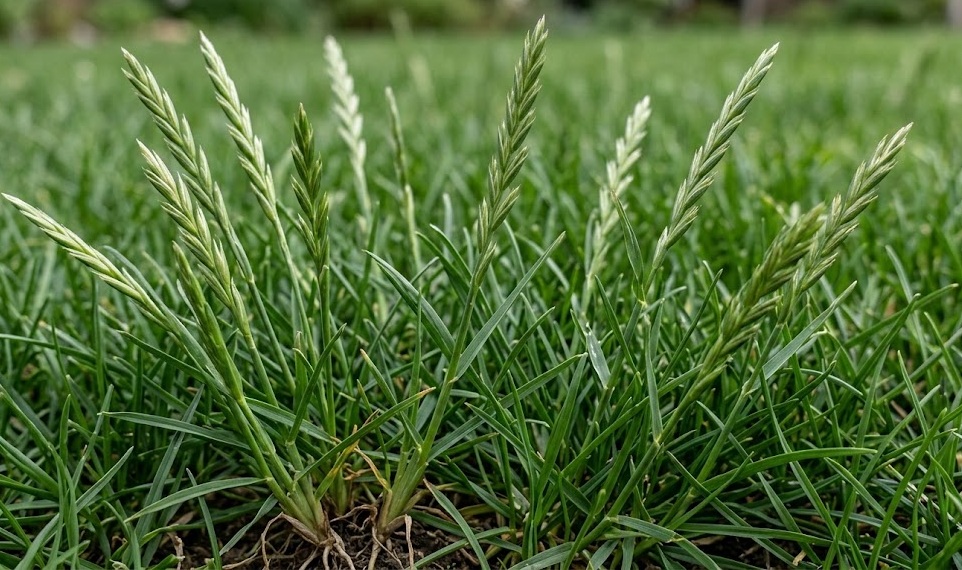
The timing of flowering and seed production is another biological process regulated by the changing patterns of daylight throughout the year. You should notice that perennial ryegrass is a “long-day” plant, meaning it is naturally stimulated to produce seed heads as the days get longer in the late spring and early summer. In a managed lawn, we typically prevent this by mowing, but it is an interesting example of how light directs the life cycle of the grass. Understanding these natural rhythms helps you work with the plant rather than against it.
Seasonal light shifts and adjustments
As the seasons change, the angle of the sun and the length of the day shift, requiring you to adapt your care for the ryegrass accordingly. In the early spring, maximizing light exposure is vital for a fast green-up and the recovery of the lawn after its winter dormancy. You should complete all pruning of trees and shrubs before they leaf out to give the emerging grass a head start with the full spring sun. This early boost of energy is critical for building the foundations of a healthy lawn for the rest of the year.
During the peak of summer, the intense midday sun can sometimes be a double-edged sword for perennial ryegrass. While it provides plenty of energy for growth, the accompanying heat can lead to moisture stress and a slowdown in the plant’s metabolism. You should ensure that your irrigation is sufficient to keep up with the increased transpiration rates caused by the bright, hot sun. In some cases, a light afternoon “syringing” or misting can help cool the grass blades without saturating the soil.
Autumn brings a gradual reduction in both light intensity and day length, signaling the grass to begin preparing for the winter months. You should be mindful that as the sun’s path lowers, shadows will lengthen and parts of your lawn may spend more time in the shade than they did in the summer. This is the time to remove any temporary shade structures or furniture that might be blocking the precious remaining light. Maximizing light capture in the autumn helps the plant store the maximum amount of energy for its winter survival.
In the winter, even though the grass is mostly dormant, light still plays a minor role in its health and the timing of its spring return. You should avoid leaving any opaque objects on the lawn for extended periods, as they can kill the grass underneath by blocking all light and trapping moisture. Keeping the surface clear allows the soil to absorb as much solar warmth as possible on clear winter days, which can benefit the sleeping root systems. A light-conscious approach to winter care ensures that your perennial ryegrass is ready to shine as soon as the first days of spring arrive.